
Walk into almost any workshop, and you will find the same problem: everyone is fighting for floor space. When you bring in a new powder coating line, a long, straight-line system is usually the first layout people think of. But it is also a luxury that most factory blueprints cannot afford. It leaves you zero room for staging raw metal, packs your operators into tight corners, and messes up your forklift lanes.
The easy answer seems to be “just make the equipment smaller.” But anyone who has run a line knows that shortcut fails fast. Shorten the curing oven, and your powder doesn’t cure properly. Speed up the line to hit targets, and your parts exit the oven still wet or hot.
So the goal isn’t actually to shrink the line. The goal is to fold, stack, and configure the process so that 50 meters of actual production travel fits into a 25-meter building footprint. That requires changing how we routing conveyors and manage air flow, not cutting corners on process times.
Advanced Conveyor Routing: Breaking the Straight-Line Limitation
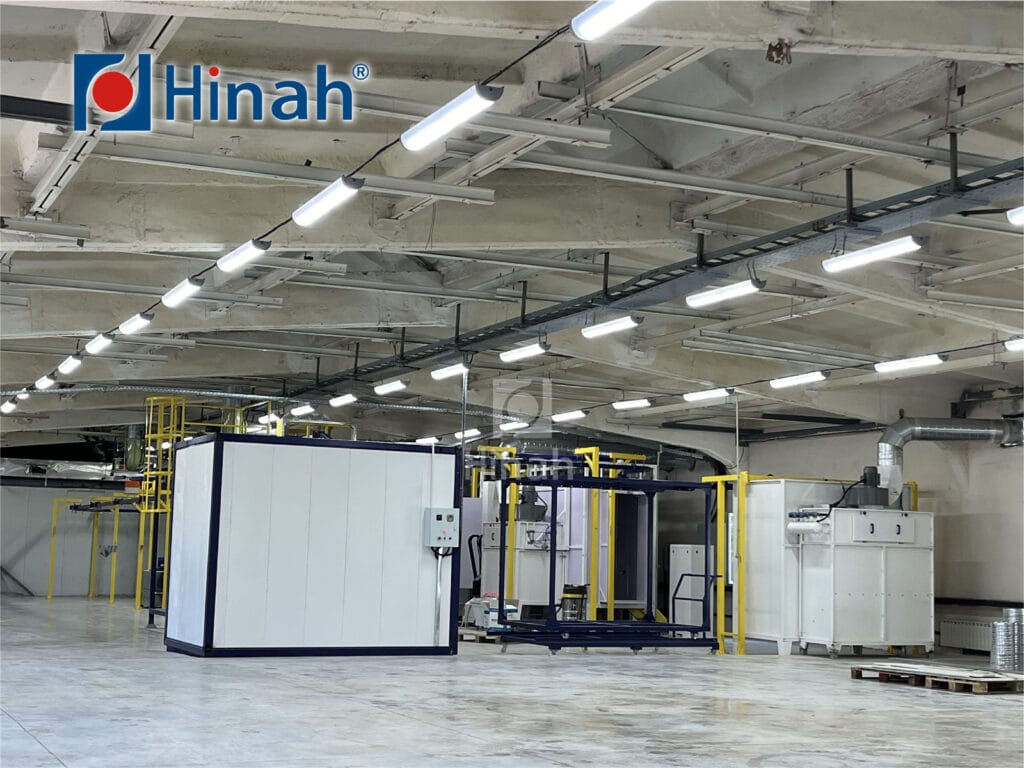
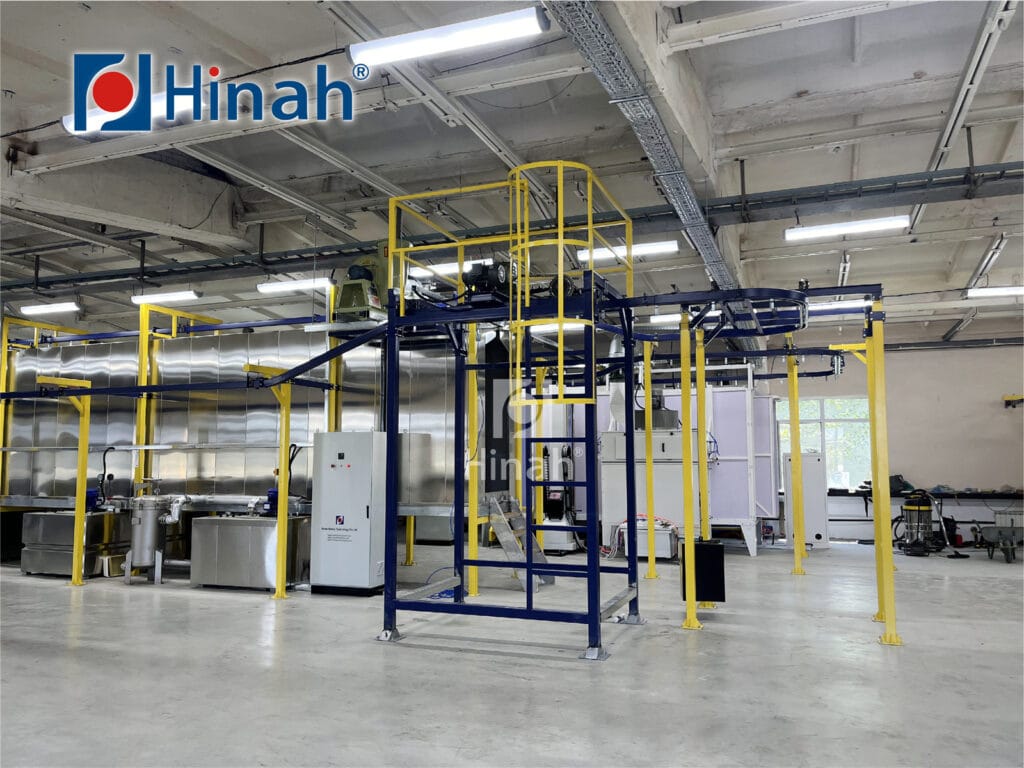
If you want to save space, you have to stop thinking in a straight line. The conveyor track is the spine of your powder coating line, and how you route it determines your entire factory layout. If you just lay out your pretreatment, booths, and ovens in one single row, you will quickly run out of factory wall.
Instead of stretching your line out, you need to use the geometry of your workshop. Here are three practical ways to route a conveyor that keep your footprint small without sacrificing your production capacity.
U-Shape and W-Shape Loop Layouts
The simplest way to cut a line’s length in half is to fold it. By using 180° conveyor turns, you can create a U-shape or a nested W-shape layout.
This design brings the loading and unloading zones right next to each other. Now, instead of needing separate teams at opposite ends of a long building, the same operators who hang the raw parts can take down the finished goods. You immediately save linear floor space, and you cut your labor requirements at the same time.
The Overhead Advantage: Utilizing Your Vertical Space
Floor space might be tight, but look up—your ceiling height is often completely wasted. You can free up hundreds of square meters of floor space by moving non-spray processes above your head.
For example, after parts exit the curing oven, they need anywhere from 15 to 30 minutes to cool down before operators can pack them. Instead of letting those hot parts take up valuable floor space in a long cooling lane, route the conveyor track up toward the roof. The parts cool down in the unused air space near the ceiling, leaving the floor underneath completely clear for forklift lanes or material staging.
Power & Free (P&F) Conveyor Systems
Standard continuous conveyors keep every single part moving at the exact same speed. This means your ovens and flash-off zones must be incredibly long to give parts enough time inside them.
A Power & Free system changes this entirely. It allows parts to stop, start, and switch tracks independently. When a part enters the curing oven, the system can drop it off on a side track where it sits completely still to cure. Meanwhile, the main chain keeps moving at a faster speed outside. By letting parts “dwell” in compact batch-like pockets inside your automated line, you can shrink the physical length of your ovens drastically.
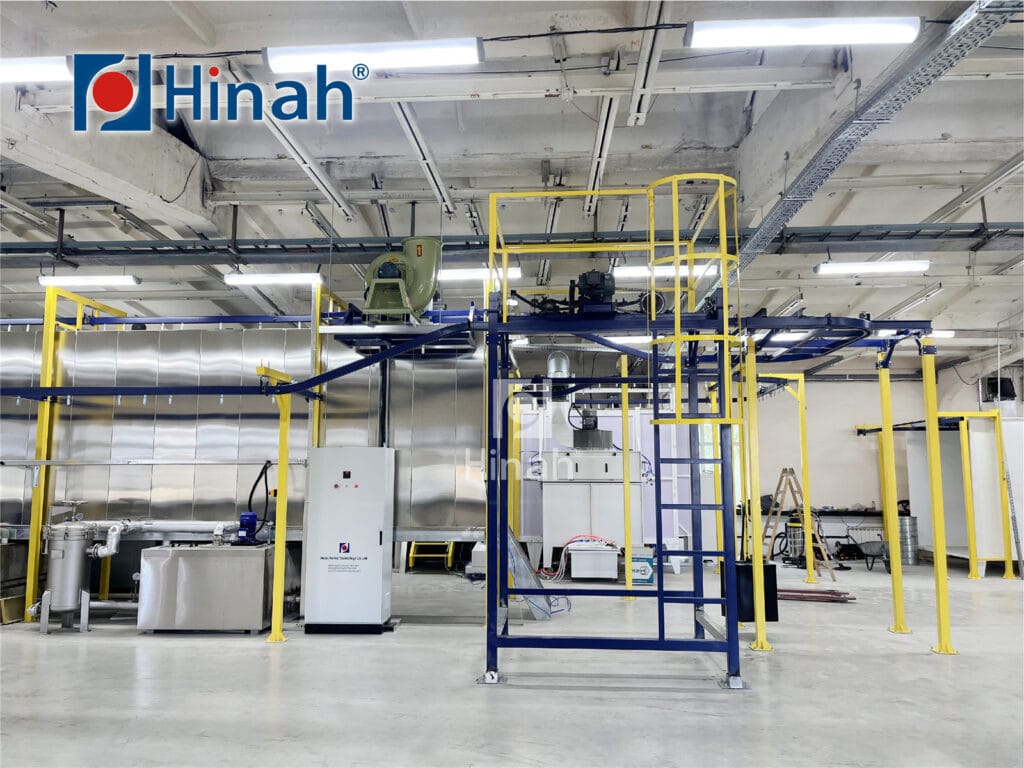
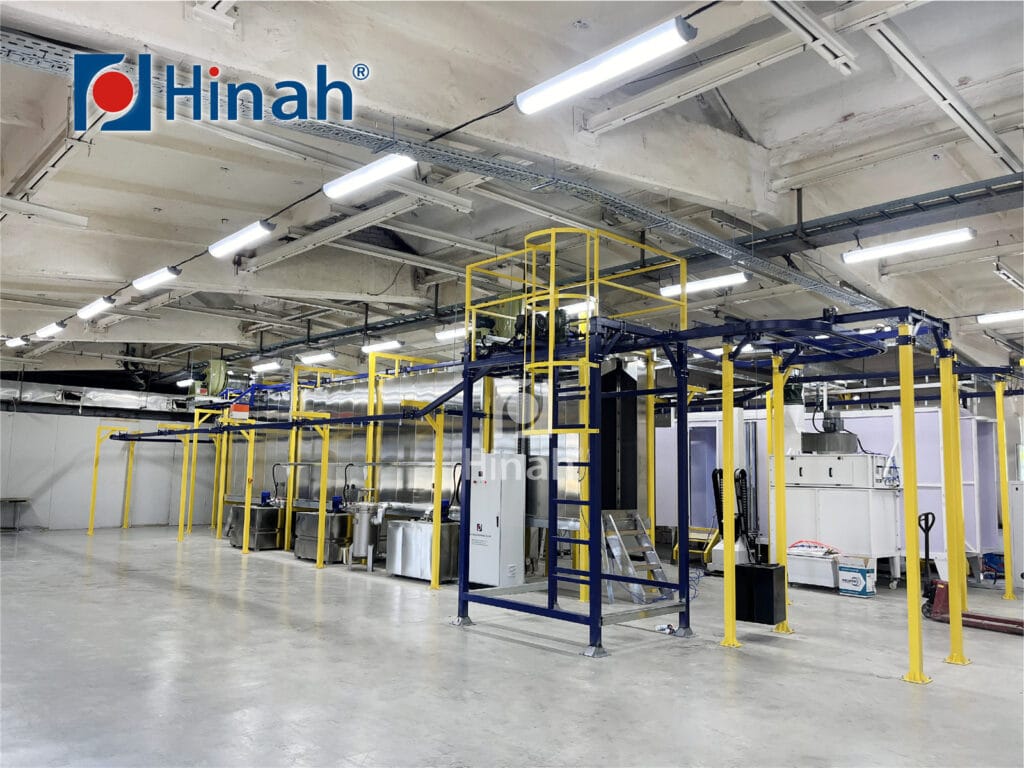
Optimizing the Pre-treatment Footprint in Powder Coating Line
Pre-treatment is usually the biggest space-hog on the factory floor. Whether you use a multi-stage chemical wash or a mechanical blast system, cleaning the metal before it hits the spray booth takes up massive linear length. If you use a traditional setup with five separate chemical spray tunnels lined up back-to-back, you will run out of floor space before you even lay down the first oven.
To keep your powder coating line compact, you have to change how parts move through the cleaning phase. You either need to combine chemical stages into a single physical footprint or switch to a completely dry, mechanical process.
Multi-Stage Combined Chemical Wash
In a standard high-volume line, parts pass through separate, dedicated tunnels for degreasing, rinsing, and phosphating. Each stage requires its own housing and its own drain deck.
For small-to-medium batch volumes, you can combine these steps into a single, centralized spray chamber. The parts hang stationary inside this single compact enclosure, while an automated PLC system cycles different liquids through the same spray nozzles—first the degreaser, then the rinse water, then the chemical treatment. You use a smart valve system to return each liquid back to its own storage tank below. You get a full 3- or 5-stage treatment while using the physical floor space of just one single stage.
Shot Blasting vs. Chemical Deluge
If your factory footprint cannot accommodate long chemical lines and the water treatment equipment that comes with them, a structural mechanical blast cabinet is often the best alternative.
A heavy-duty shot blasting machine cleans rust, scale, and oil off metal parts using a high-velocity abrasive mix. A compact blast cabinet occupies only a fraction of the space of a multi-stage chemical wash line. It requires zero dry-off oven space because the process is entirely dry; your parts can go straight from the blast cabinet directly into the powder spray booth.
Vertical Dip Tanks
When your parts are heavy, bulky, or irregular, but your total daily production volume is low, horizontal spray tunnels are highly inefficient. They require long transition zones between tanks that waste valuable meters of floor space.
Instead, switch to a vertical dip tank system. By utilizing the depth of your workshop floor (or building raised platforms), crane operators or overhead hoists lower the parts vertically into deep, narrow tanks. You stack the tanks tightly side-by-side like a deck of cards. This vertical approach cuts the horizontal footprint of your pre-treatment zone by more than half.
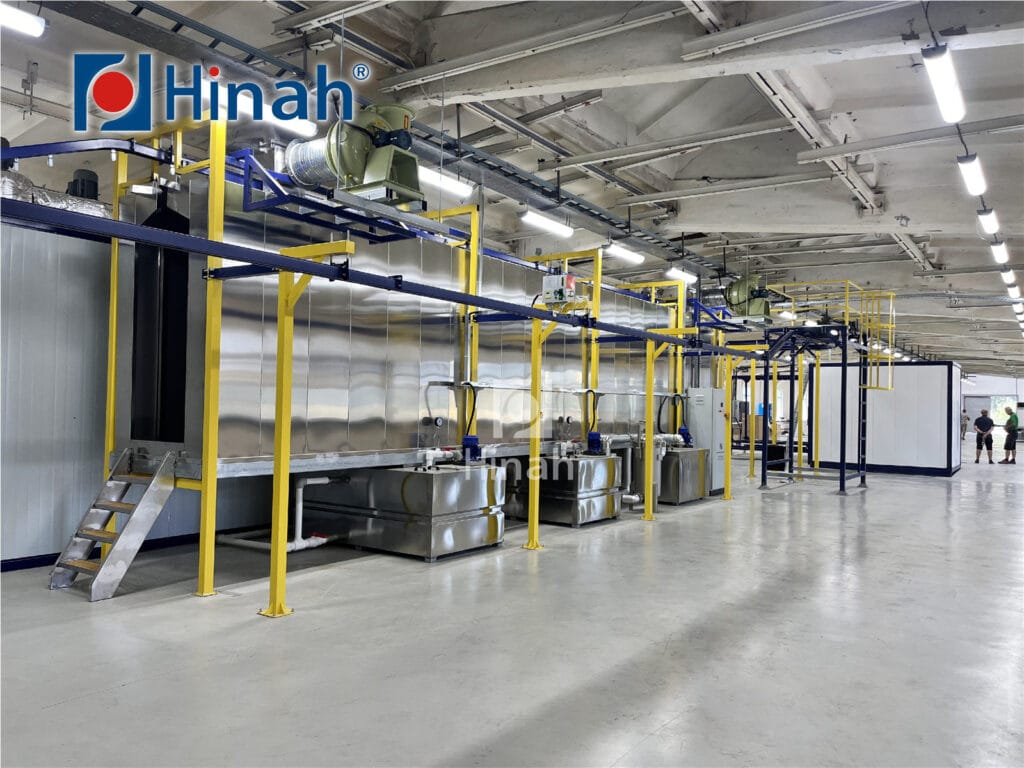
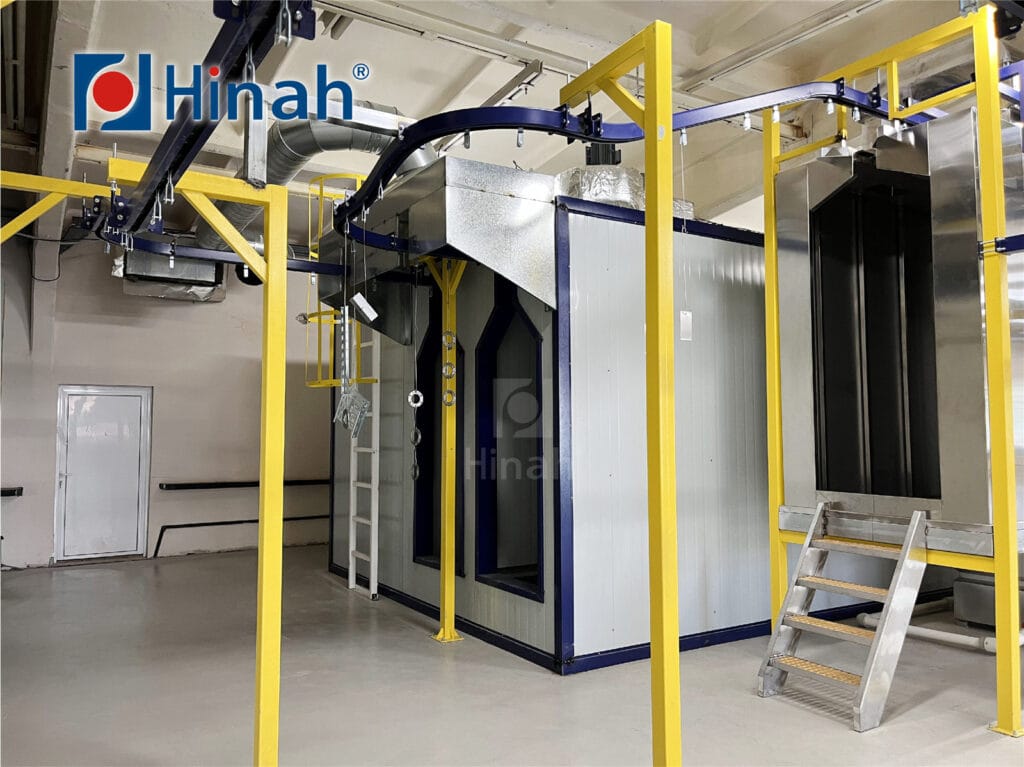
Engineering a Compact Powder Coating Booth Station
The spray zone is the heart of your powder coating line, but it can quickly become congested. You have to fit the booth structure, the powder application guns, the recovery equipment, and clear workspace for your operators into a single tight area. If you use an inefficient powder recovery design, your filtration equipment alone can take up more space than the actual spray booth.
To save space at this stage, you must look for integrated equipment designs that pull the filtration systems directly into or under the booth structure, rather than placing them out on the workshop floor.
Integrated Cyclone Recovery Systems
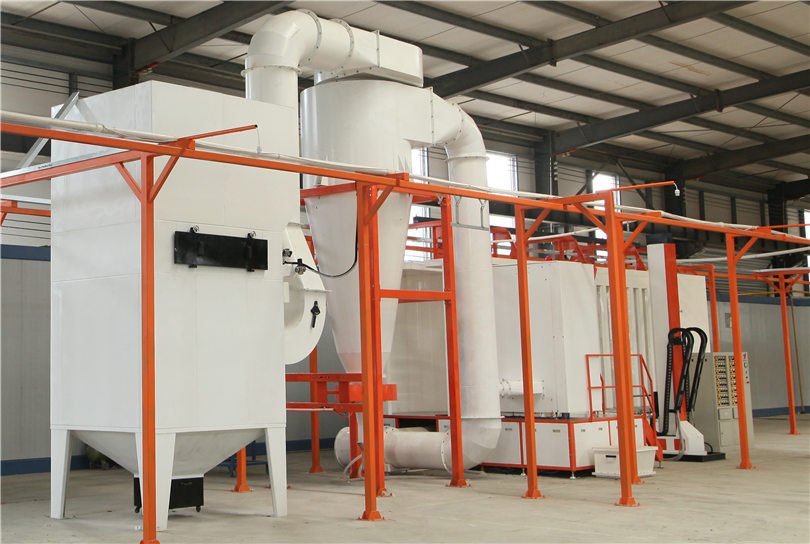
In high-volume lines where color changes happen often, a cyclone system is essential for reclaiming overspray powder. Traditional cyclone setups use large, external ductwork that connects to a massive baghouse filter standing several meters away from the booth. This layout destroys your open floor space.
Modern, compact multi-cyclone modules fix this problem. Engineers design these newer systems to mount directly to the side of the spray booth base. The air and powder travel a very short distance through compact, internal channels. By eliminating long runs of external ductwork and integrating the final cartridge filters right into the cyclone module frame, you save critical square meters of aisle space around the powder coating line.
Back-to-Back Manual Booths
If your production requires operators to coat complex parts manually from both sides, a single standard booth forces you to build long open platforms on both the left and right sides of the conveyor track.
A smarter spatial solution is a back-to-back staggered manual booth design. In this configuration, the conveyor track runs through two smaller, interconnected booth chambers. The first operator sprays the left side of the part in chamber A, and as the conveyor moves the part forward a couple of meters, a second operator sprays the right side in chamber B from the opposite side of the line. This staggered setup lets you use narrower walkways and optimizes operator ergonomics without widening the footprint of the entire station.
Automated Reciprocator Positioning
When you deploy automatic spray guns mounted on vertical reciprocators (moving mechanical columns), you must calculate their stroke movement carefully. If you install traditional stationary reciprocator bases, you have to leave permanent, wide clearance zones behind the machines so maintenance teams can service them.
Instead, use reciprocators mounted on compact, heavy-duty floor tracks. During normal production, the machines lock closely into position right against the spray booth wall, taking up minimal floor space. When your team needs to clean the spray guns or service the motors, they simply slide the reciprocator backward along the track into a temporary maintenance aisle. This gives you the best of both worlds: tight, space-saving operation during the day and easy maintenance access when you need it.