
Color changes are often the biggest bottleneck on the shop floor. When your automatic powder coating line stops just so operators can clean out the system, profitable production grinds to a halt.
The real struggle is balancing speed with perfection. No one wants cross-contamination or color specks on the final product, but spending 45 minutes to clean a single booth ruins your daily output. Here we will look at the actual engineering upgrades—from booth materials to smart recovery systems—that can safely cut your color-change time down to under five minutes.
Engineering the Powder Coating Booth: PVC Material vs. Traditional Steel
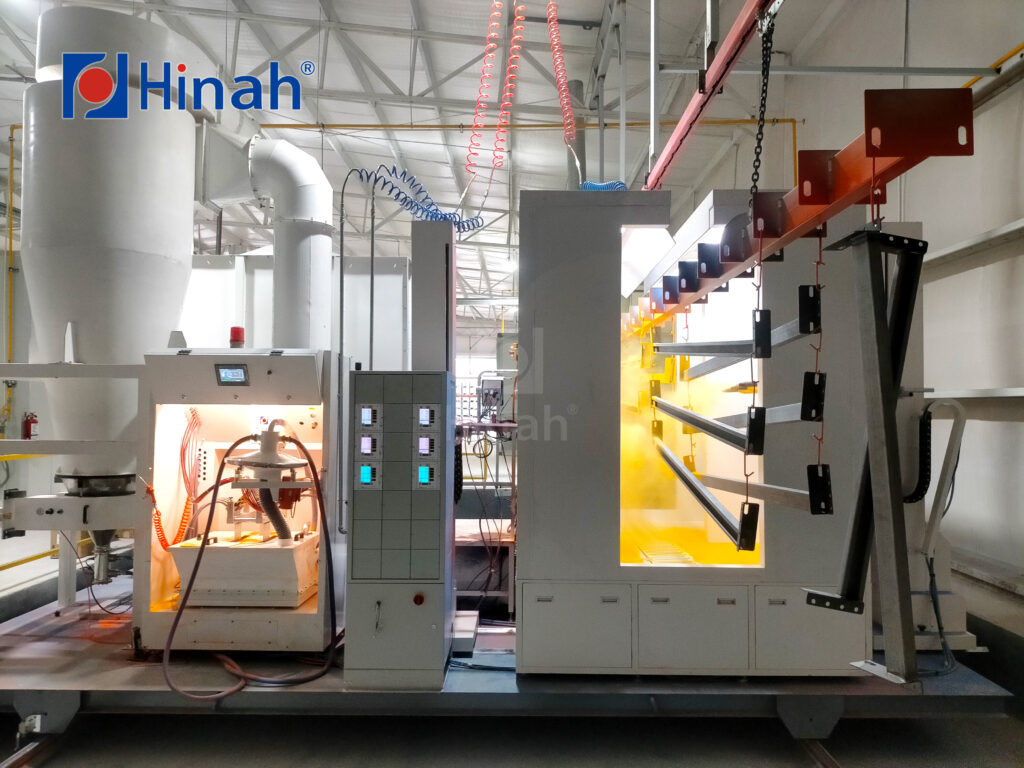
Traditional stainless steel booths attract powder. When the spray guns operate, static electricity makes the powder stick to the steel walls. Operators then have to spend a long time manually wiping or blowing down the interior during every color change.
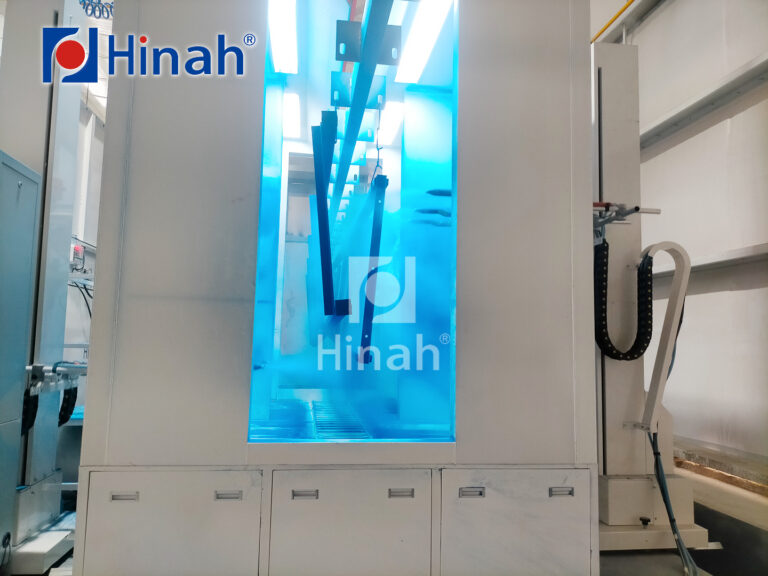
Switching to a non-conductive sandwich PVC booth changes everything. PVC naturally repels powder particles instead of attracting them. This electrostatic repulsion keeps the booth walls remarkably clean during production.
Booth geometry and airflow also play a huge role. Modern automatic powder coating lines use curved booth corners to eliminate sharp pockets where powder can hide. At the same time, a constant downdraft airflow system continuously pulls loose powder toward the floor. This self-cleaning action ensures that minimal powder remains inside the booth when the batch ends, reducing manual squeegee work to a bare minimum.
Advanced Powder Recovery in Automatic Powder Coating Line
An efficient recovery system must separate powder quickly and clean itself automatically. If your recovery system clogs or requires manual vacuuming between colors, your line stays down too long.
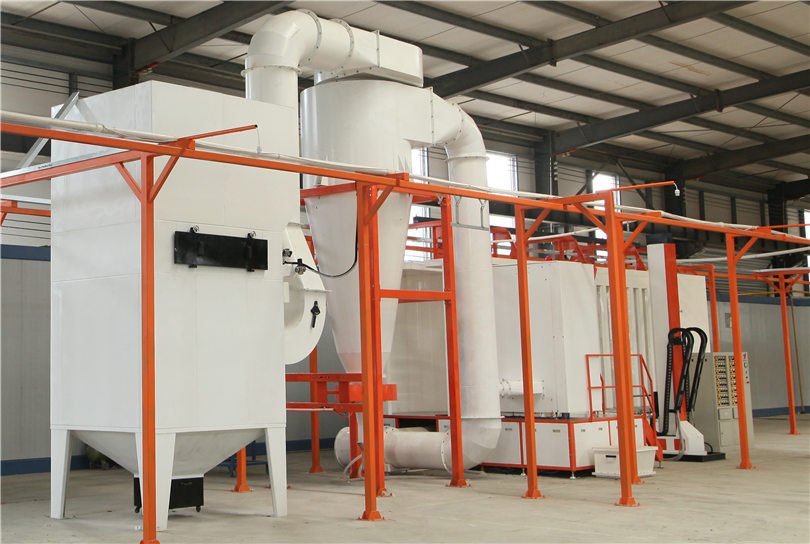
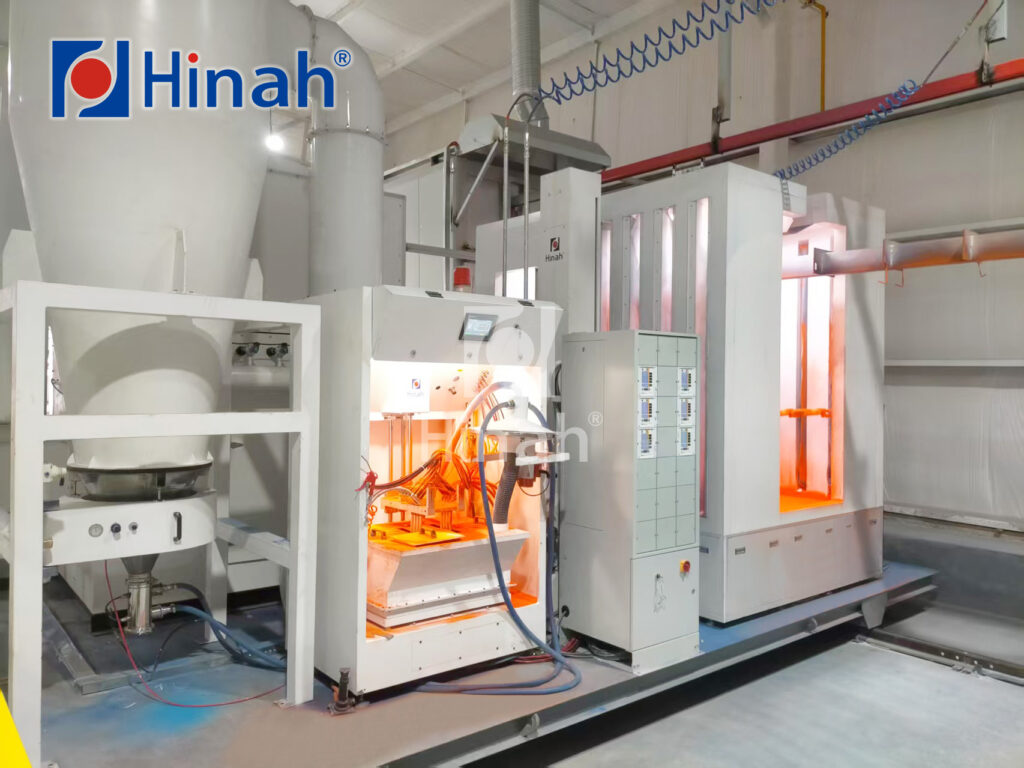
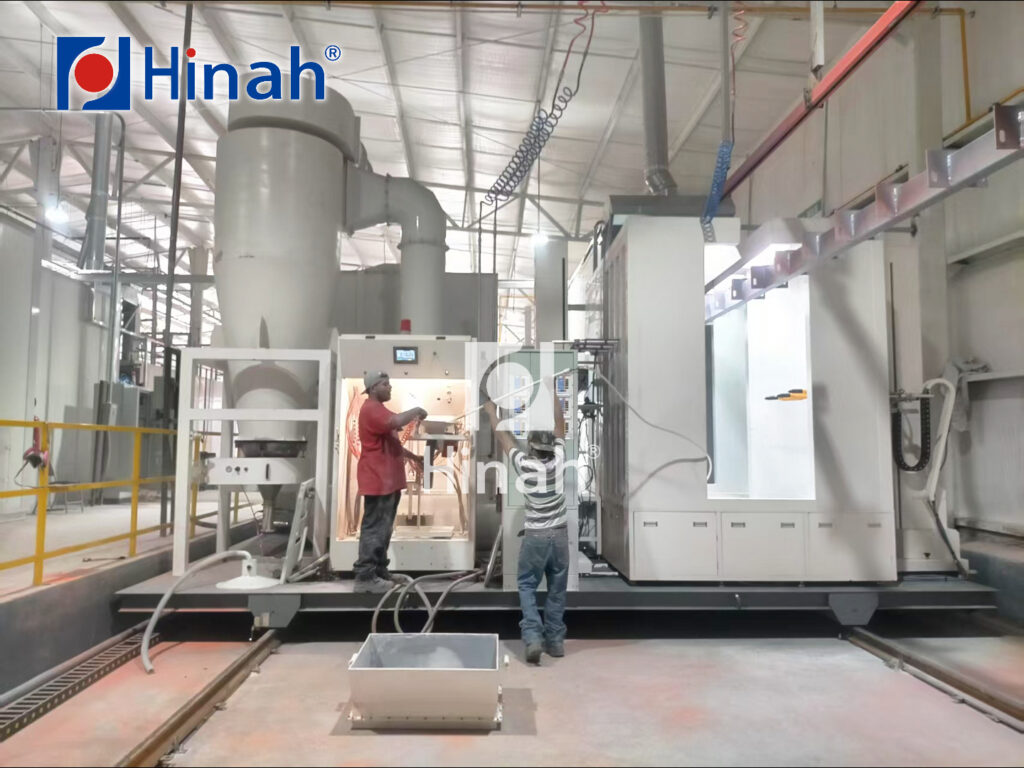
The large-cyclone separator is the heart of a fast-change automatic powder coating line. It uses high-speed centrifugal force to spin the powder out of the airflow. This process achieves a separation efficiency of over 95%. The powder drops straight into a collection hopper, while the clean air moves toward the final filters. Because powder does not stick to the smooth inner walls of the cyclone, you do not need to clean it manually between color runs.
The rest of the recovery loop relies on automated maintenance. High-pressure air valves deliver reverse pulse-jets to clean the secondary filter cartridges instantly. This action knocks away any migrating particles without operator intervention. Finally, automated pinch valves manage the path from the fluidizing powder center to the guns. This sealed, automated loop prevents cross-contamination and moves the powder efficiently without manual handling.
Automated Gun Maintenance and Feed Center Optimization
Even if the booth is clean, leftover powder inside the spray guns and hoses will ruin the next batch. Cleaning these internal components manually takes too much time and leaves room for human error.
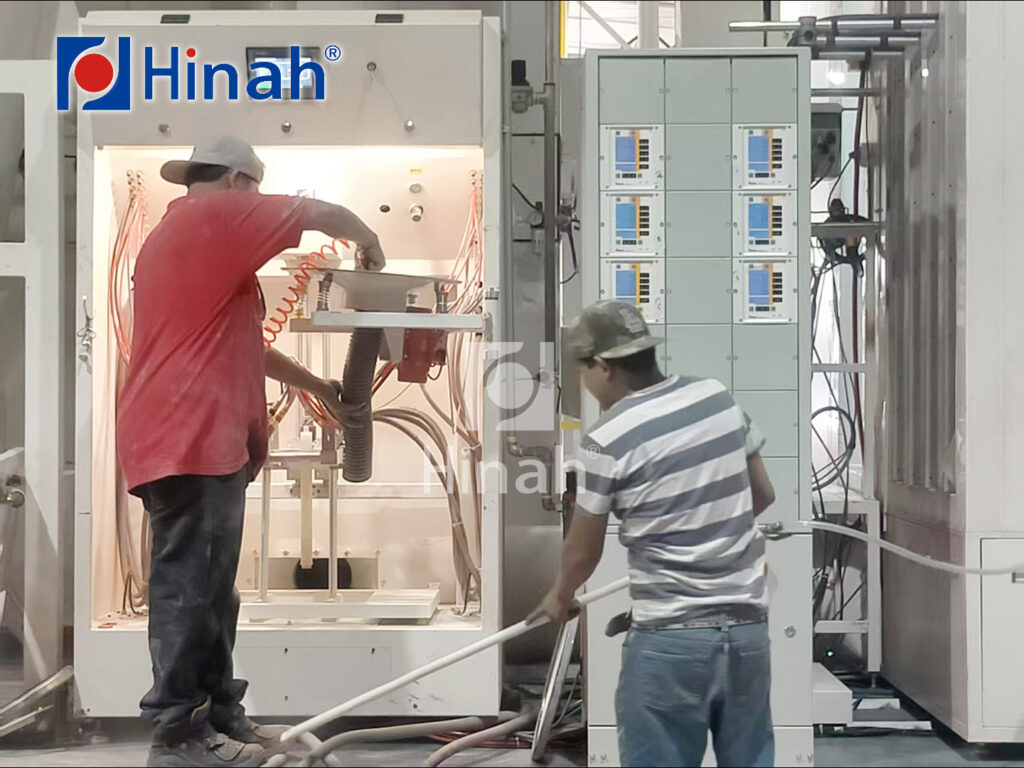
Modern automatic powder coating lines solve this issue with automated internal air purging. The system triggers a high-pressure air blast that sweeps through the gun barrel, powder hose, and nozzle. This intense air wash clears out all remaining powder particles in less than 30 seconds, leaving the internal pathways completely clean for the next color.
To speed up the process further, operators use multi-hose quick-disconnect coupling plates. Instead of unscrewing individual lines, a worker can switch an entire block of powder hoses in one simple movement.
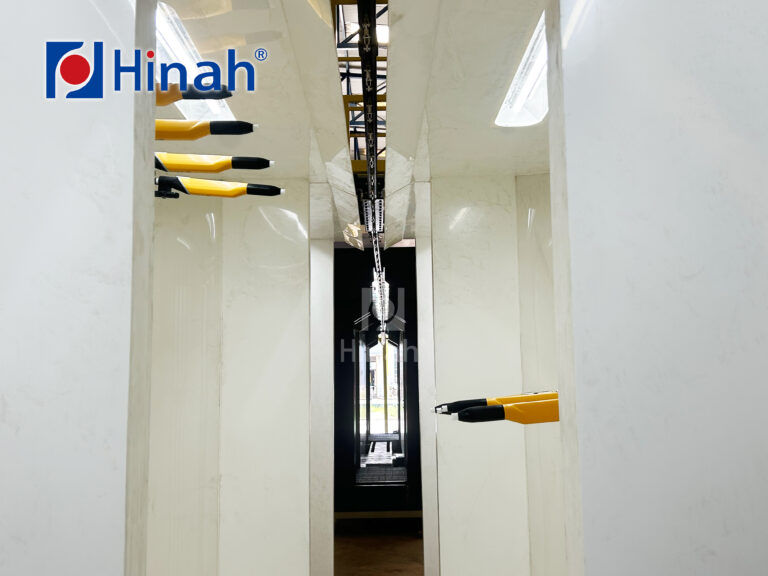
Finally, the smart positioning system automates the movement of the equipment itself. When a color run ends, the reciprocators or robotic axes automatically park the spray guns at a dedicated cleaning station. This allows the automated system to clean the guns thoroughly while operators safely prepare the next batch of powder at the feed center.