
Every bump, every sudden stop, every tiny jerk along a power & free coating line affects production—sometimes in ways you don’t even notice. Behind the scenes, shock absorbers quietly soften these impacts, keeping trolleys gliding smoothly and protecting both your line and the coating quality. Despite their small size, their design can make or break the efficiency of the entire system. Let’s take a closer look at why these unassuming components deserve more attention than they usually get.
What is a Shock Absorber?
A shock absorber in a power & free coating line may seem like a small, simple part, but it plays a crucial role. Installed along the overhead track, its main job is to absorb the sudden forces generated when trolleys start, stop, or change direction. Without it, carriers would collide harshly with stops, causing wear on both the equipment and the coating itself.
There are several types of shock absorbers used in these lines, including hydraulic, pneumatic, and mechanical designs. Each type works differently, but the goal is the same: reduce impact energy, protect the line, and maintain smooth, continuous movement. Choosing the right shock absorber for your line is not just about fitting a component—it’s about ensuring the entire coating process runs efficiently and reliably.
Why Does Power & Free Coating Line Need Shock Absorber?
The design of a shock absorber can make a noticeable difference in how a power & free coating line performs. A poorly designed or improperly selected shock absorber can lead to jerky trolley movements, increased wear on carriers, and even disruptions in the coating process. Over time, these small shocks add up, slowing production and increasing maintenance costs.
On the other hand, a well-designed shock absorber ensures that trolleys decelerate smoothly, minimizing stress on both the line and the coating material. This not only extends the life of the equipment but also helps maintain consistent coating quality—especially on delicate or precision parts. In short, paying attention to shock absorber design is not just a matter of engineering detail; it directly affects efficiency, reliability, and product quality.
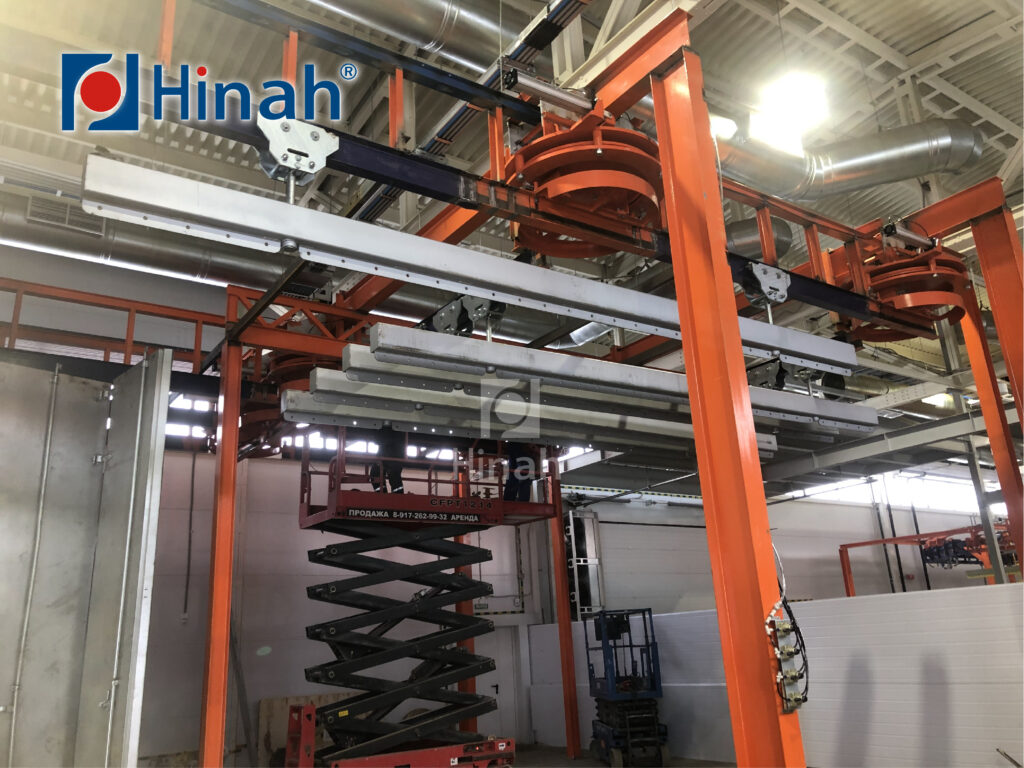
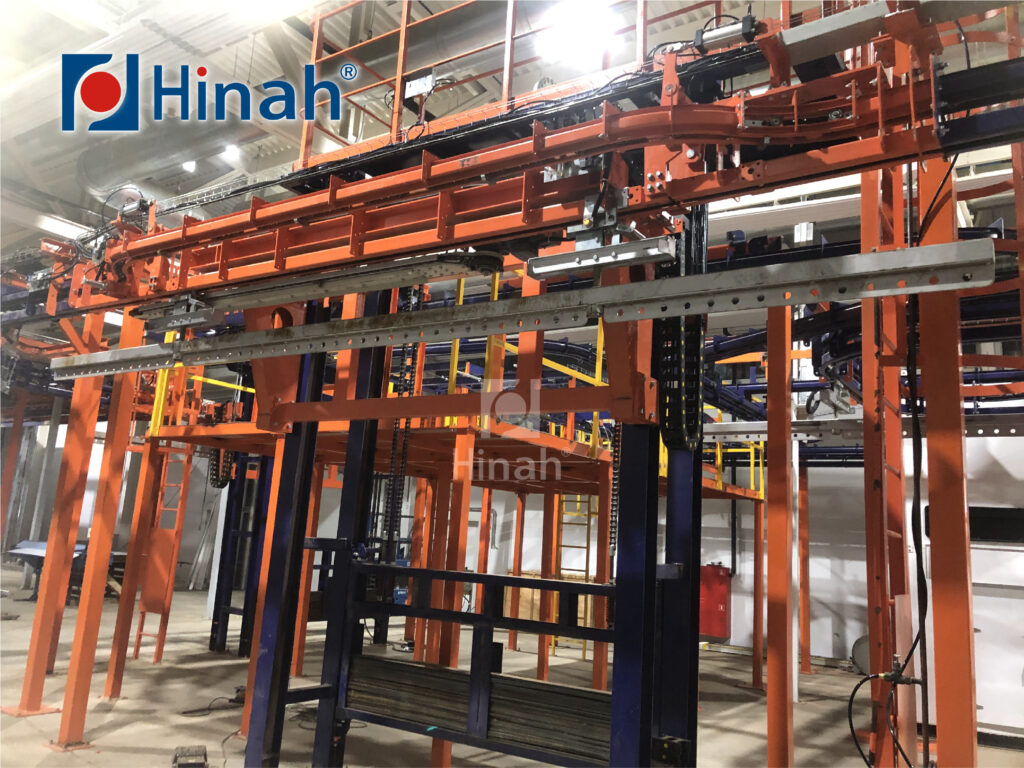
Key Shock Absorber Design Considerations for Power & Free Coating Line
Designing or selecting the right shock absorber is crucial for the smooth operation of a power & free coating line. A small misstep in this component can lead to jerky trolley movements, increased wear, and even coating defects. To ensure optimal performance, focus on these three key considerations:
- Material and Durability
The material of the shock absorber determines how well it withstands repeated impacts. High-quality materials can endure constant stress without degrading, protecting both the trolleys and the track. Using low-grade materials may lead to premature wear, frequent maintenance, and unexpected downtime.
- Absorption Capacity and Travel Distance
A shock absorber must match the mass and speed of the trolleys in your line. Proper absorption capacity ensures that deceleration is smooth, preventing shocks from transferring excessive force to the carriers or track. The travel distance—the distance over which the absorber cushions the impact—also affects overall line stability and coating quality.
- Installation and Maintenance
Even the best-designed shock absorber will underperform if installed incorrectly or neglected. Proper alignment, regular inspection, lubrication, and timely replacement are essential to maintain smooth movement and prevent line disruptions.
By carefully addressing these three factors, a shock absorber becomes more than a simple component—it ensures stable, reliable, and high-quality operation throughout your power & free coating line.