
In a powder coating line, the conveyor is one of those components everyone relies on—but rarely pays enough attention to. It runs quietly in the background, carrying every part through pretreatment, spraying, and curing. But when something goes wrong, it doesn’t start with a dramatic failure. It starts with small signs: a speed change you barely notice, an unusual sound, a momentary stop that feels harmless. These red flags often appear long before real damage shows up. And if they’re ignored, they slowly chip away at your coating quality, production rhythm, and costs.
Irregular Powder Coating Conveyor Speed Affecting Consistency
A stable conveyor speed is the foundation of predictable coating results. When the speed begins to fluctuate—even slightly—it changes the exposure time inside the spray booth. Parts may move too fast for complete coverage or too slow, causing heavy, uneven film build. These inconsistencies usually show up as rework, wasted powder, or a sudden spike in rejected pieces.
What makes this issue tricky is that it often doesn’t look serious at first. Operators may assume it’s a minor mechanical hiccup or a temporary load variation. But unstable speed usually points to deeper problems: motor fatigue, worn drive components, poor calibration, or an overloaded conveyor structure. If these early signs aren’t addressed, the entire line loses rhythm, and coating quality becomes increasingly difficult to control.
Frequent Downtime or Sudden Stops During Production
When a powder coating conveyor starts stopping without warning, it disrupts far more than the flow of parts—it breaks the entire rhythm of the finishing line. Each stop allows powder to settle unevenly, cools parts prematurely, and forces operators to restart processes that should be continuous. These interruptions often stem from worn bearings, insufficient lubrication, weak drive motors, or neglected maintenance routines. While each stop may seem like a small event, they compound quickly, reducing output and accelerating wear on critical components. If these sudden pauses become routine, it’s a clear sign the conveyor is heading toward a major failure.
Excessive Chain Wear or Abnormal Noise
Unusual sounds—rattling, grinding, clicking—are often the conveyor’s first cry for help. Excessive chain wear creates friction and instability, putting stress on every moving component and increasing the chances of chain breakage. Once the chain begins to wear, the conveyor loses alignment, parts may shake or vibrate, and the load distribution becomes uneven. These issues don’t just threaten safety; they gradually reduce coating precision by introducing micro-movements that affect film uniformity. Ignoring this noise means allowing minor wear to escalate into costly downtime and emergency repairs.
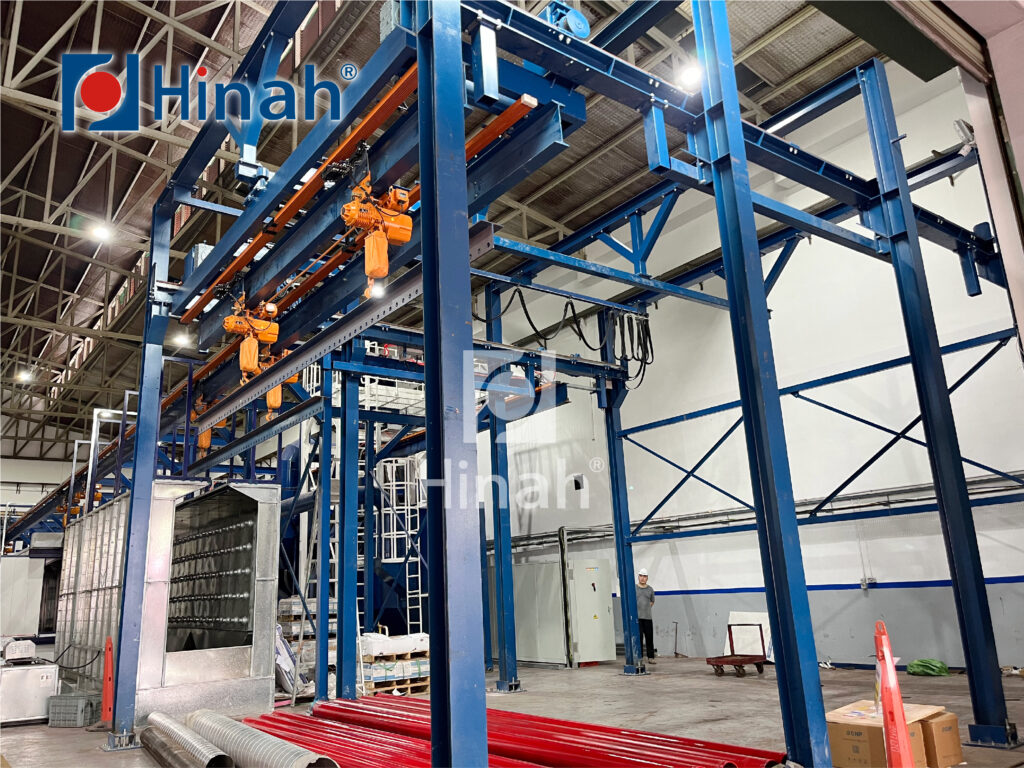
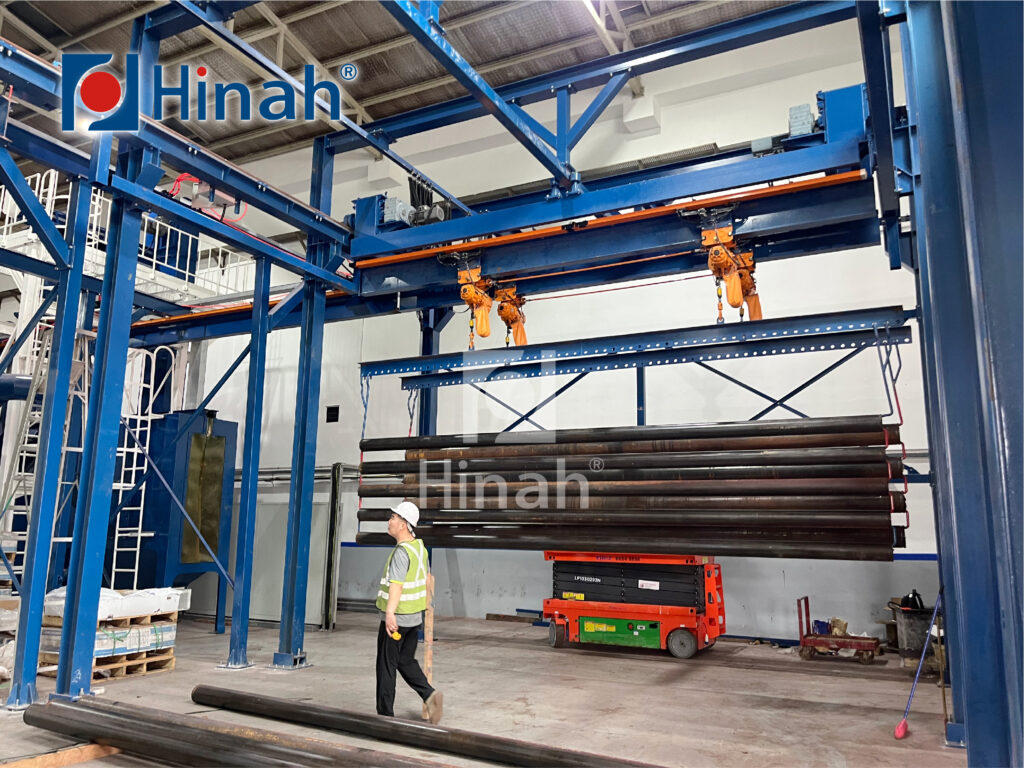
Part Instability Caused by Powder Coating Conveyor Overload
When a powder coating conveyor struggles with load capacity, parts begin to move in ways they shouldn’t—swinging, tilting, or bumping into each other as they travel through the line. Even small movements can disrupt the spray pattern, leading to thin spots, heavy edges, or unexpected contamination. These stability problems often stem from outdated hanger design, uneven weight distribution, or a conveyor system that simply isn’t built for the production volume it now handles. If parts aren’t moving smoothly and consistently, coating quality becomes unpredictable, and every pass through the booth carries the risk of a defect.
Poor Integration With Other Powder Coating Equipment
A powder coating conveyor doesn’t operate on its own—it sets the pace for the entire line. When the conveyor isn’t properly matched with the pretreatment sequence, spray booth layout, curing oven length, or automation speed, the whole system begins to fight against itself. Parts may arrive too quickly for the sprayers to respond, or too slowly for the oven to maintain the right thermal profile. These mismatches create bottlenecks that operators try to solve manually, leading to inconsistent quality and unnecessary downtime.
In many finishing lines, the conveyor becomes the weakest link simply because each section of equipment was installed or upgraded at different times. As production needs grow, the conveyor struggles to keep up with the newer components around it. This lack of synchronization results in uneven loading, wasted energy, and coating defects that appear random—but are actually symptoms of poor integration.
Fixing this issue rarely requires replacing the entire system. Often, a careful reevaluation of line speed, part spacing, and equipment coordination is enough to restore harmony. When the powder coating conveyor and the rest of the line move together as a single unit, efficiency increases immediately and coating quality becomes far more consistent.