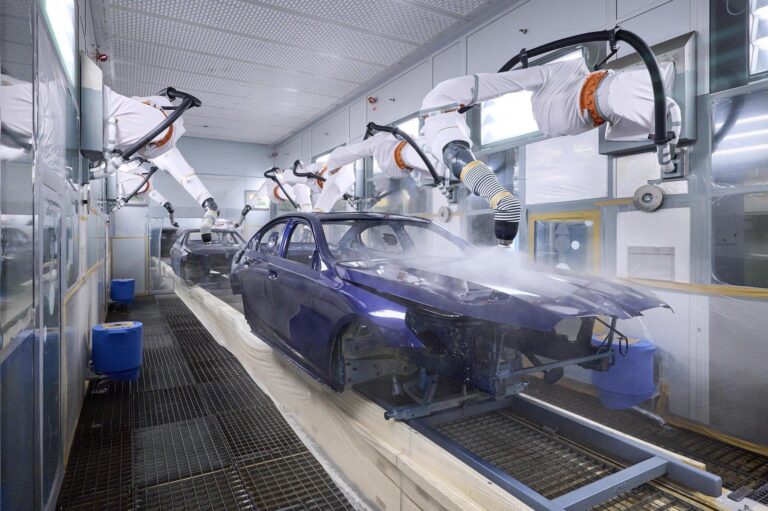

In many automated paint line projects, the conveyor is treated as a supporting component—something that simply moves parts from one station to the next. In reality, it is the element that quietly defines whether the entire line runs smoothly or struggles every day.
When coating quality fluctuates, takt time becomes unstable, or production never reaches its designed capacity, the root cause is often traced back to conveyor design. Speed variation, loading imbalance, or layout constraints may seem minor at first, but over time they shape the behavior of the whole automated paint line.
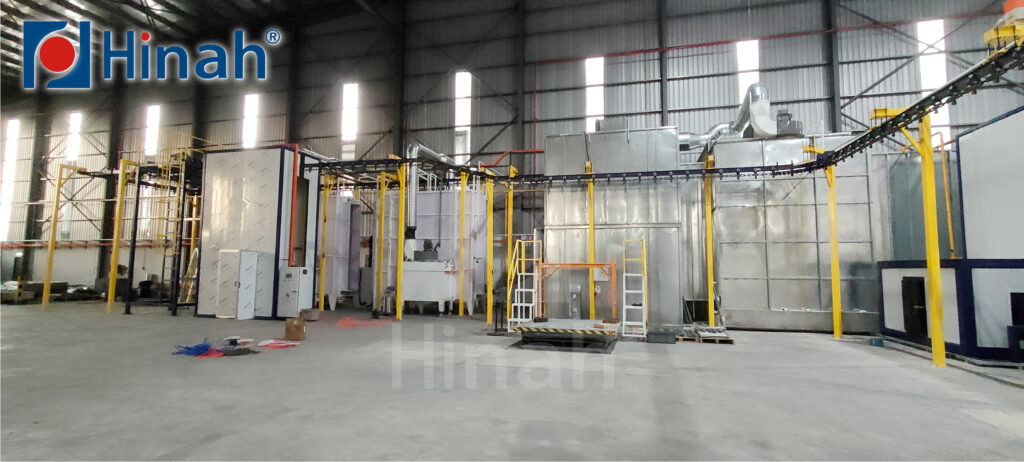
What Conveyor Design Really Means for an Automated Paint Line
In an automated paint line, every process depends on timing. Pretreatment, spraying, flash-off, and curing may be separate stages, but they are all bound together by the conveyor. Once the conveyor rhythm is set, the rest of the line is forced to follow.
Many production issues begin when the conveyor is designed only to meet basic transport requirements. If its speed range is too narrow, its structure too rigid, or its layout planned without considering downstream processes, the automated paint line quickly loses flexibility. What looks acceptable on drawings becomes a limitation once real production starts.
The conveyor also determines how tolerant the line is to variation. Differences in part size, weight, or hanging position are inevitable in daily operation. A well-planned conveyor absorbs these variations and keeps the process stable. A poorly planned one amplifies them, turning small inconsistencies into visible coating defects or throughput losses.
This is why conveyor design should not be treated as a mechanical detail at the end of a project. It is the structural foundation of the automated paint line—one that defines how smoothly all other systems can perform under real production conditions.
The Impact of Conveyor Speed on Process Balance
Conveyor speed is often defined early in the project—sometimes even before the coating process is fully understood. Once fixed, it becomes a constraint that every other system must adapt to, whether it is suitable or not.
Problems arise when conveyor speed is treated as a simple productivity lever. Increasing speed may raise theoretical output, but it also shortens spray time, reduces flash-off margins, and narrows the window for stable curing. When these processes fall out of balance, the line may continue running, but quality begins to drift.
Speed stability is just as critical as speed itself. Even small fluctuations in conveyor motion can translate into uneven film build, inconsistent overlap, or temperature variations in the oven. These issues rarely appear dramatic in isolation, yet over time they accumulate, quietly undermining the consistency of the automated paint line.
A well-matched conveyor speed does not push individual processes to their limits. Instead, it creates a stable rhythm that allows each stage to operate within a controlled and repeatable range. This balance is often the difference between a line that looks efficient on paper and one that performs reliably in daily production.
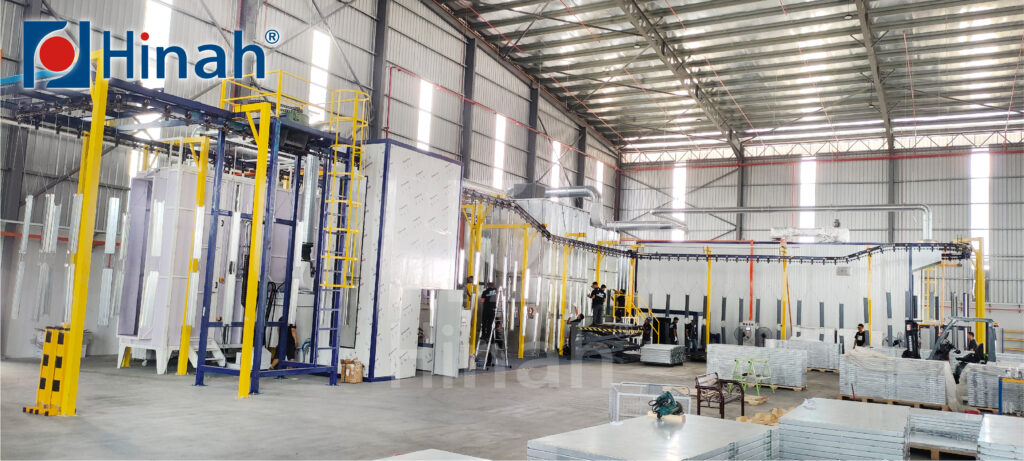
Load Capacity and Hanging Density Challenges in Automated Paint Line Conveyors
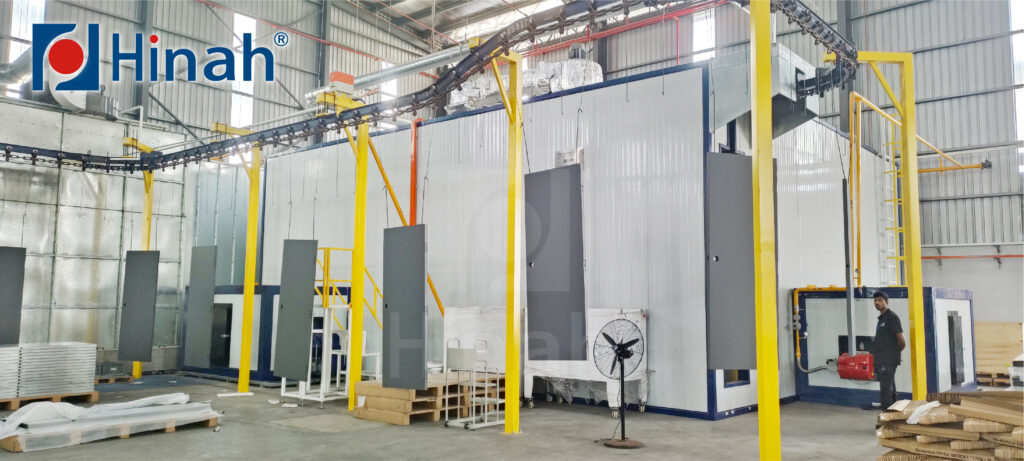
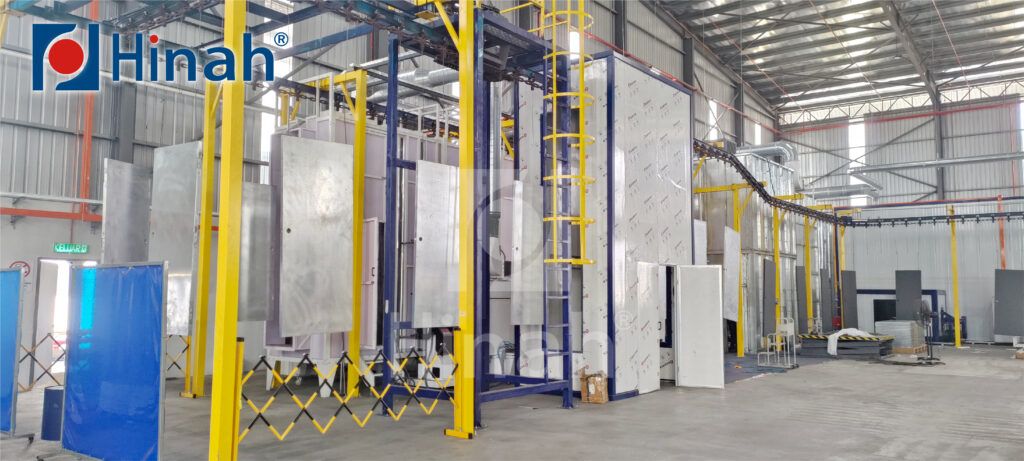
In any automated paint line, conveyors are expected to carry parts of varying weights and sizes while maintaining smooth motion, yet real production rarely matches initial design assumptions. When load capacity is stretched or hanging density is too high, subtle issues begin to appear: minor vibrations, tracking deviations, and uneven airflow can quietly undermine coating quality. Overcrowded fixtures interfere with spray patterns and stress the conveyor structure, while insufficient load tolerance limits flexibility for mixed-product runs. In a well-designed automated paint line, the conveyor accommodates these variations, ensuring consistent operation and stable finishes without constant adjustment, proving that mechanical planning is as critical to performance as the coating process itself.