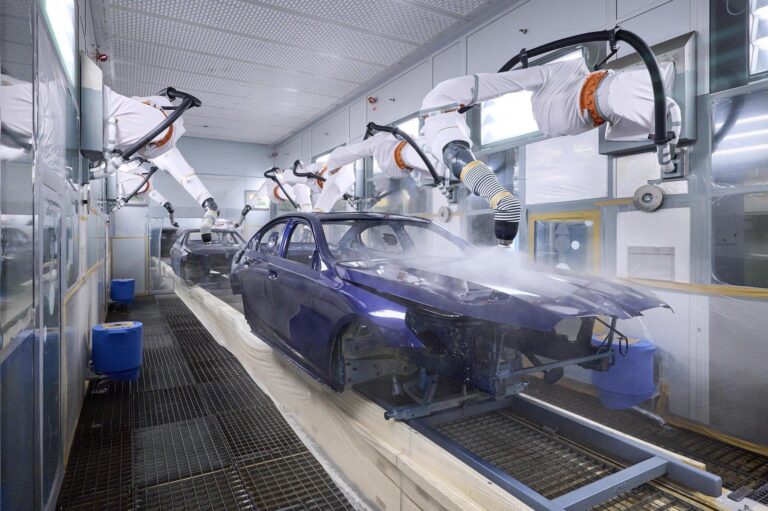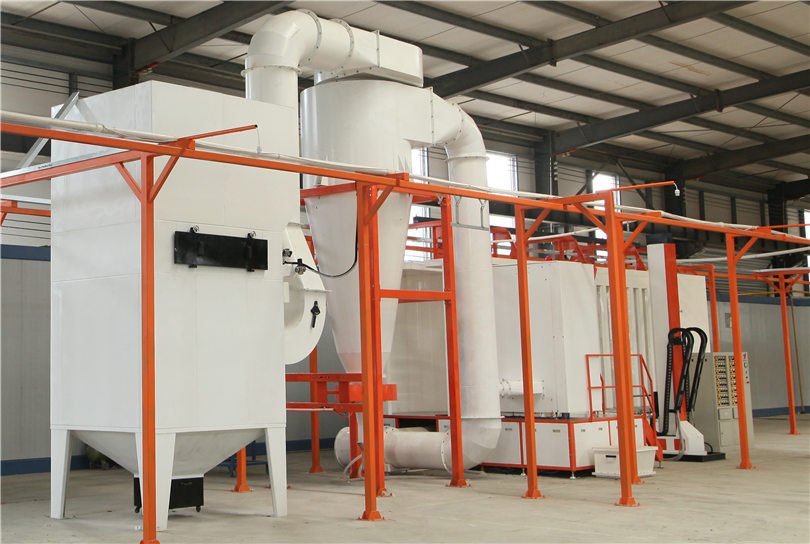

In high-output powder coating operations, dust is rarely just a housekeeping issue. As production speeds increase and coating lines become more automated, uncontrolled powder overspray begins to affect coating quality, airflow stability, and even long-term equipment reliability. Many workshops discover that traditional filter-based solutions struggle to keep pace under continuous operation. This is where large cyclone powder coating booth enters the discussion—not as a simple dust collector, but as an engineered system designed to control airflow, stabilize recovery, and bring predictability back to the coating process.
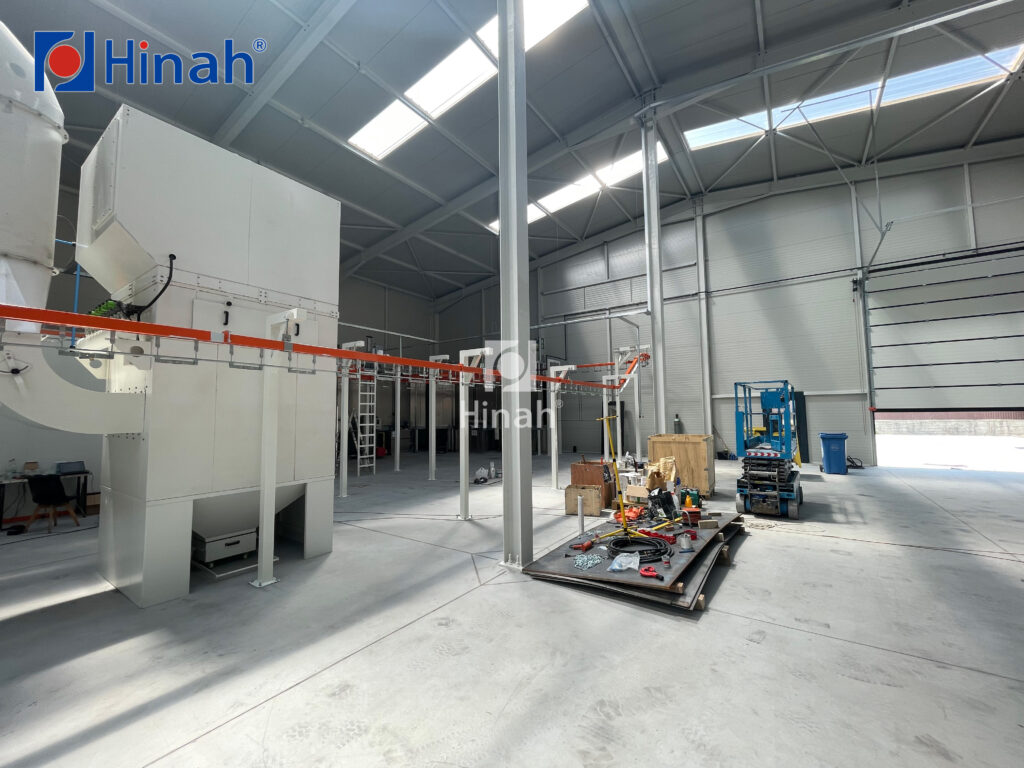
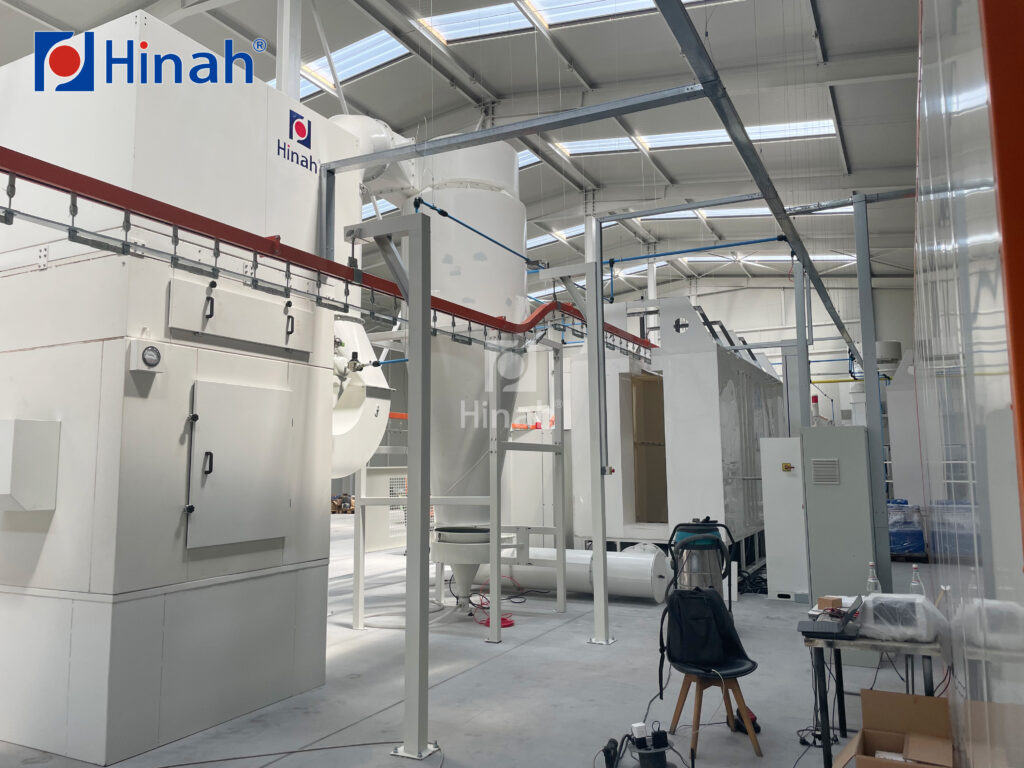
Working Principle of a Large Cyclone Powder Coating Booth
At the core of a large cyclone powder coating system is a simple physical concept: separating solid particles from air by centrifugal force rather than filtration. When powder-laden exhaust air enters the cyclone chamber at high velocity, it is forced into a controlled rotational motion. Heavier powder particles are driven outward toward the cyclone wall, where they lose momentum and fall into the recovery section under gravity, while cleaned air exits through the central outlet.
What determines real-world separation performance is not the presence of rotation alone, but how consistently that rotational airflow is maintained. Cyclone diameter, cone angle, and inlet geometry all influence the balance between air velocity and residence time. If air moves too slowly, fine powder remains suspended; if it moves too fast, turbulence increases and recovery efficiency becomes unstable. Effective cyclone design therefore focuses on maintaining a narrow, predictable operating window rather than maximizing airflow volume.
Another critical factor is particle size distribution. Large cyclone systems perform best when handling continuous, high-volume overspray with relatively uniform powder characteristics. Instead of trapping particles on filter media, the system allows powder to be recovered without mechanical barriers, reducing pressure loss and eliminating the gradual performance degradation common in filter-based designs. As a result, separation efficiency remains more stable during long production cycles, even as powder load fluctuates.
Airflow Engineering Inside a Large Cyclone Powder Coating Room
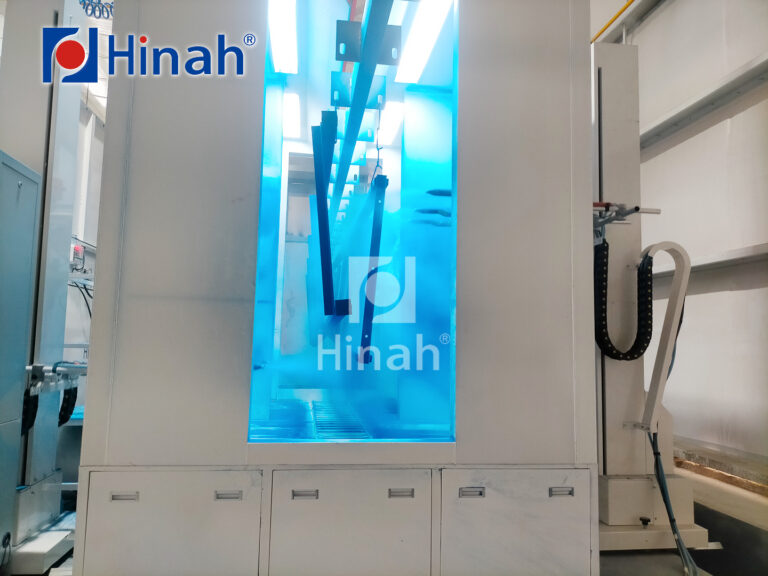
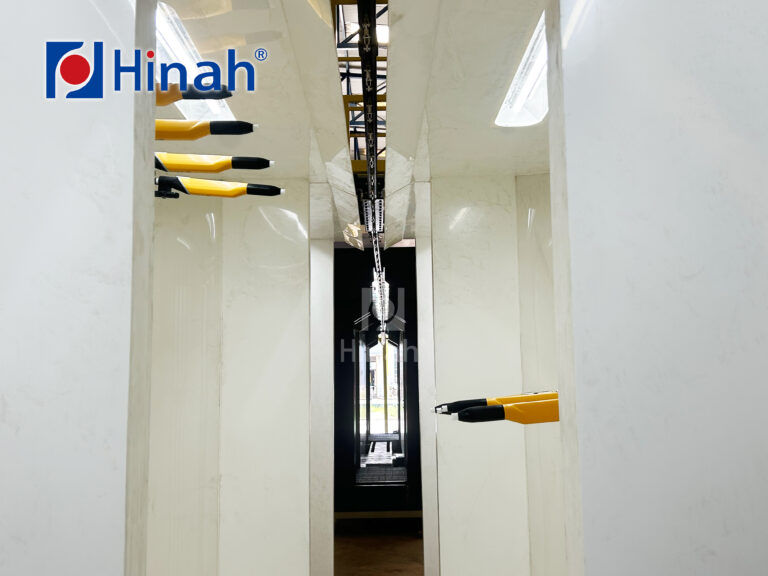
In a large cyclone powder coating booth, airflow is not simply about moving air out of the enclosure—it is about controlling how powder behaves at every stage of the spraying process. The entire system operates under carefully managed negative pressure, ensuring that overspray is consistently drawn away from the workpiece without disturbing the powder cloud formed by the spray guns.
One of the key design challenges is achieving uniform air velocity across the booth opening. If airflow is uneven, certain zones may experience weak powder capture, allowing dust to escape into the workshop, while other areas suffer from excessive air speed that disrupts coating transfer efficiency. Well-designed booths distribute airflow in a way that gently guides overspray toward the exhaust path, rather than pulling it aggressively from a single point.
Turbulence control is equally critical. Sharp transitions, poorly positioned duct inlets, or mismatched airflow volumes can create unstable vortices inside the booth. These turbulent zones may re-suspend already separated powder, reducing recovery efficiency and increasing dust accumulation on booth surfaces. Large cyclone systems rely on smooth airflow paths and gradual pressure changes to keep powder movement predictable and repeatable.
Another often overlooked factor is the balance between exhaust volume and powder spray output. As production speed increases or additional spray guns are introduced, airflow demand changes accordingly. Without proper coordination, even a large cyclone system can become overloaded, leading to fluctuating pressure and inconsistent dust control. This is why airflow engineering must be treated as a dynamic system parameter rather than a fixed design value.
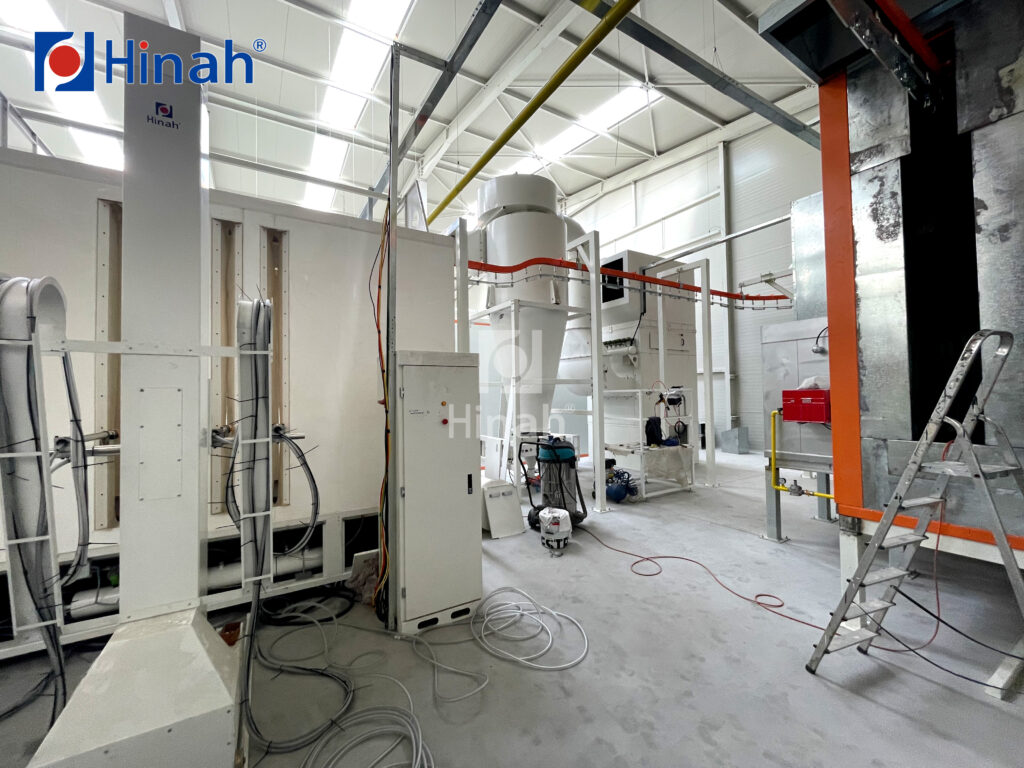
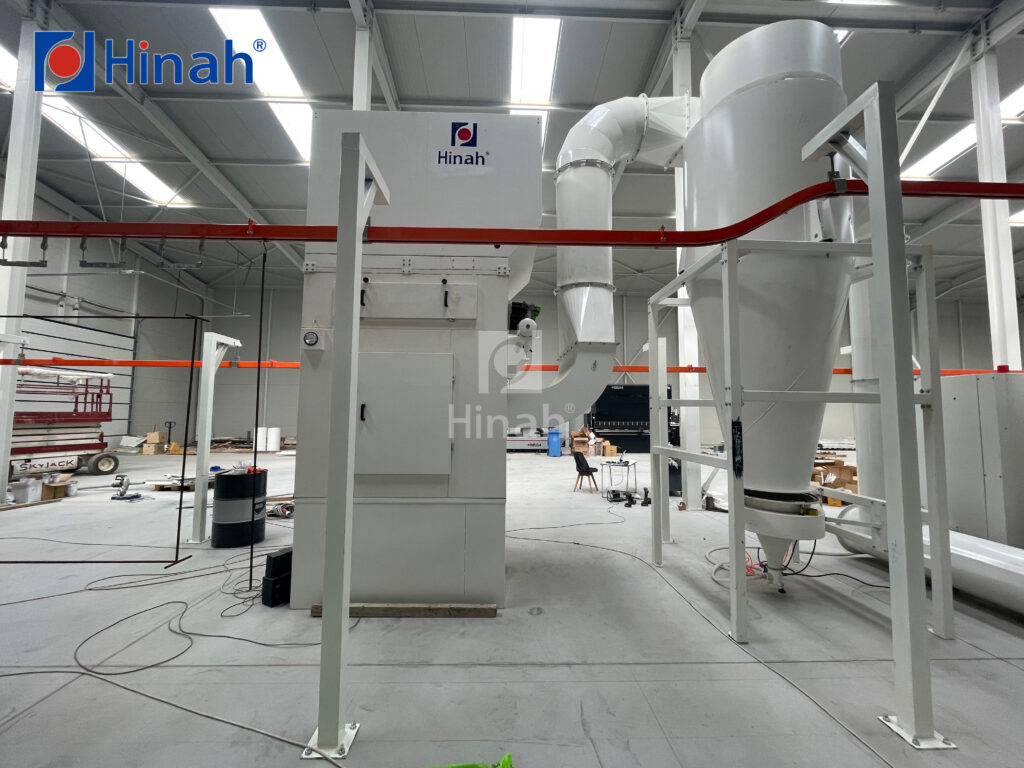
Powder Recovery Performance and System Efficiency
In a large cyclone system, powder recovery performance is defined by consistency rather than peak efficiency. While recovery rates are often used as a reference, stable behavior under continuous production is the more meaningful indicator of system quality.
Airflow velocity must remain within a controlled range. Excessive air speed increases turbulence inside the cyclone, reducing separation efficiency, while insufficient airflow allows fine powder to escape with the exhaust air. Effective designs balance capture strength and separation stability without relying on excessive energy input.
By operating without filter media, cyclone-based recovery maintains relatively constant system resistance over time. In a well-engineered powder coating booth, this stability supports predictable airflow behavior, lower energy consumption, and reliable dust control throughout extended production cycles.