
Contamination causes most surface defects in the finishing industry. Dust, oil, or metal shavings fall onto parts and create bumps or craters. These flaws ruin the final finish. This leads to expensive rework and wastes your materials. In many cases, the transport system itself drops these impurities onto the product.
The powder coating conveyor often acts as the primary source of these rejects. A standard system moves parts efficiently but also sheds debris into the paint. Different designs handle this risk in different ways. Some setups keep the mechanical parts away from the product. Others use shields to catch falling waste. This guide compares conveyor options to help you keep your production line clean and reduce your reject rate.
Overhead Monorail Conveyors: The Challenge of Gravity
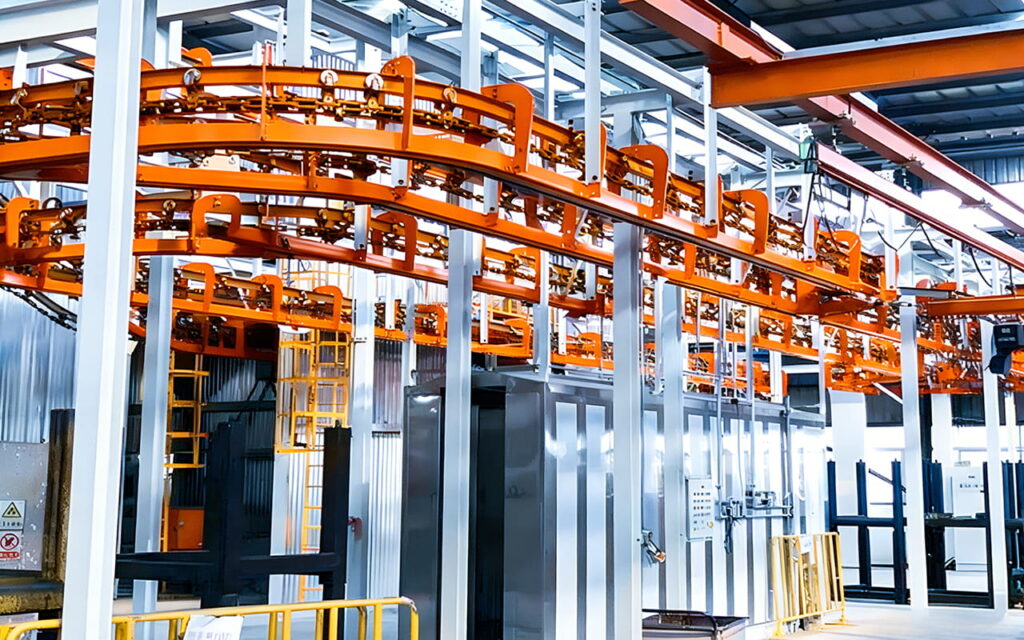
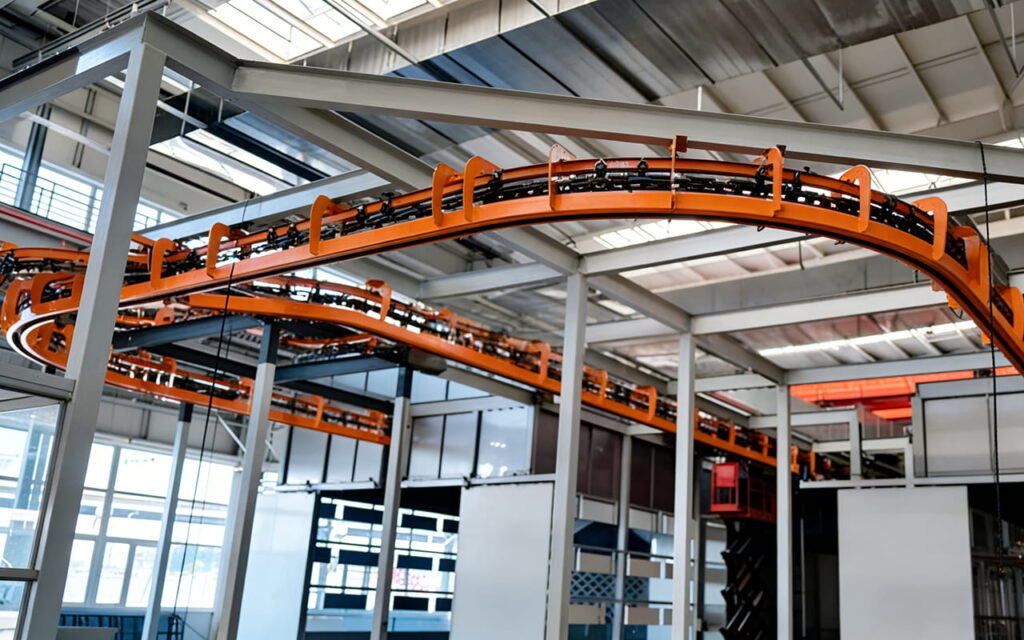
Overhead monorail systems are common because they save floor space. However, they pose a constant risk to the finish quality. These systems place the drive chain and track directly above the workpieces. As the chain moves, it creates friction. This friction generates tiny metal shavings and wear dust. Gravity then pulls these particles down onto the fresh powder before it enters the oven.
Oil and grease create even more trouble for a powder coating conveyor of this type. Chains require lubrication to run smoothly. Excess oil can drip from the overhead track and land on the parts. These drips cause “fish-eyes” and other craters in the coating.
Many plants try to solve these issues with drip trays. These trays catch some debris, but they also require frequent cleaning. If a tray fills up, the vibration of the line can still shake dust onto the products. Some engineers choose specialized dry lubricants or inverted designs to move the dirt source away from the spray zone.
Power&Free Powder Coating Conveyor: Precision and Isolation
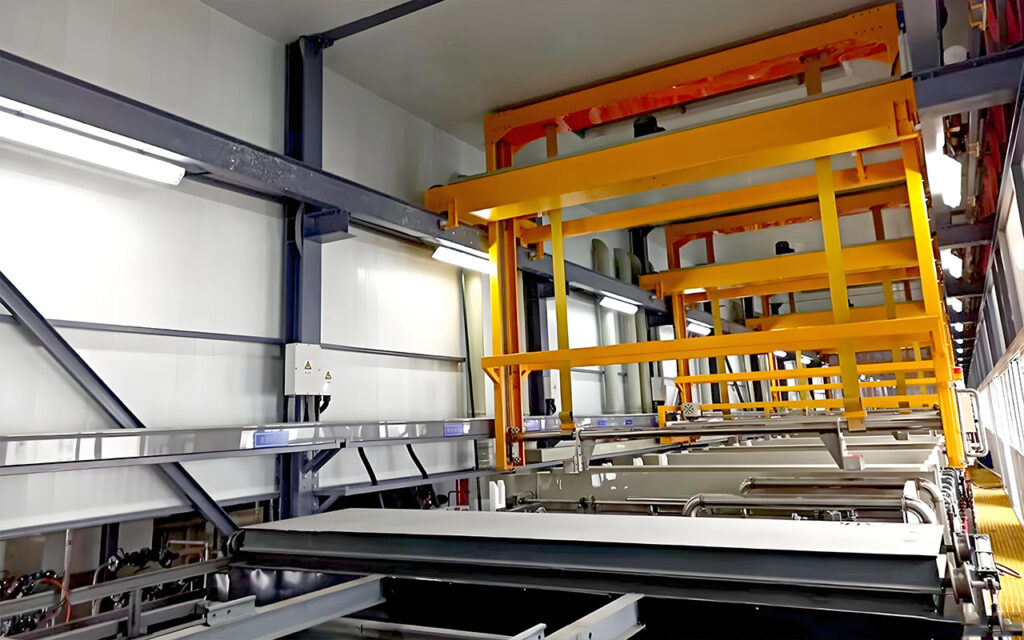
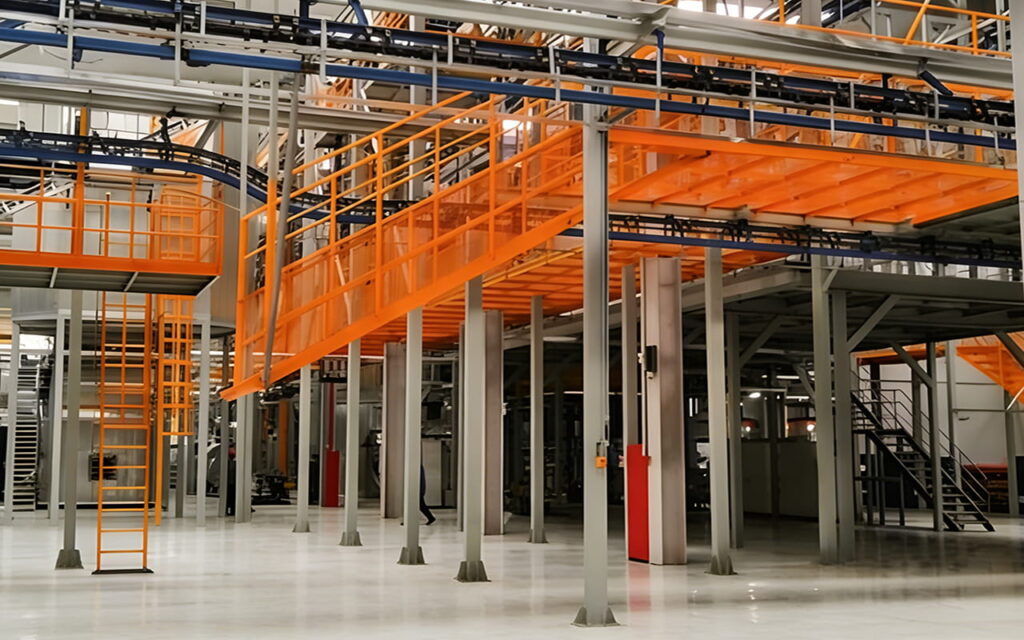
Power and free conveyor systems offer much more control than simple monorails. These systems use two separate tracks. The top track provides the “power” through a moving chain. The bottom track allows the “free” carriers to move independently. This design lets you stop a single carrier without stopping the entire line. This flexibility helps prevent parts from bumping into each other and creating friction dust.
A powder coating conveyor with this design also helps manage contamination through strategic buffering. You can move parts into a holding area between the wash station and the spray booth. This gap gives the parts more time to dry and prevents water or chemicals from reaching the coating zone. Since the carriers can disconnect from the power chain, the system reduces the constant vibration that often shakes debris loose.
Maintaining a clean environment is easier with this setup. You can program the system to bypass certain areas if a leak or mechanical issue occurs. Operators can also pull individual carriers off the line for deep cleaning without shutting down the whole factory. This level of isolation keeps the spray environment much cleaner than a continuous flow system.
Enclosed Track Conveyors: Shielding the Process
Enclosed track systems provide a physical barrier between the chain and the product. Unlike open rail designs, these systems house the moving chain inside a tubular or rectangular track. This track features a narrow slot at the bottom for the pendants. This design contains most of the wear dust and metal shavings inside the metal housing. It prevents particles from falling directly onto the parts.
A high-quality powder coating conveyor with an enclosed track also manages lubrication better. The track acts as a shield that keeps grease and oil away from the spray booth. Any excess lubricant stays within the track walls instead of dripping onto the workpiece. This significantly reduces the risk of chemical contamination and surface craters.
Cleaning and maintenance are also simpler with this configuration. Since the track is closed, outside dust from the factory floor cannot easily settle on the oily chain. This keeps the internal components cleaner for a longer time. It also prevents the chain from carrying floor dirt into the curing oven. Many manufacturers choose this option for high-precision jobs where even a small speck of dust can cause a reject.
Inverted Powder Coating Conveyor Systems: The Ultimate Cleanroom Solution
Inverted systems flip the traditional layout to protect the product. These systems place the conveyor track on the floor or a low pedestal instead of hanging it from the ceiling. This change puts the “dirt source” below the workpiece. Gravity now works in your favor. Any dust, metal shavings, or oil drips fall toward the floor rather than onto the fresh powder.
This layout makes the powder coating conveyor much easier to manage in a cleanroom environment. Since no moving parts sit above the spray zone, you eliminate the risk of overhead debris. You can achieve a “Class A” finish more consistently because the air above the parts remains clear. This setup is a favorite for automotive parts and high-end consumer electronics.
These systems also offer better stability for the workpieces. Floor-mounted tracks reduce the swaying and swinging often seen with overhead lines. Stable parts move through the spray booth with more precision. This leads to a more even coating thickness and less overspray waste. While these systems require more floor space, the reduction in rework costs often justifies the investment.
Key Features to Look for in a Low-Contamination Powder Coating Conveyor
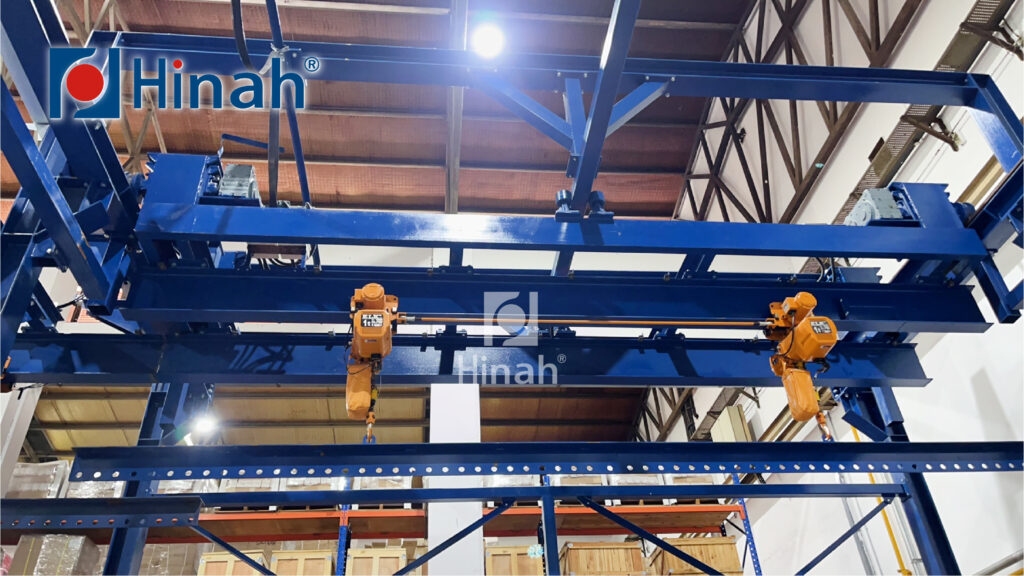
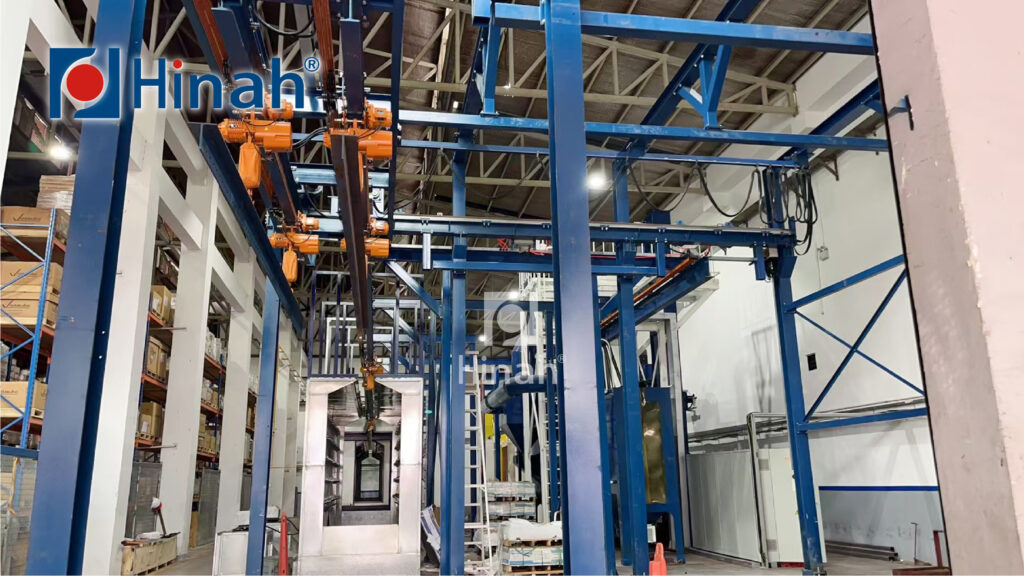
When you choose a system, focus on the mechanical details that control debris. A good powder coating conveyor should include automated cleaning tools. Brushes and blowers can remove dust from the chain before it enters the spray booth. You should also check the track material. Stainless steel tracks stay cleaner than carbon steel because they do not rust or flake over time.
Maintenance access is another critical factor. You need to reach the lubrication points easily without over-greasing the system. Modern designs use “smart” lubrication that applies tiny amounts of oil only where necessary. This prevents the excess buildup that eventually leads to drips and rejects.
The following table compares the contamination risks and typical performance of the systems discussed in this guide:
| Conveyor Type | Primary Contamination Risk | Mitigation Method | Cleanliness Rating |
| Overhead Monorail | Gravity-fed dust and oil drips | Drip trays and dry lubes | Fair |
| Power and Free | Friction dust from chain stops | Buffer zones and isolation | Good |
| Enclosed Track | Internal wear particles | Sealed housing design | Very Good |
| Inverted System | Floor dust (minimal) | Floor-mounted layout | Excellent |