
The industrial finishing sector is currently undergoing a fundamental shift, moving away from labor-intensive manual operations toward highly integrated, automated systems. We will examine the present landscape of the powder coating line market, focusing on how automation has evolved from a luxury for large-scale manufacturers to a survival necessity for enterprises of all sizes.
The analysis indicates that the integration of programmable logic and precision application technology has moved the needle significantly in three critical areas: operational throughput, material sustainability, and quality consistency. By auditing current production benchmarks, we have found that modern automated systems do not just speed up the process—they fundamentally redefine the economics of the powder coating line.
Current Market Landscape of Powder Coating Line
The global market for powder coating line is currently experiencing a period of robust expansion, driven by the industrial sector’s dual focus on environmental compliance and operational cost-cutting. As of 2026, the global coating equipment market has surpassed a valuation of USD 27 billion, with automated systems accounting for the vast majority of new capital investments.
Regional Adoption and Growth Drivers
While the Asia-Pacific region continues to hold the largest market share (approximately 38% in 2025) due to massive manufacturing hubs in China and India, North America has emerged as the fastest-growing market for high-tier automation. This shift is largely a strategic response to persistent labor shortages and the rising “nearshoring” trend, where companies are bringing production closer to home and relying on technology to offset higher domestic labor costs.
In the Middle East, the demand for sophisticated powder coating line is being fueled by large-scale infrastructure projects and a pivot toward local industrial diversification. Across all regions, the move away from liquid coatings to powder-based systems remains consistent, with electrostatic spray segments now projected to command over 92% of the global market by the end of 2026.
Benchmarking Manual vs. Automated Systems
To understand the current “impact” cited in this report, it is essential to quantify the performance gap between legacy manual setups and modern automated powder coating line configurations. The following table illustrates the typical operational gains observed in mid-to-heavy industrial applications.
| Performance Metric | Manual Coating Setup | Automated Powder Coating Line (2026 Standard) |
| Material Utilization Rate | 45% – 65% | 95% – 98% (with recovery systems) |
| First-Pass Quality (FPQ) | 75% – 85% | 97% – 99%+ |
| Labor Intensive Index | High (4-6 Operators/Shift) | Low (1-2 Technicians/Shift) |
| Color Change Speed | 30 – 60 Minutes | 5 – 15 Minutes (Fast-change booths) |
| Energy Consumption | Static / High Waste | Dynamic / Smart-modulated Curing |
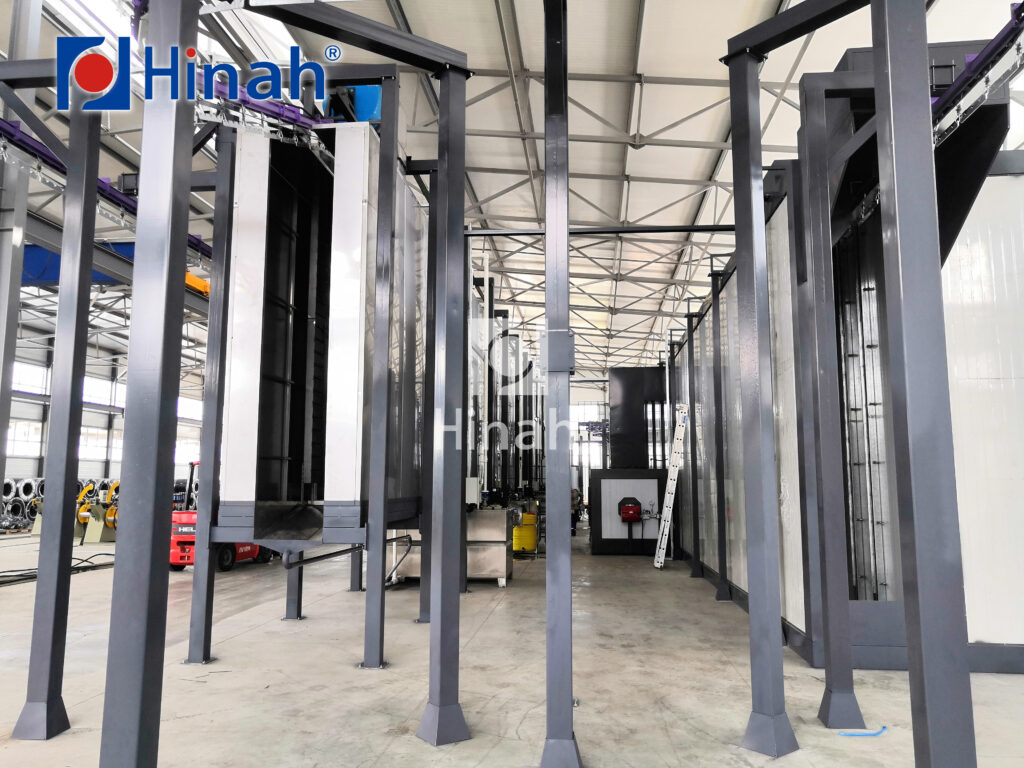
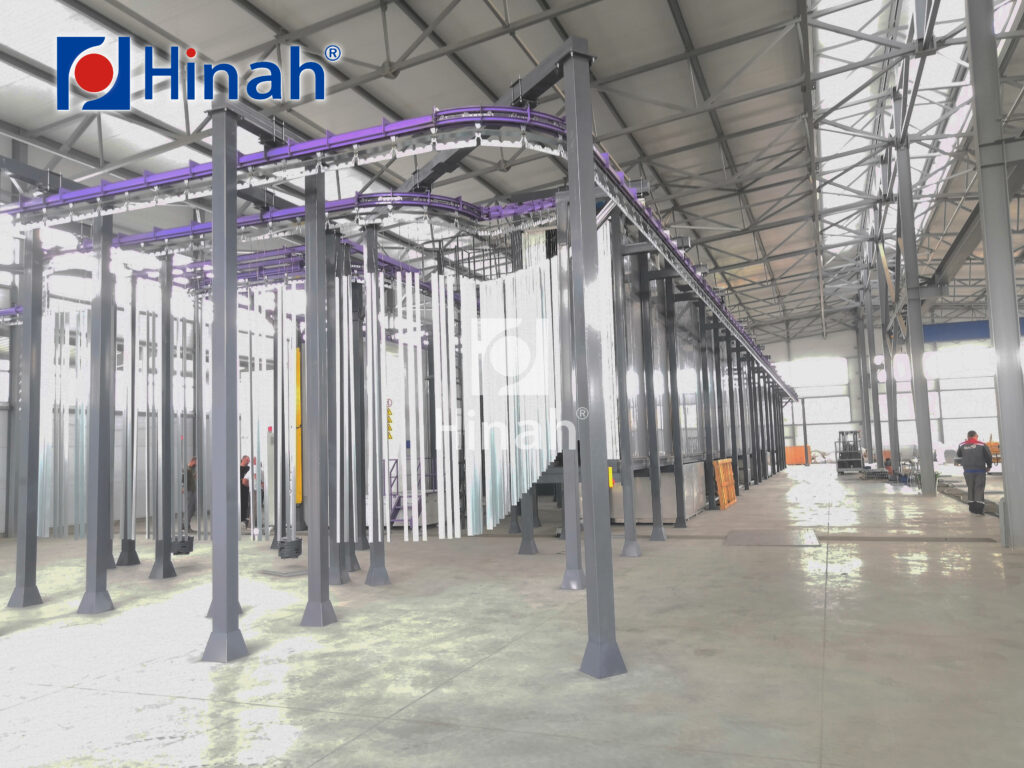
Core Technologies in Automated Powder Coating Line Systems
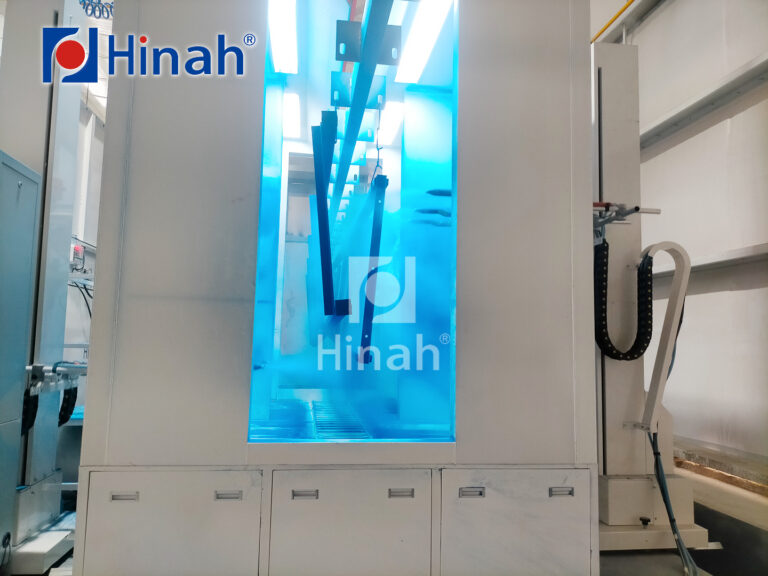
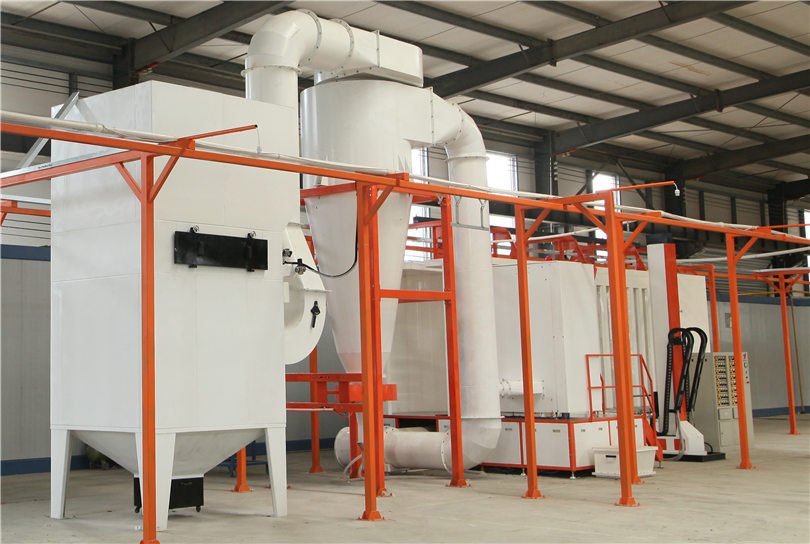
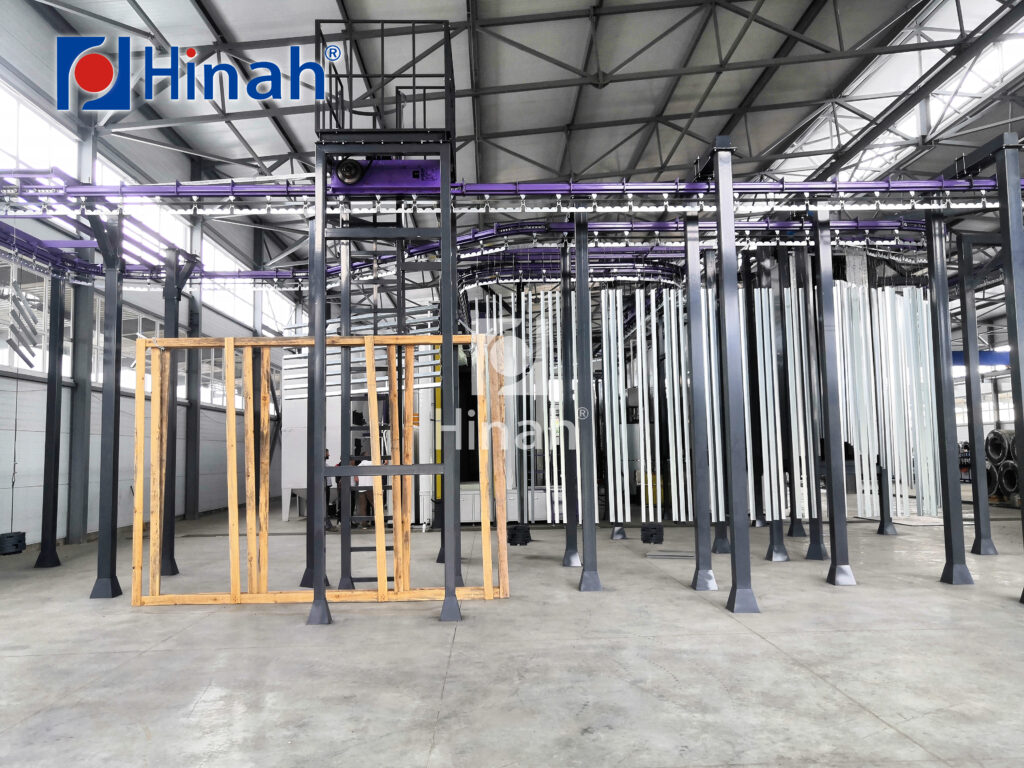
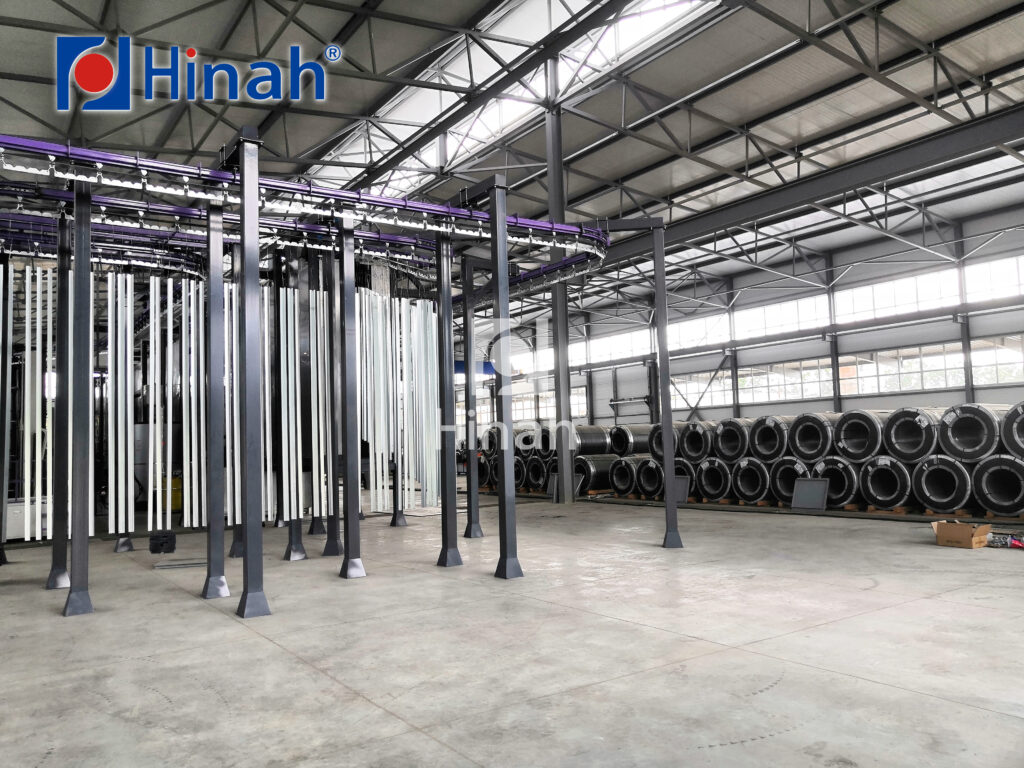
The transition to a fully automated powder coating line is defined by the integration of three critical technological pillars: intelligent control, precision application, and high-efficiency recovery. These systems work in concert to eliminate human error and ensure a level of repeatability that manual operations cannot achieve.
Intelligent Process Control: The PLC and IoT Backbone
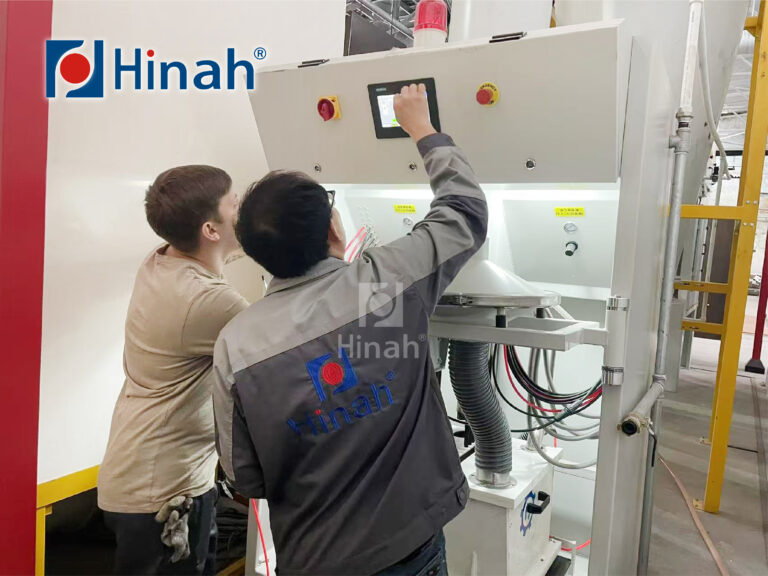
At the center of every modern powder coating line is a Programmable Logic Controller (PLC) integrated with a Human-Machine Interface (HMI). Unlike legacy systems, today’s controllers utilize “Part Recognition” technology. Using light curtains or 3D laser scanners at the entrance of the spray booth, the system detects the exact dimensions and geometry of the incoming workpiece.
- Dynamic Response: The PLC automatically adjusts the gun triggering, stroke length of the reciprocators, and voltage output in real-time.
- Data Logging: Every parameter, from conveyor speed to air pressure, is recorded, enabling predictive maintenance and comprehensive quality auditing.
Precision Application: Advanced Reciprocators and Robotics
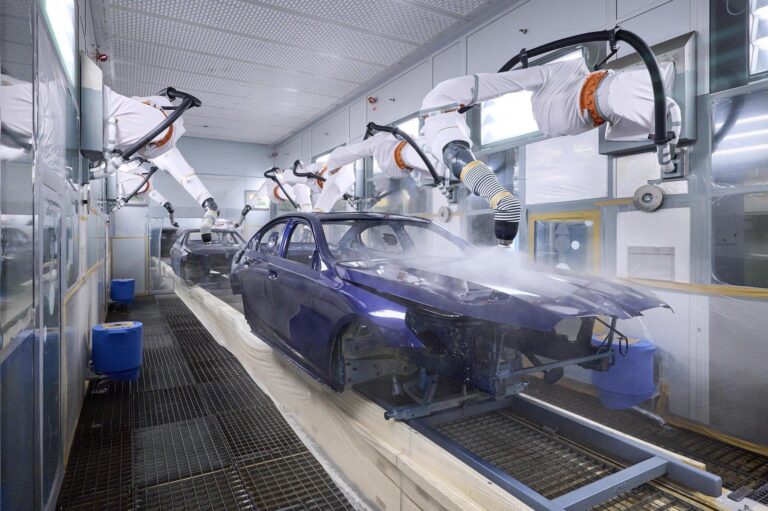
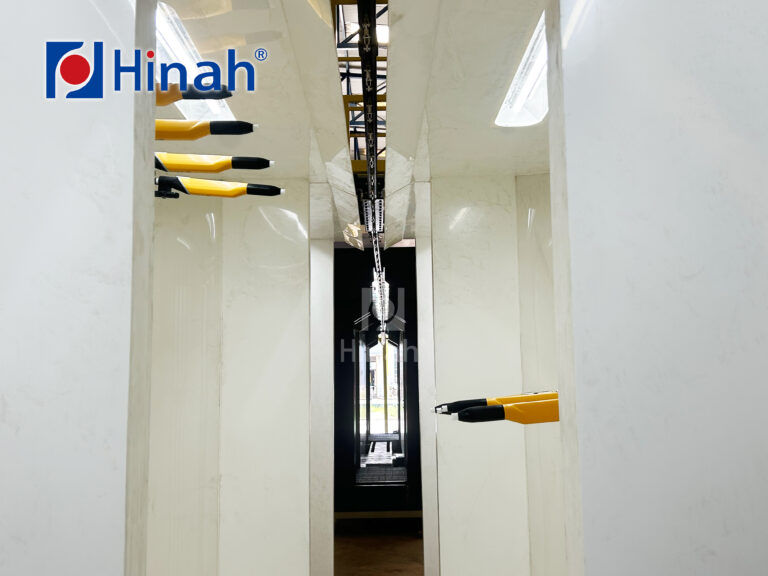
The mechanical execution within a powder coating line has evolved from simple up-and-down movement to multi-axis precision.
- Automated Reciprocators: Modern reciprocators offer variable stroke speeds and frequencies, allowing for uniform film thickness even on complex geometries.
- Faraday Cage Solution: Advanced gun controllers now feature “Corner Mode” or “Pulsed Power” settings. By rapidly modulating the electrostatic charge, these systems overcome the Faraday Cage effect, ensuring powder reaches recessed areas without excessive buildup on edges—a common failure point in manual coating.
Closed-Loop Powder Management and Recovery
Sustainability in a powder coating line is achieved through the “Closed-Loop” philosophy. The objective is to ensure that every gram of powder that does not adhere to the part is reclaimed and reused.
- Cyclone Separators: High-efficiency cyclones can recover up to 98% of oversprayed powder. The system centrifugally separates the reusable powder from the “fines” (micro-particles that affect finish quality).
- Automatic Sieve Systems: Reclaimed powder is automatically filtered through an ultrasonic sieve to remove contaminants before being pumped back into the fresh powder hopper. This ensures a consistent mix of virgin and reclaimed material, maintaining finish integrity without manual intervention.
Conclusion
The evolution of the powder coating line from manual oversight to intelligent automation represents a critical milestone in industrial finishing. As demonstrated, the integration of PLC-driven precision and closed-loop recovery systems has effectively neutralized the traditional trade-offs between speed and quality. For manufacturers navigating the complexities of 2026’s economic and environmental demands, transition to an automated framework is no longer an optional upgrade—it is the definitive standard for operational resilience and technical excellence in the modern era.