
Choosing a recovery system is one of the most important decisions when planning a powder coating booth. The recovery method affects color change, powder reuse, airflow, cleaning work, and overall booth performance.
For most powder coating operations, the choice comes down to two common options: cyclone recovery and cartridge filter recovery. Neither system is automatically better. The right choice depends on production volume, color changes, powder type, workpiece size, and how the coating line operates.
How Does a Powder Coating Booth Recovery System Work?
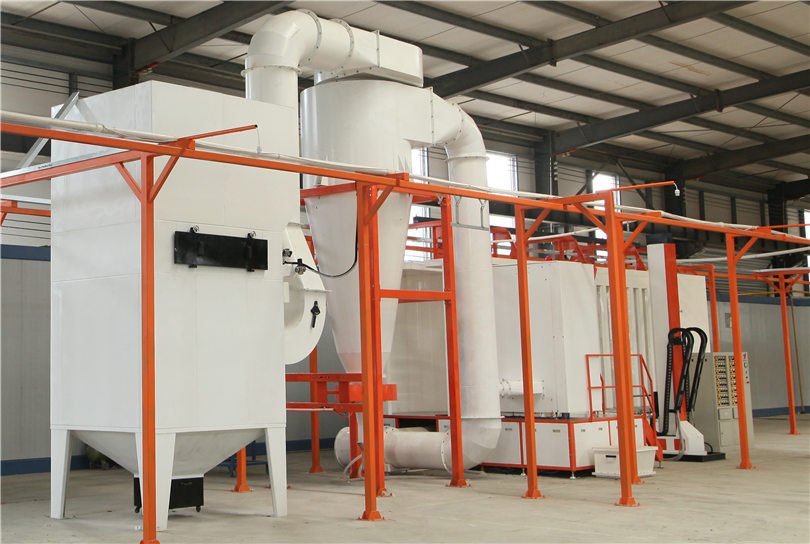
During spraying, not all powder reaches the workpiece. The overspray enters the booth and moves with the airflow toward the recovery system.
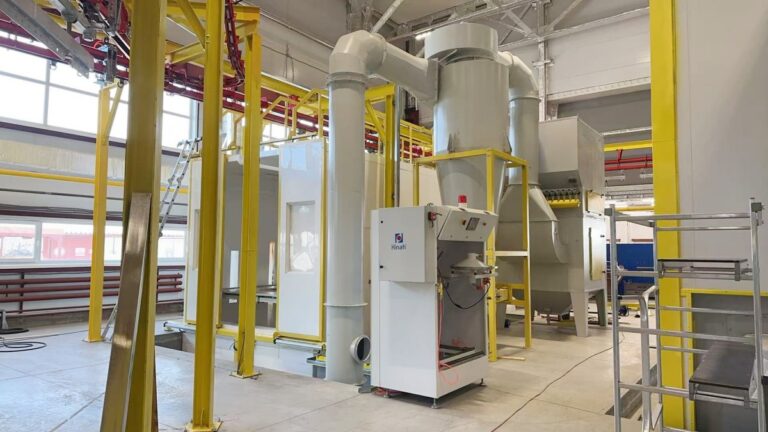
A cyclone system uses centrifugal force to separate powder from the air stream. Heavier powder particles move toward the cyclone wall and fall into a collection container. The cleaned air then continues through the exhaust and filtration stages.
A cartridge system uses filter elements to capture powder particles from the airflow. The filters retain the powder while air passes through them. A pulse-cleaning system periodically removes accumulated powder from the filter surface.
The two systems follow different separation principles, so their performance can vary significantly under different production conditions.
Cyclone Recovery: Where Does It Work Best?
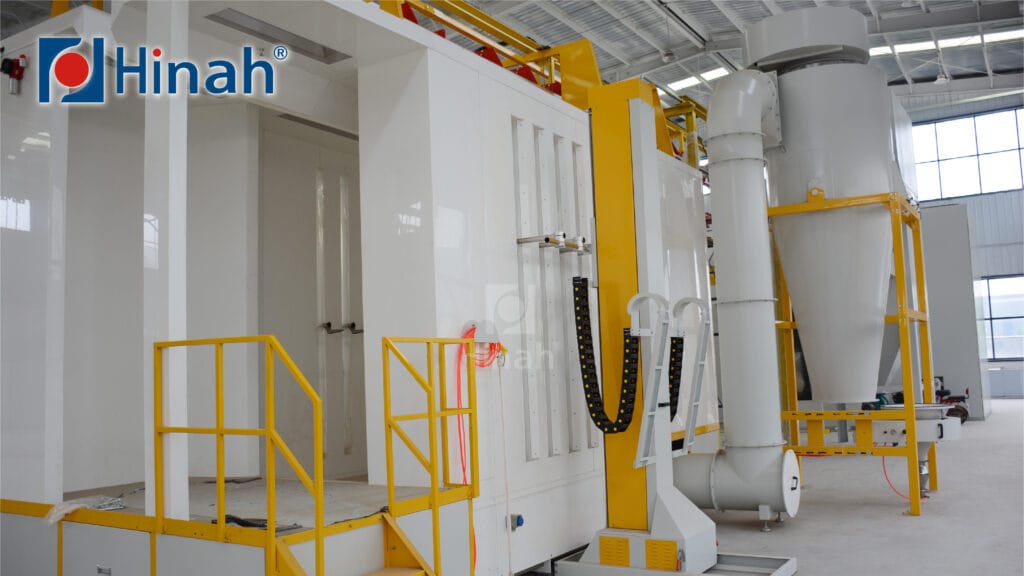
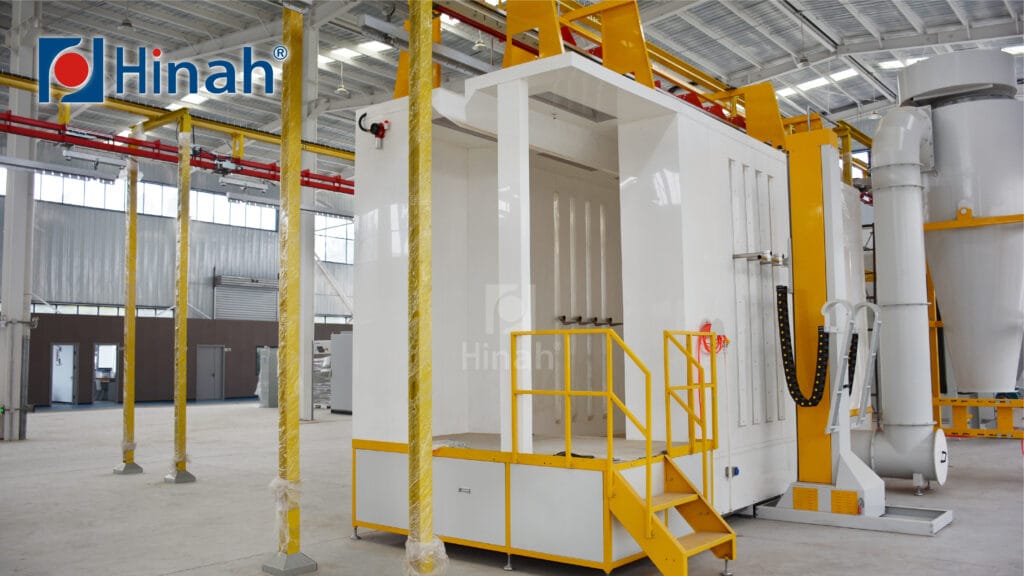
Cyclone recovery works particularly well on production lines that spray large quantities of powder and run relatively long production batches.
One major advantage is its ability to collect reusable powder efficiently. The cyclone separates much of the powder before it reaches the final filter stage. This reduces the powder load on the downstream filters.
Cyclone systems also suit operations with large booths and high airflow requirements. When the production line handles large metal parts or runs for extended periods, this configuration can provide stable recovery performance.
However, cyclone recovery needs careful consideration when the line changes colors frequently. Powder can remain inside the cyclone, ductwork, and collection system. A thorough cleaning process becomes necessary before switching to another color.
For this reason, cyclone recovery often makes more sense for high-volume production with longer color runs.
Cartridge Recovery: When Is It the Better Choice?
Cartridge recovery has a different advantage. It can simplify color change and cleaning, especially when production involves many colors in a single shift.
The operator can clean the booth, ducts, and filter area more quickly when the system has been designed for fast access. This helps reduce powder contamination between colors.
Cartridge systems also work well for operations that need flexible production rather than continuous high-volume spraying. They can suit smaller production batches, mixed orders, and frequent product changes.
The main limitation comes from the filters themselves. Fine powder can accumulate on the cartridge surface and affect airflow if the cleaning system does not work properly. Operators should also monitor filter condition and pressure difference during operation.
Cyclone vs. Cartridge: Which Powder Coating Booth Is Better?
There is no universal winner.
A cyclone system is usually the stronger choice when the production line has high powder throughput, long production runs, and relatively few color changes. It can handle large powder loads and provide effective primary separation before final filtration.
A cartridge system often makes more sense when the production line has frequent color changes, smaller batches, or many different products. Easy cleaning and quick recovery-system access become more valuable in these conditions.
The table below gives a practical comparison:
| Factor | Cyclone Recovery | Cartridge Recovery |
| High powder volume | Excellent | Good |
| Long color runs | Excellent | Good |
| Frequent color changes | Moderate | Excellent |
| Large production lines | Excellent | Good |
| Cleaning between colors | More involved | Generally easier |
| Fine powder separation | Good with final filtration | Excellent |
| Filter maintenance | Lower primary filter load | More important |
These points provide a starting point, but the final design should consider the complete coating process rather than the recovery unit alone.
What Should You Consider Before Choosing?
Start with the production pattern. Ask how many colors the line runs each day and how long each color normally stays in production.
Next, consider the powder volume. A high-output line can place a large load on the recovery system, so airflow and separation capacity become critical.
Workpiece dimensions also matter. Large cabinets, frames, wheels, and structural components require enough booth space and stable airflow around the parts.
Finally, look at the cleaning process. A recovery system may perform well technically, but difficult cleaning can create problems when the production schedule involves frequent color changes.
The best powder coating booth design balances recovery efficiency, airflow, cleaning access, filtration, and production requirements.
Final Recommendation
Cyclone and cartridge recovery systems serve different production needs. Cyclone recovery is well suited to high-volume lines with long color runs, while cartridge recovery offers greater flexibility for frequent color changes.
For a new coating line, do not select the recovery method based on the booth alone. Evaluate the spray guns, booth dimensions, airflow, powder characteristics, recovery equipment, filtration, and production schedule as one system.
A well-matched recovery system can improve powder utilization and keep booth performance stable throughout daily production. More importantly, it should match the way your factory actually operates—not simply follow a standard equipment configuration.