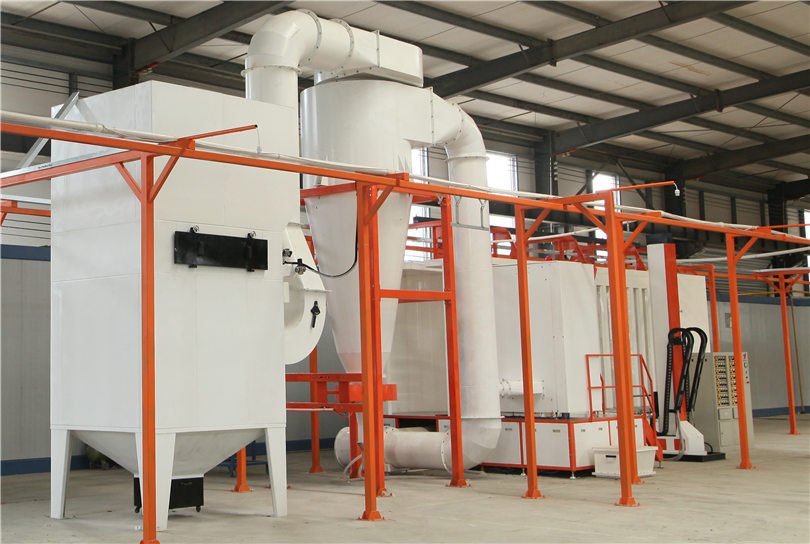

Cross-contamination between colors is one of the most frustrating problems in an automatic powder coating line. A small amount of leftover powder can create visible spots, color variation, or surface defects on the next batch. The problem becomes more serious when a factory changes colors several times a day. In most cases, contamination does not come from one single component. It usually comes from powder that remains somewhere in the spraying and recovery path.
Understanding where this powder hides is the first step toward reliable color changes.
Where Does Cross-Contamination Come From?
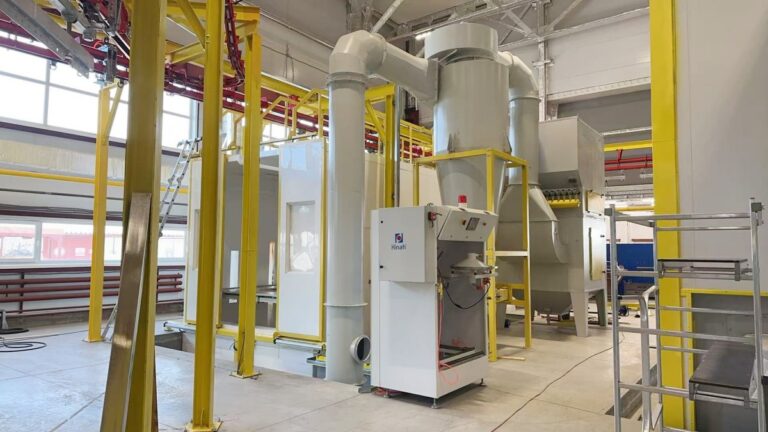
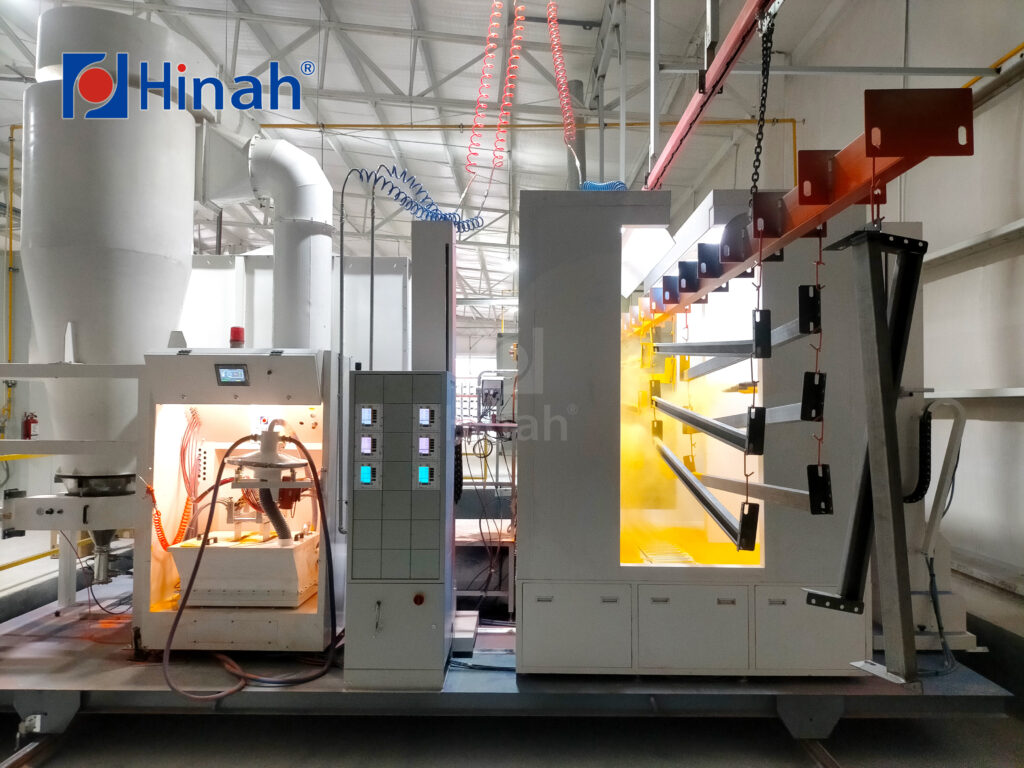
During spraying, powder travels through several components before it reaches the workpiece. Depending on the line design, these components may include powder hoses, spray guns, booth walls, recovery ducts, cyclones, filters, hoppers, and reclaim containers.
When operators finish one color, some powder can remain inside these areas. The next color then picks up the residue and carries it to the workpiece.
The problem is easy to miss because the remaining powder may be a very small amount. However, even a few particles can become visible on a light-colored finish.
The Powder Coating Institute recommends reviewing deep cleaning and worn-part replacement based on powder volume and the time between color changes. It also recommends regular inspection of powder hoses because wear or contamination can affect coating quality.
Why Is an Automatic Powder Coating Line More Sensitive?
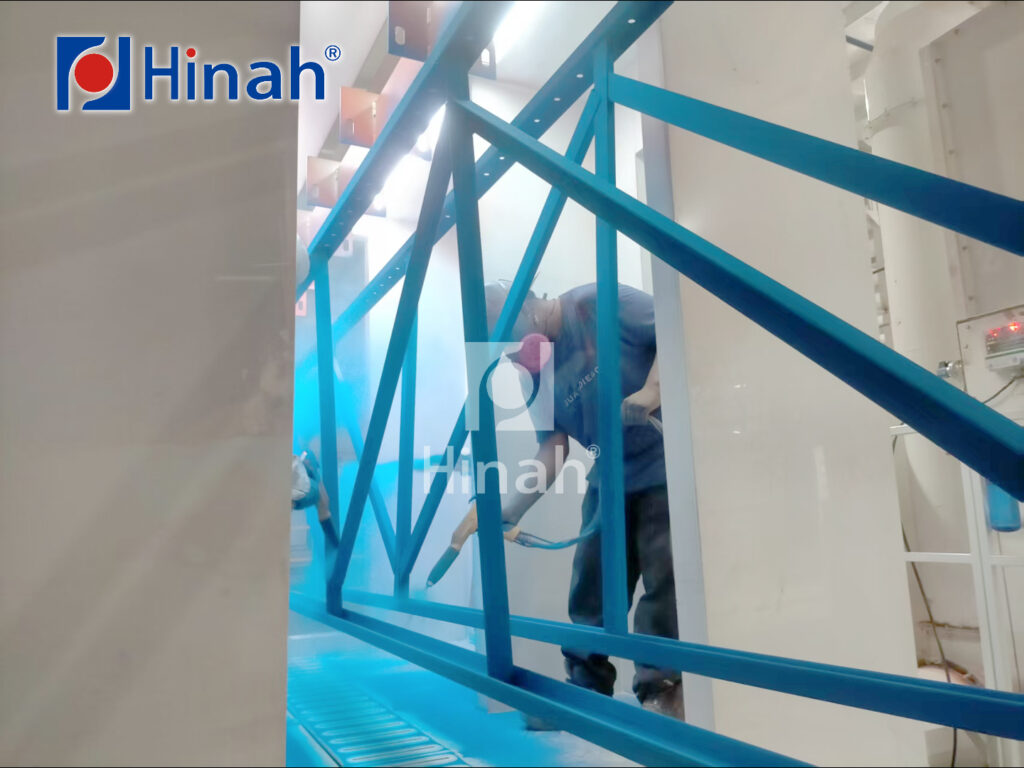
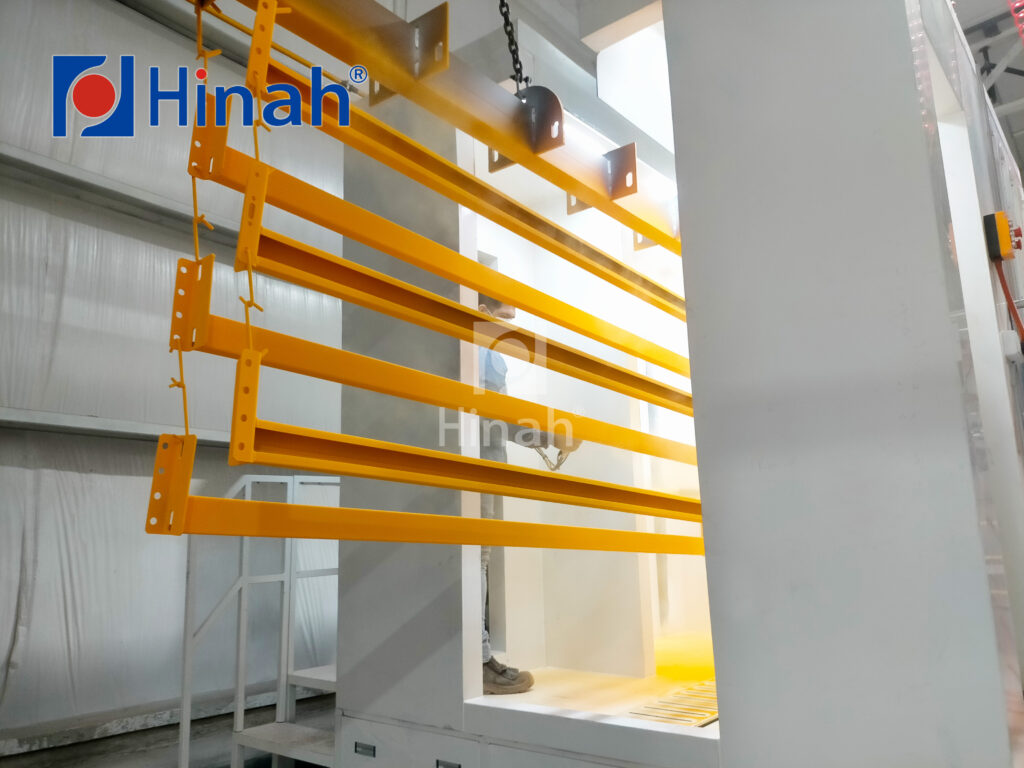
An automatic powder coating line can process a large number of parts continuously. Automatic guns also apply powder repeatedly at a fixed position, while the recovery system continuously handles overspray.
This improves production consistency, but it also means that powder can move through more equipment during a production cycle.
A color change therefore involves more than cleaning the visible booth surface. Operators need to consider the complete powder path.
For example, cleaning the booth without cleaning the powder hose may leave old powder inside the hose. Cleaning the gun without checking the recovery system can create another source of contamination. The same problem can occur when reclaim powder from the previous color remains in a cyclone or collection container.
The key is to treat the spraying and recovery system as one connected process.
Which Components Should Be Checked During a Color Change?
Several areas deserve particular attention.
Spray guns and powder hoses: Powder can remain inside the hose, especially around connections and bends. Worn hoses can also retain powder more easily.
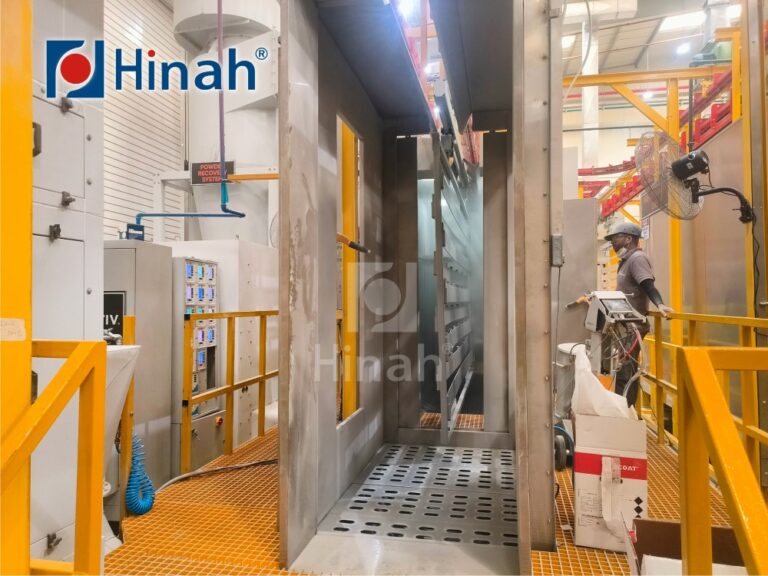
Booth walls and ledges: Overspray can settle on horizontal or hard-to-reach surfaces. OSHA specifically requires powder coating areas to remain free from powder accumulation, including on ledges, beams, pipes, hoods, booths, and floors.
Recovery equipment: Cyclones, filters, ducts, and reclaim containers can hold powder from the previous color. If the recovery path is not cleaned properly, the old powder may enter the next color.
Hangers and contact points: Hangers can collect powder over time. Poorly maintained contact points can also affect grounding. OSHA requires workpieces to maintain contact with the conveyor or support and calls for regular hanger cleaning to maintain effective grounding.
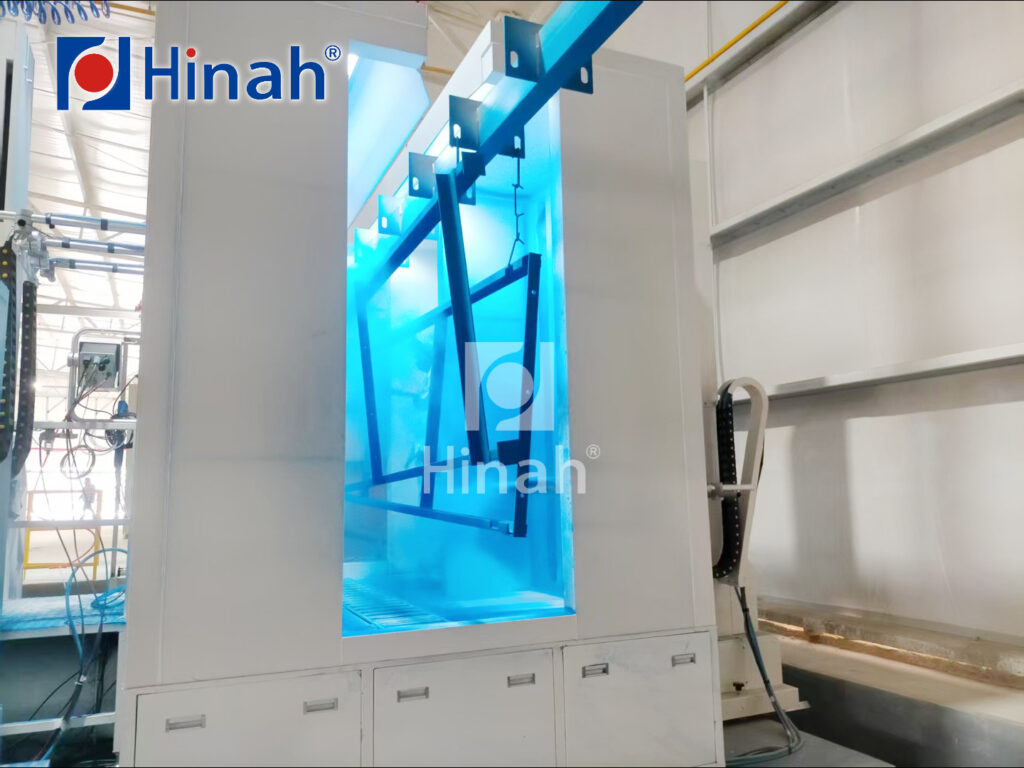
How Can Automatic Powder Coating Line Reduce Contamination?
Good equipment design can make color changes much easier.
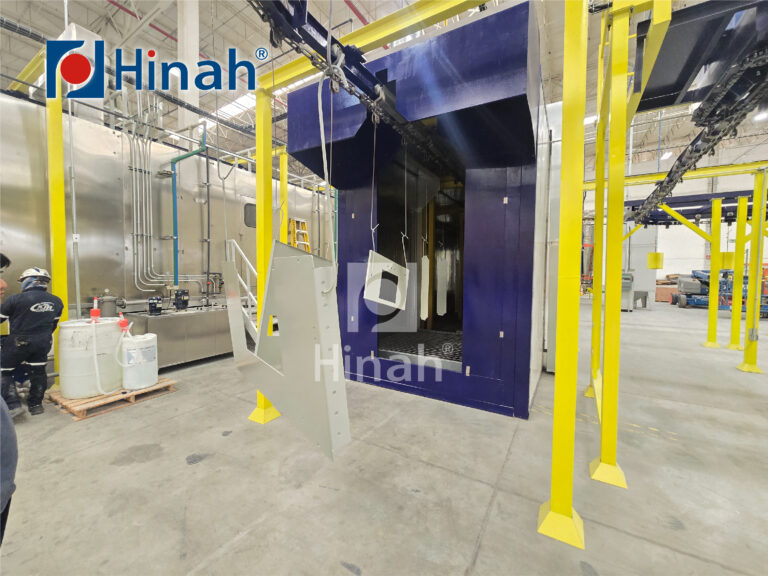
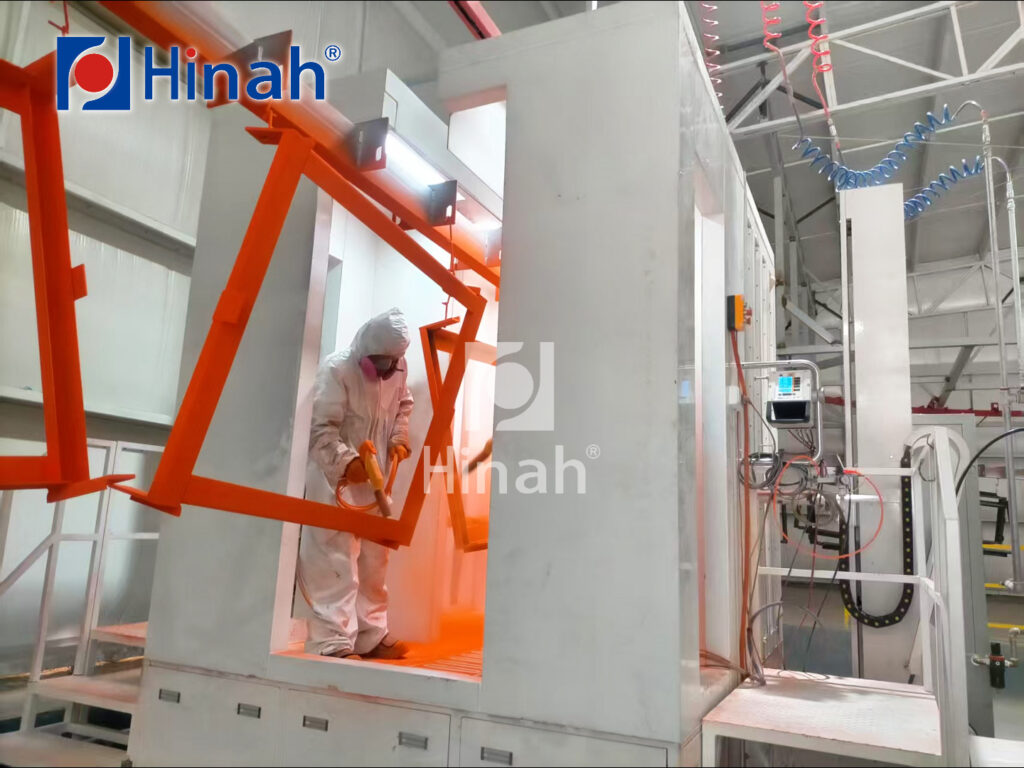
First, the booth should provide easy access to surfaces that require cleaning. Smooth internal surfaces and fewer powder-trapping areas help operators remove residue more quickly.
Second, the powder delivery system should allow hoses, guns, pumps, and other components to be cleaned without unnecessary disassembly. Quick connections can simplify this process when the line changes colors frequently.
Third, the recovery system needs to match the production pattern. A factory that runs only one or two colors has different requirements from a factory that changes color throughout the day. If several colors share the same recovery path, cleaning becomes especially important.
Finally, operators should define a clear color-change procedure instead of relying on individual experience.
Does Booth Airflow Affect Color Cross-Contamination?
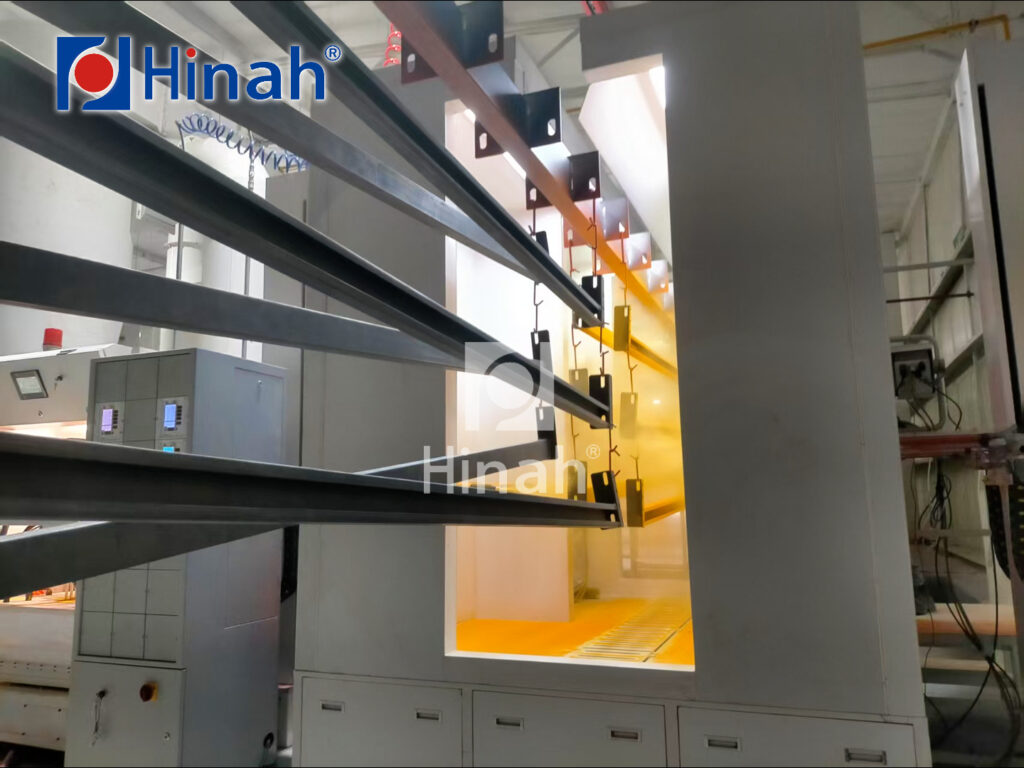
Yes. Airflow controls how overspray moves inside the booth and toward the recovery system.
If airflow becomes unstable, powder may settle in unexpected areas instead of moving efficiently into the collection system. This can increase the amount of residue that remains after production.
OSHA requires exhaust ventilation for powder coating operations to safely remove suspended powder and directs nondeposited powder toward the recovery cyclone or receptacle.
However, airflow should not be treated only as a contamination issue. Powder accumulation also creates a housekeeping and safety concern. OSHA states that powder coating surfaces should be cleaned in a way that avoids scattering dust or creating dust clouds.
A Better Color-Change Strategy
The most reliable approach is to divide cleaning into several levels.
For a normal color change, operators can clean the booth, guns, hoses, powder supply components, and accessible recovery areas.
For a major color change, especially from a dark color to white or another light color, a deeper cleaning may be appropriate. Operators should inspect hidden areas instead of assuming that visible surfaces are clean.
Production teams should also monitor the first parts after every change. If small spots or unexpected color differences appear, stop and identify the contamination source before continuing production.
This approach can prevent a small residue problem from becoming a large batch-quality problem.
Last Words
Cross-contamination usually happens because old powder remains somewhere in the spraying or recovery path. Booth walls, hoses, guns, recovery equipment, and hangers can all contribute. Therefore, cleaning only the visible booth is rarely enough.
A well-designed automatic powder coating line should make color changes straightforward by providing accessible equipment, efficient powder recovery, stable airflow, and easy-to-clean powder delivery components. Combined with a consistent cleaning procedure, these features can greatly reduce the risk of color contamination and help maintain stable coating quality during frequent color changes.
For plants running many colors, the goal should not simply be to clean faster. The better goal is to design the entire powder path so that less old powder remains in the first place.