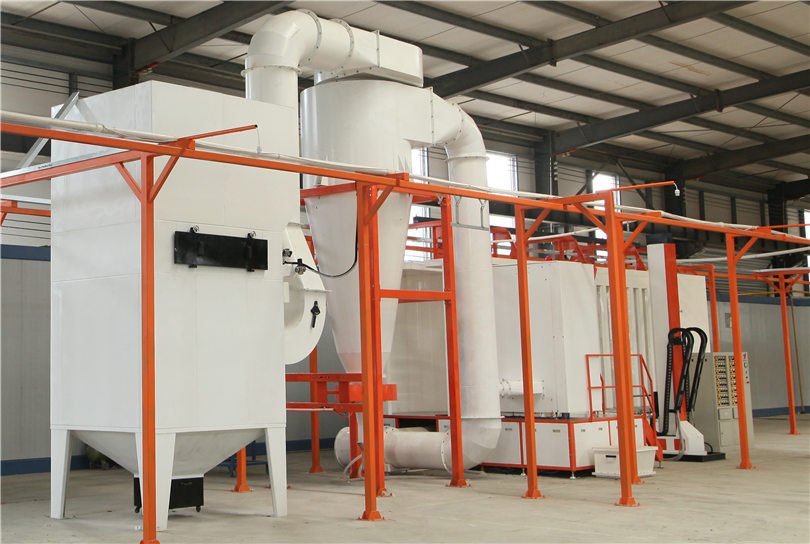

If your powder coating booth starts leaking dust, you know exactly what’s happening: your powder recovery system is losing its punch. It’s frustrating to watch expensive powder drift onto the floor instead of back into the hopper. This isn’t just a mess; it’s a direct hit to your wallet.
Most of the time, suction doesn’t just disappear for no reason. A clogged filter or a tiny air leak in the pipes is usually the “thief” stealing your airflow. You don’t need a total system overhaul to fix it. We just need to find where the air is getting stuck or escaping. Let’s look at the common spots that kill your suction and how to get that pull back to 100%.
What Causes the Airflow Resistance in the Recovery Circuit?
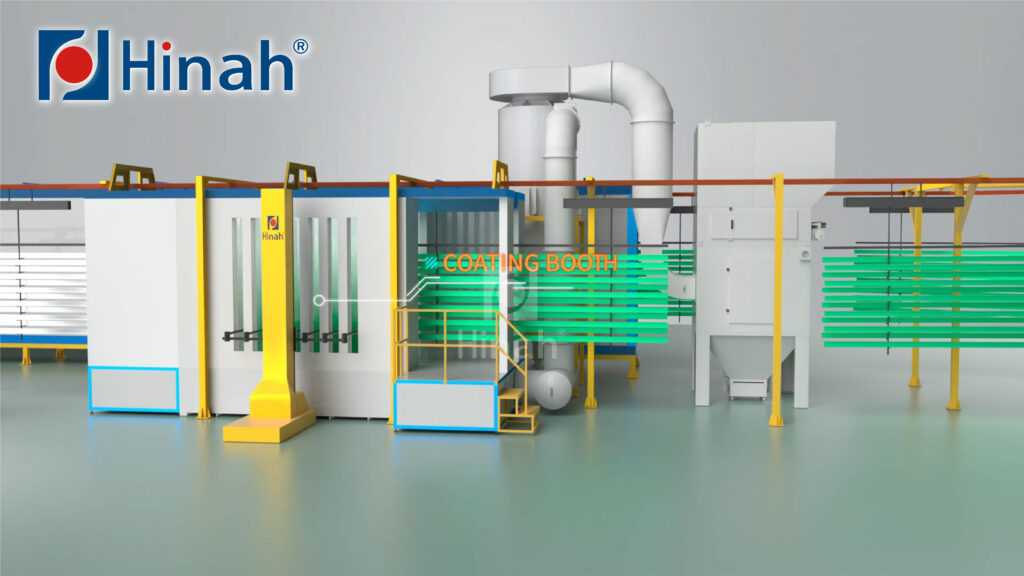
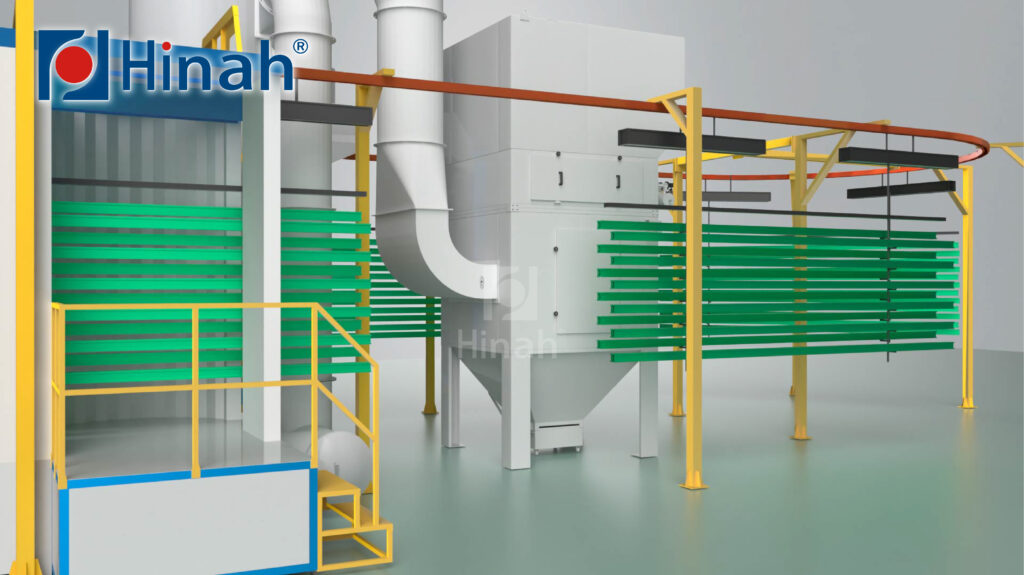
Why does airflow suddenly slow down? Usually, it’s because the air is fighting too much resistance. Here are the three main “choke points” in your powder recovery system:
The “Filter Blinding” Effect: This is the most common culprit. When ultra-fine powder gets trapped deep inside the filter fabric, the air simply can’t pass through anymore. It’s like trying to breathe through a heavy wet cloth. If your automatic cleaning isn’t hitting hard enough, this powder buildup becomes a solid wall that kills your suction.
The Hidden Vacuum Leaks: Even a small gap in your cyclone base or a loose connection in the ducting can ruin everything. Think of it like a straw with a hole in it; you can pull as hard as you want, but you won’t get much liquid. In a powder recovery system, any air leaking in from the outside breaks the vacuum and drops the suction power at the booth.
Weak Pulse-Jet Cleaning: Your system relies on bursts of compressed air to knock powder off the filters. If your solenoid valves are sticking or your air pressure is too low, the filters stay dirty. When the filters stay dirty, the fan has to work twice as hard for half the result.
How to Optimize Powder Recovery System Performance?
You don’t need to wait for the system to fail before you take action. A few simple, regular checks can stop suction loss before it even starts. Here is how you keep your powder recovery system pulling strong every single shift:
Watch the Pressure Gauges
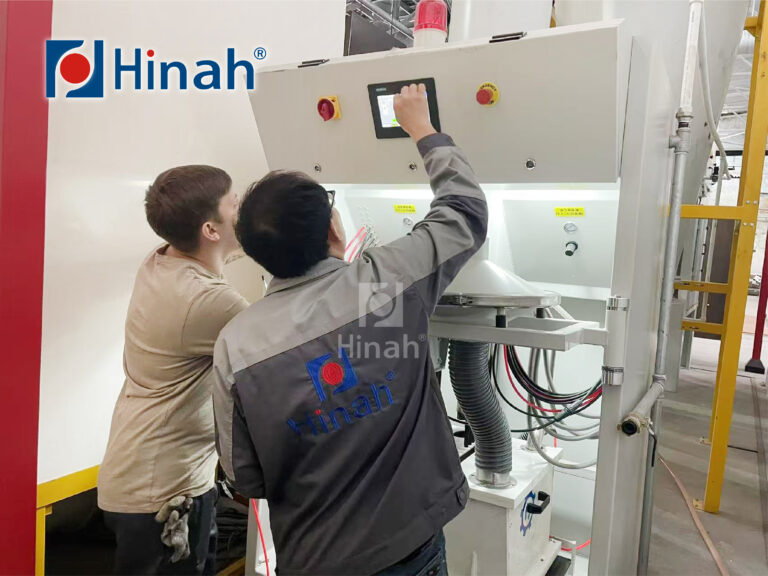
Don’t ignore the manometers on your control cabinet. These gauges tell you exactly how much “stress” the filters are under. If the pressure difference starts climbing higher than usual, your filters are getting clogged. Make it a habit to check these numbers at the start of every shift so you can catch a problem before the booth starts leaking dust.
Check the Pipes for Clogs
Powder loves to settle in the horizontal sections of your ductwork, especially if the air speed drops even a little. Over time, this buildup acts like a dam. Once a month, tap on the pipes or open the inspection hatches. Clearing out these “dead zones” ensures the air has a clear, fast path back to the powder recovery system.
Listen to the Fan and Motor
Your fan is the heart of the system. If you hear strange vibrations or high-pitched whistling, the impeller might be out of balance or a belt might be slipping. A fan that isn’t spinning at its rated speed cannot create the vacuum you need. Keep the motor clean and the belts tight to ensure you always have maximum static pressure.
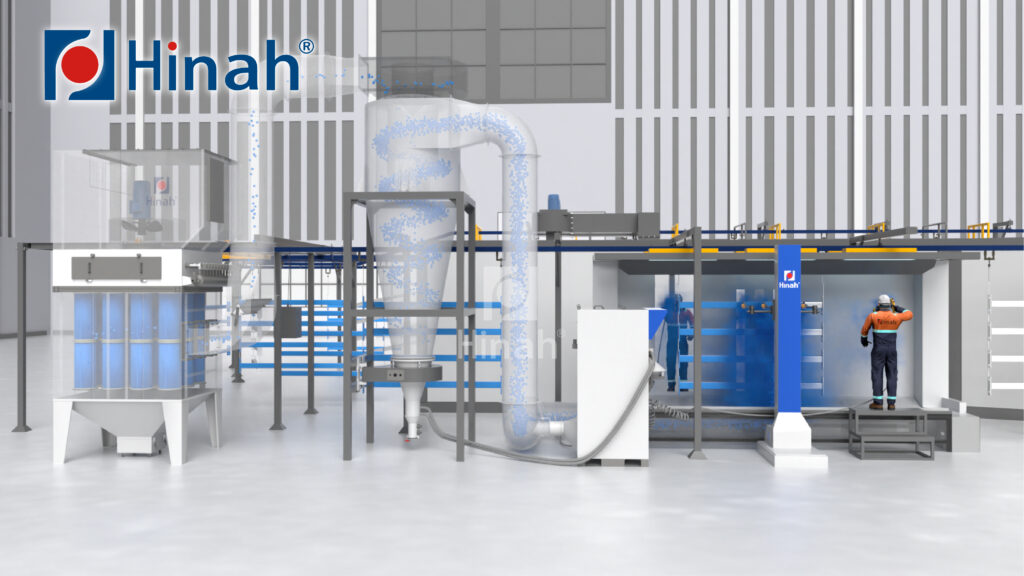
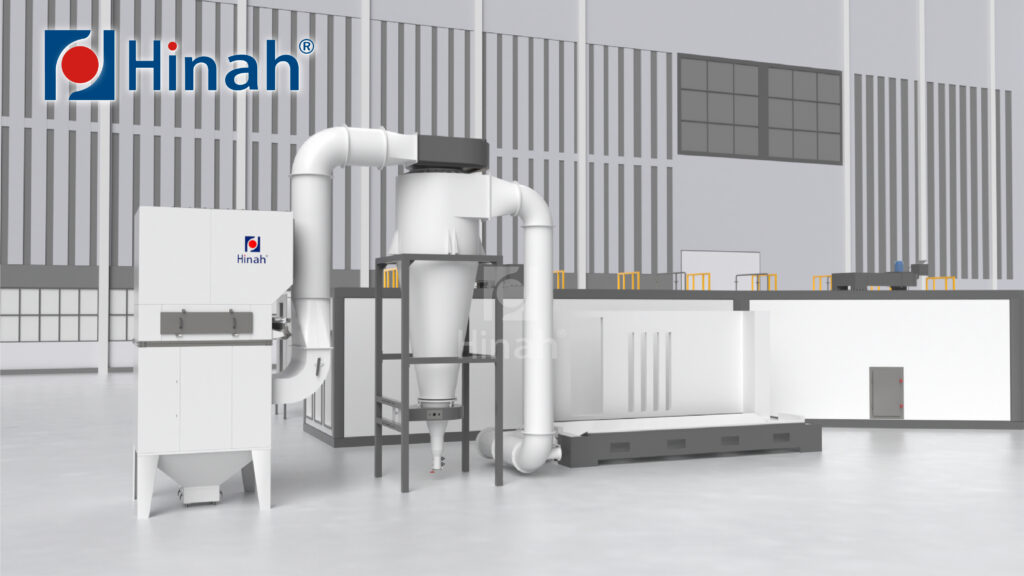
Enhancing Cyclone Efficiency for Consistent Suction
If you use a cyclone in your powder recovery system, the “spin” is everything. The cyclone doesn’t just collect powder; it acts as a primary filter. If the cyclone isn’t working right, too much powder heads straight for your final filters, clogging them instantly and killing your suction.
Here is how you keep your cyclone efficient:
Check the Vortex Finder: Inside the top of the cyclone, there is a tube called the vortex finder. If this tube gets worn out or coated in heavy powder buildup, it messes up the airflow pattern. A smooth, clean vortex finder ensures the “clean” air spins upward correctly while the powder drops down. If the air pattern breaks, your suction becomes turbulent and weak.
Seal the Bottom Tight: The bottom of the cyclone is the most sensitive spot. Whether you use a collection bucket or a rotary valve, the seal must be 100% airtight. Even a tiny leak here allows air to rush upward from the bottom, which pushes the falling powder back up into the filters. This “updraft” is a major reason why a powder recovery system loses its pull.
Match the Air-to-Cloth Ratio: Your fan pulls air through the cyclone and then through secondary filters. If you are trying to pull too much air through too little filter surface area, the resistance stays high. Ensure your fan speed matches the design specs of your cyclone. Pushing the system too hard actually creates more resistance and less real suction at the powder coating booth.