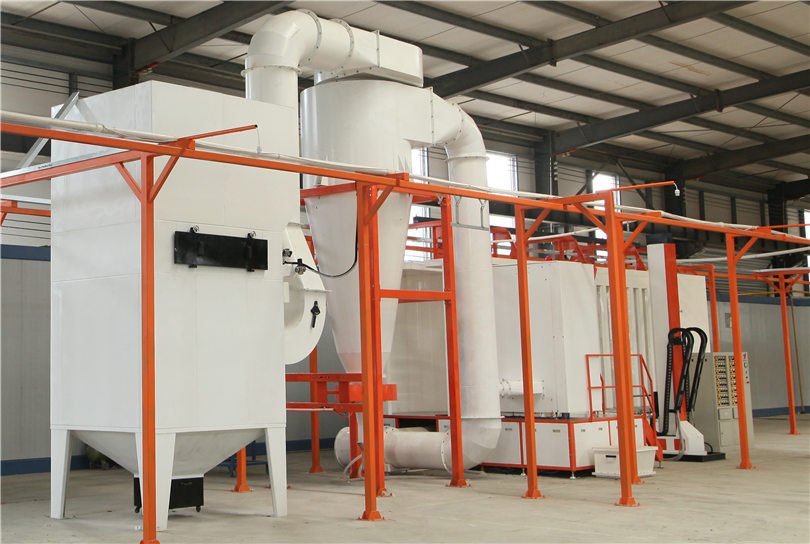

If you feel like you’re buying more powder than you should for your output, you aren’t alone. In many shops, a large chunk of the budget ends up in the recovery filters instead of on the workpieces. While some waste is inevitable, an automated powder coating system should ideally do a much better job than manual spraying.
Often, the problem isn’t the equipment itself, but small settings that drift over time. You might have the latest booth, but if your grounding is weak or your gun timing is off, you are essentially throwing money into the dust collector. Let’s look at why this happens and how you can get your powder usage back under control without overcomplicating your process.
Common Culprits of Powder Waste in Automated Powder Coating Line
Several simple factors usually cause excessive waste. If you want to improve your efficiency, start by checking these three areas:
Weak Grounding
Powder needs a strong electrical path to stick to your parts. If your hangers have layers of old paint or grease, they insulate the part from the ground. This creates a “push-back” effect where the powder flies past the workpiece and into the filters. Keep your hooks clean to ensure the powder actually wants to land on the metal.
Incorrect Gun Settings
Many operators turn the voltage up too high, thinking it helps coverage. In reality, too much power causes “back-ionization.” This creates a bumpy finish and pushes incoming powder away. You should also watch your air pressure. If the air flows too fast, it carries the powder right past the part before the static charge can grab it.
Poor Airflow Balance
Your booth needs a steady vacuum to contain the powder, but too much suction is a mistake. If the face velocity is too high, the booth acts like a giant vacuum cleaner. It sucks usable powder out of the spray zone before it even reaches your product. You need to balance the fan speed so the powder stays in the “cloud” long enough to wrap around your parts.
Optimizing Your Automated Powder Coating Parameters
Equipment hardware is only half the battle. To stop the waste, you must fine-tune how your machines move and breathe.
Reciprocator Tuning
Many shops leave their reciprocators on a “one size fits all” setting. If your stroke is too long, the guns keep spraying into empty space above and below the rack. You should adjust the stroke limits so the guns stop exactly where the part ends. This simple change keeps your automated powder coating focused on the product, not the floor or the ceiling.
Powder-to-Air Ratio
Think of air as the vehicle for your powder. If you use too much air, the powder moves too fast to accept a charge. You want a dense, slow-moving cloud. Lower your atomizing air pressure until the delivery is consistent but soft. This allows the electrostatic force to pull the powder toward the part effectively.
Nozzle Selection
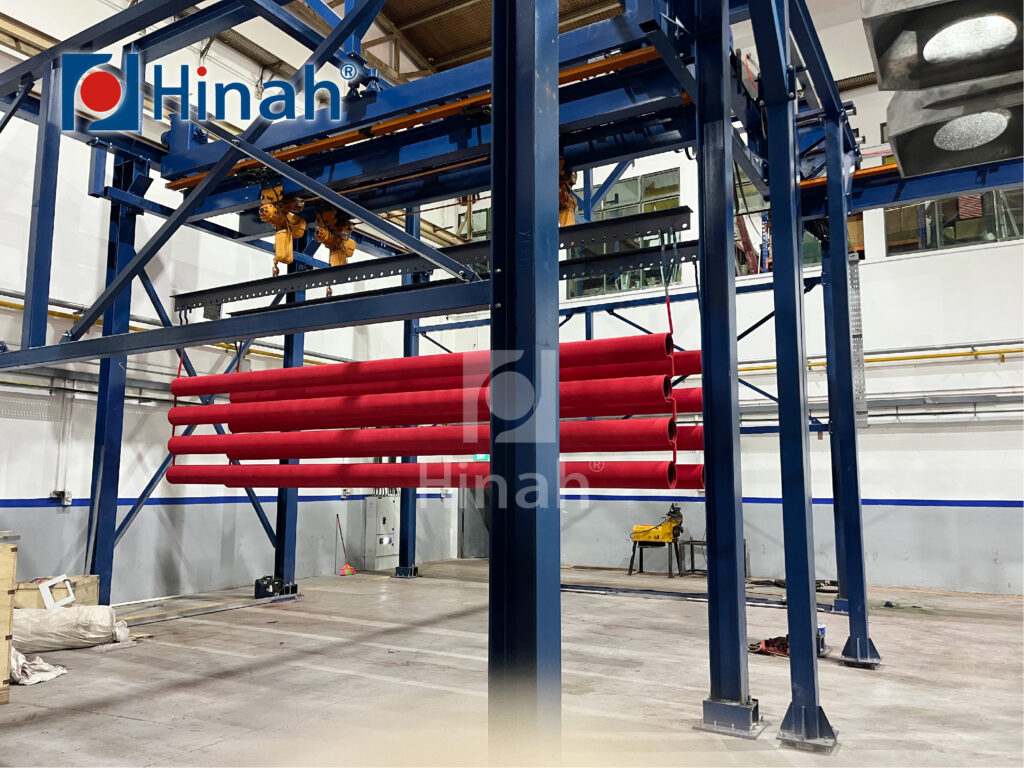
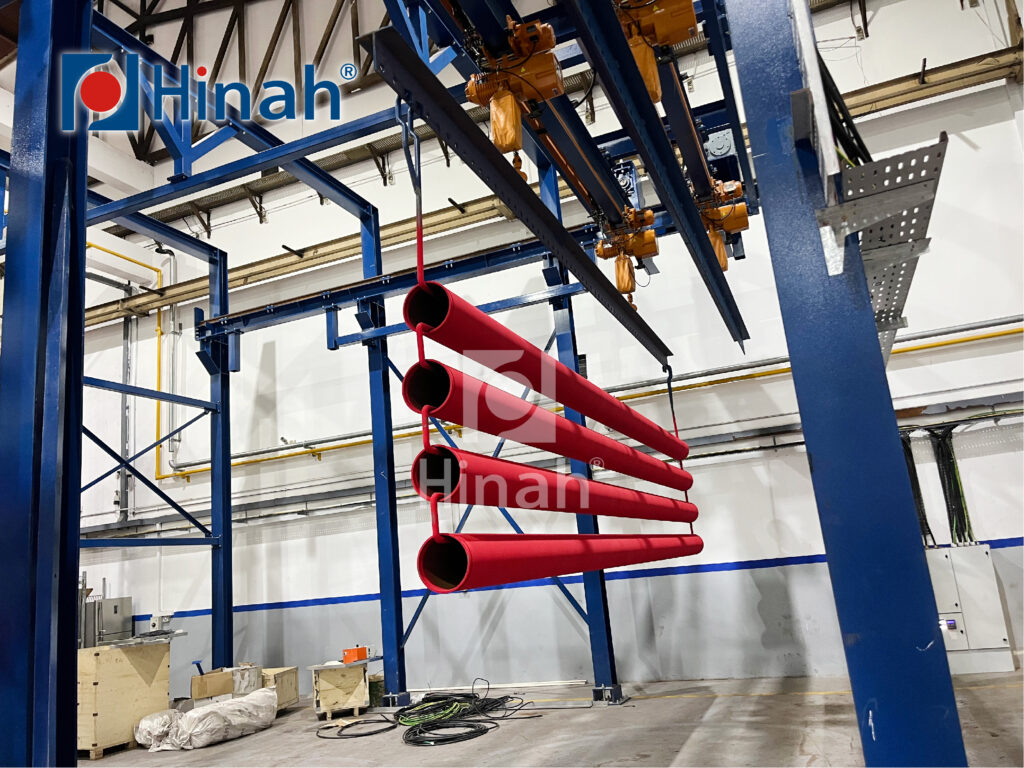
The wrong nozzle shape can waste a lot of material. A wide-angle nozzle is great for large panels, but it wastes powder on slim profiles. For narrow parts or tubing, switch to a focused fan or a round nozzle. Matching the spray pattern to the shape of your product ensures that most of your powder actually hits the target.
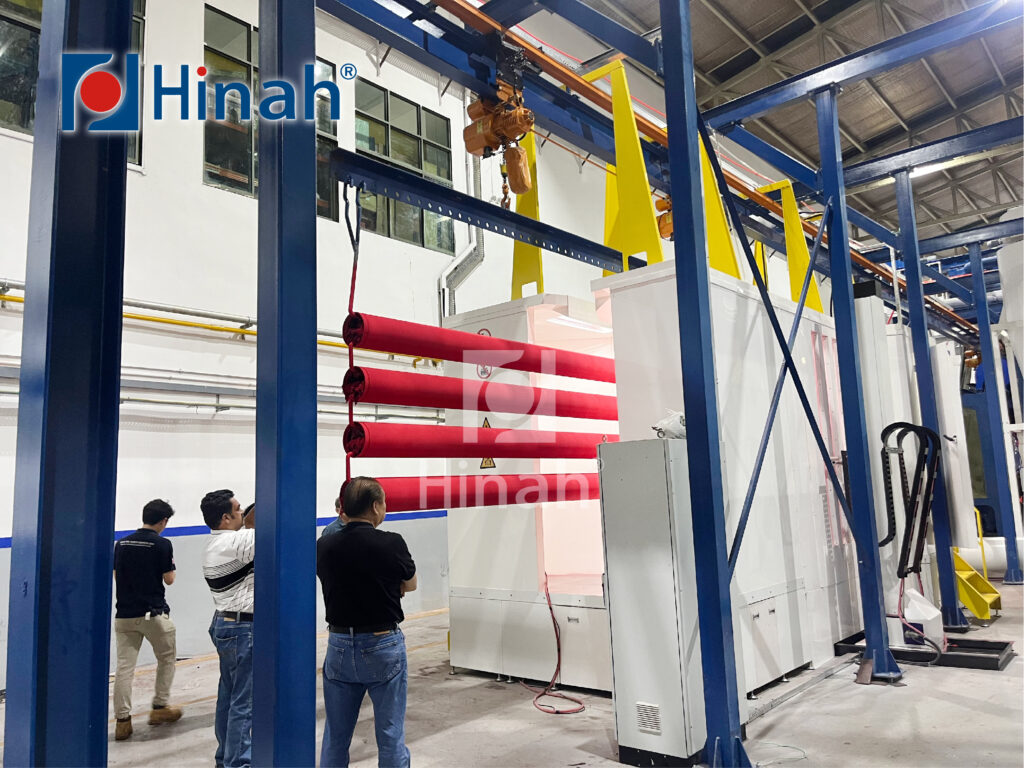
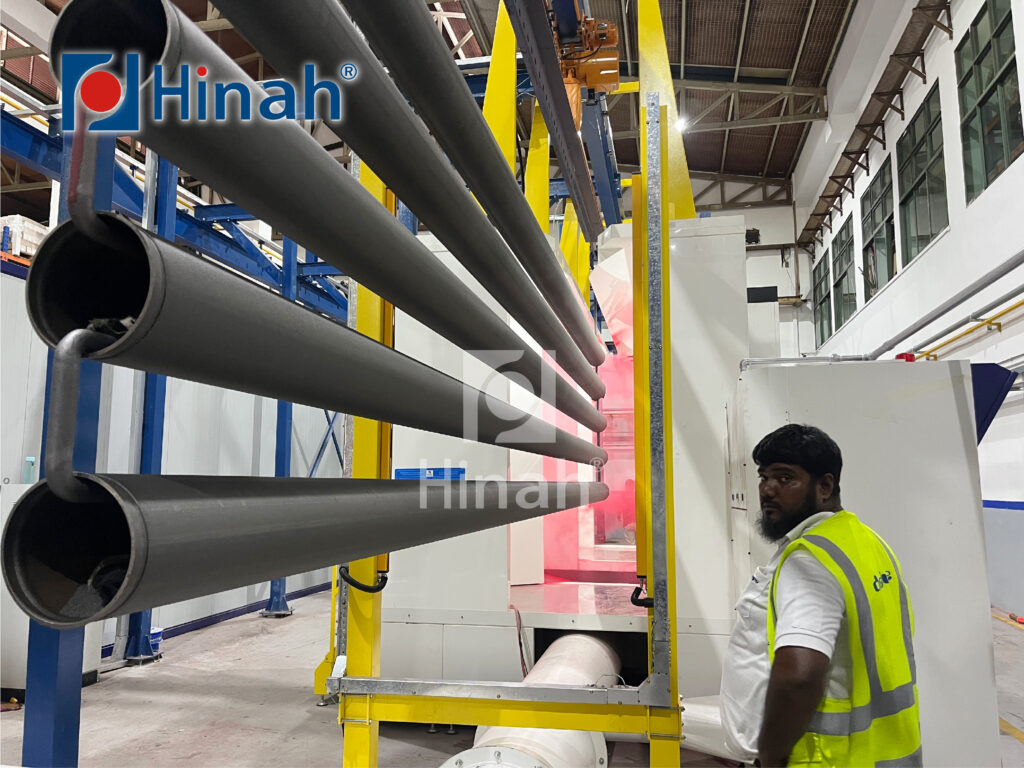
Smart Features that Maximize Material Utilization
Modern technology can take the guesswork out of your production line. If you want to reach peak efficiency, consider adding these smart features to your system.
Precision Part Identification
Spraying empty gaps between parts is the fastest way to waste money. You can install light curtains or infrared sensors at the booth entrance to detect the exact shape and position of your products. These sensors tell the PLC exactly when to trigger each gun. The system only sprays when a part is directly in front of the nozzle, which significantly cuts down on overspray during gaps in the conveyor.
Stable Powder Feed Centers
Inconsistent powder flow leads to “surging,” where the gun suddenly spits out too much material. A dedicated powder feed center maintains a constant density in the hopper. It automatically manages the powder level and ensures the guns receive a steady, even mix. When your output is stable, you don’t have to over-compensate with higher settings, which saves a lot of material over time.
Automatic Gun Positioning
The distance between the gun and the part is critical for an efficient automated powder coating process. If the guns are too far away, the powder cloud becomes too thin. Some advanced systems use sensors to measure the width of the part and move the gun racks in or out automatically. Keeping the guns at the “sweet spot” ensures maximum wrap-around and the best possible transfer efficiency.