
You built your business on quality, but lately, your finishing room feels like a gamble. One day the parts look perfect. The next day, your QC team rejects half the batch for orange peel or thin spots.
If you still rely on a manual powder coating line, you already know the struggle. Even your best sprayer gets tired after six hours. A slight change in hand angle or a distracted moment leads to wasted powder and costly rework.
The truth is, a manual powder coating line has a “quality ceiling.” You can only push it so far before human error takes over. Let’s break down why manual setups eventually fail quality checks and how switching to automation turns “hoping for the best” into a guaranteed result.
The “Human Factor”: Why the Best Sprayer isn’t Enough
Consistency is the soul of a high-quality finish. In a manual powder coating line, consistency depends entirely on a person’s hand. Even your most skilled operator has “off days.”
When a worker gets tired, their gun distance changes. If they stand too far back, the powder goes into the filter instead of onto the part. If they get too close, the coating becomes too thick. This leads to “heavy edges” or sagging that fails every quality check.
A manual powder coating line also struggles with stroke speed. A human cannot move at the exact same speed for eight hours straight. These tiny variations in movement create “waves” in the finish. You might not see them under booth lights, but your customers will see them in the sunlight.
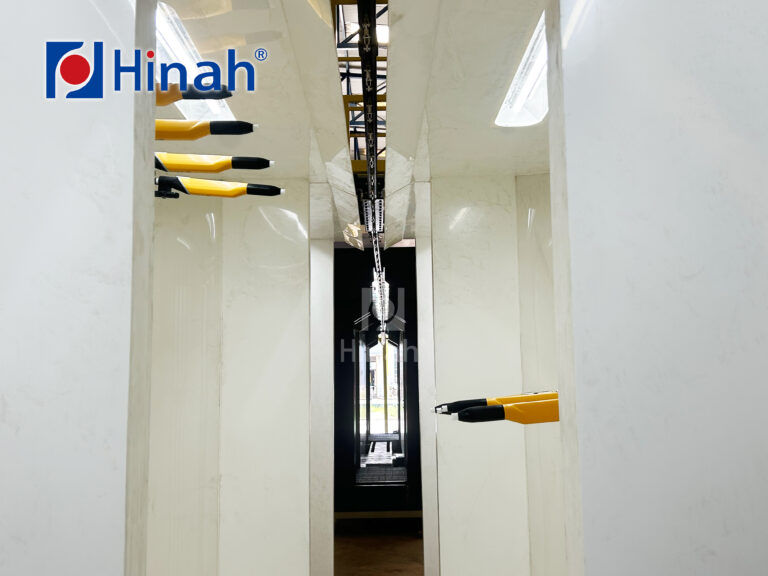
Automation removes this “human variable.” An automated reciprocator moves at the exact same speed and distance, every single second. It doesn’t get tired, and it doesn’t lose focus. You get the same micron-level thickness on the first part of the morning and the last part of the night.
Environmental Contamination in a Manual Powder Coating Line
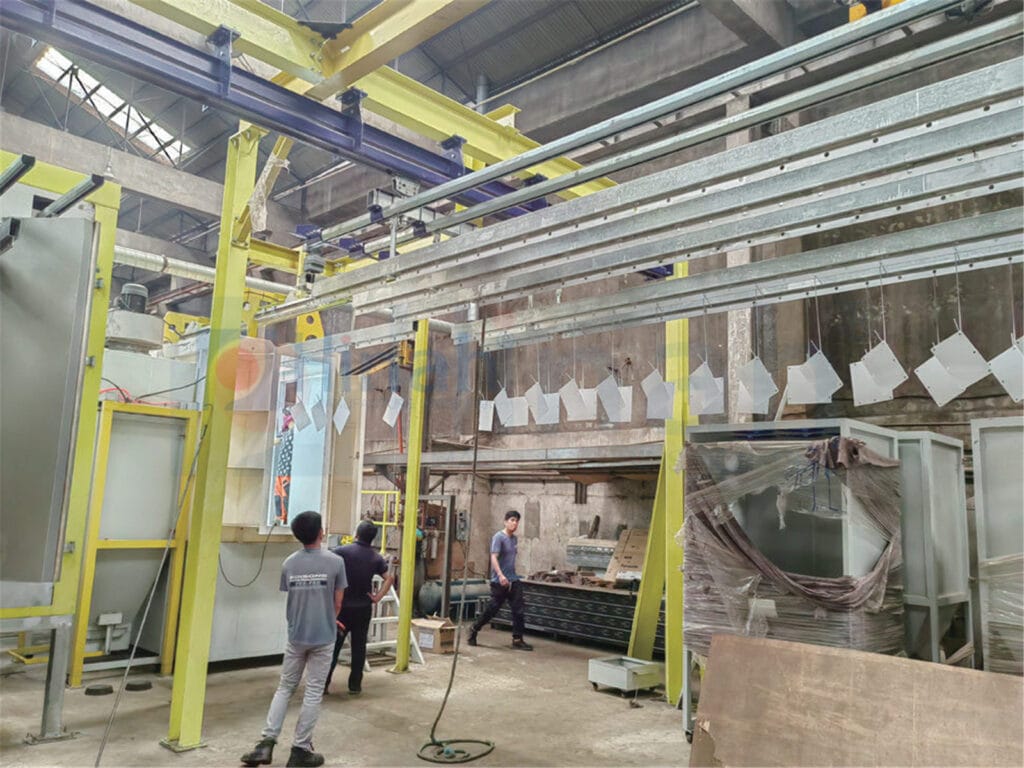
A manual powder coating line usually sits in an open area of the factory. This is a magnet for dust and debris. Workers walk past the booth, forklifts drive by, and fans blow air across the floor. Every time this happens, tiny particles enter your spray zone.
These invisible contaminants ruin a perfect finish. When dust lands on a grounded part, the powder sticks to it. After the part goes through the oven, you see “pitting” or small bumps on the surface. At this point, you have two choices: ship a low-quality product or sand it down and start over. Both choices cost you money.
In a manual powder coating line, the operator also brings in contamination. Lint from clothing, hair, and even skin oils can transfer to the metal. You might have the best powder in the world, but it cannot overcome a dirty environment.
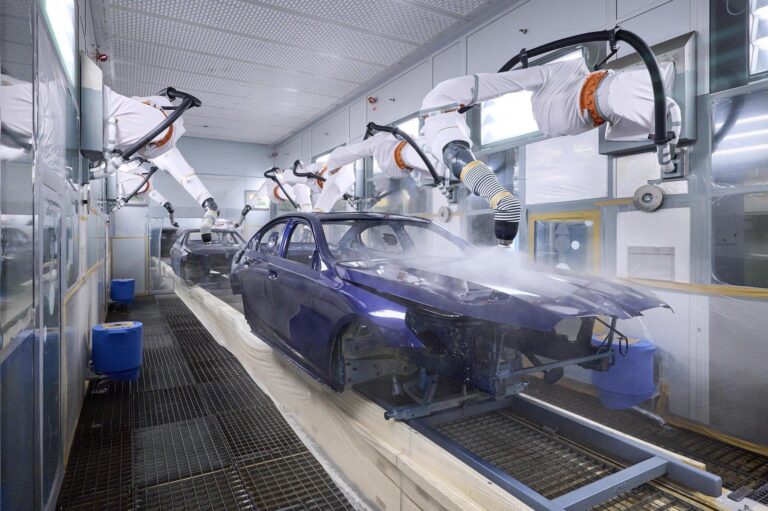
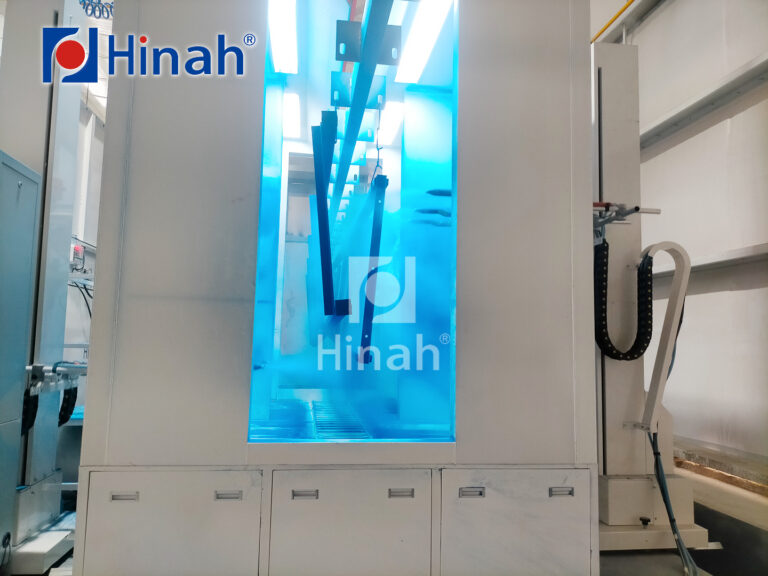
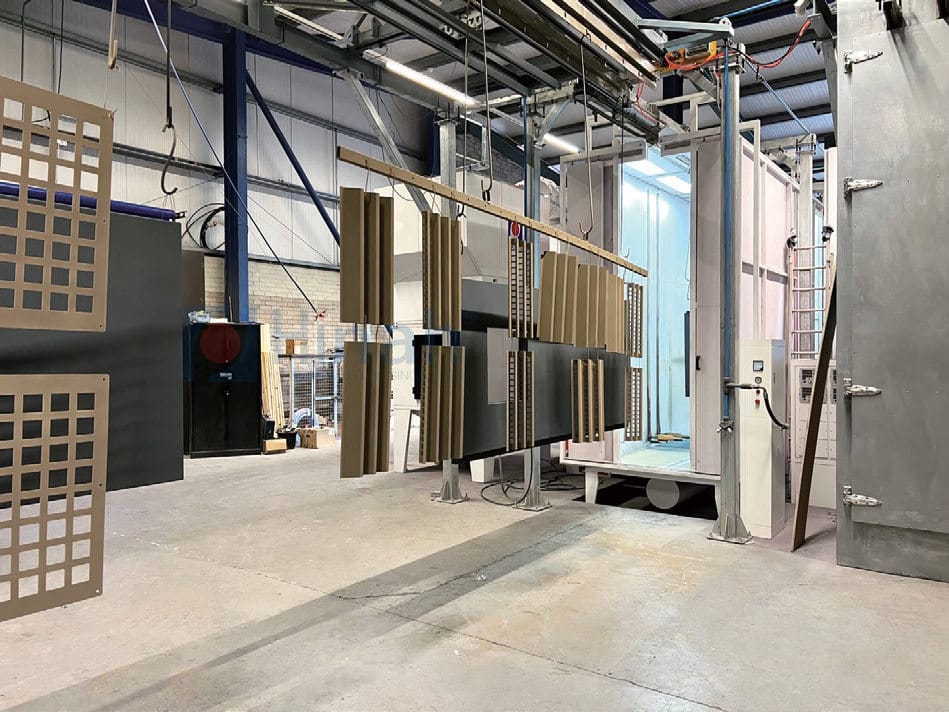
Automation solves this by enclosing the process. A high-quality automated booth creates a controlled “micro-climate.” It uses advanced airflow to keep factory dust out and pulls over-sprayed powder away from the part instantly. By removing the human from the immediate spray area, you remove the biggest source of surface defects.
Why Manual Powder Coating Line Fails the “Faraday Cage”
If your parts have sharp corners, deep recesses, or complex geometries, a manual powder coating line often hits a wall. You probably see “light spots” or bare metal in the corners. This isn’t just an aesthetic issue; it’s a failure in corrosion protection.
This happens because of the “Faraday Cage” effect. In a manual setup, the electrostatic field naturally pulls powder to the easiest, closest flat surface. Pushing that powder into a tight corner requires constant, precise adjustments to voltage and air pressure.
An operator using a manual powder coating line usually tries to fix this by spraying more powder. They pull the trigger harder and stay on the spot longer. This backfires. You end up with “back-ionization”—a grainy, sandpaper-like texture—while the very back of the corner stays empty.
Modern automated systems use “Smart Controllers.” These brains talk to the guns in real-time. As the part moves, the system automatically drops the voltage and increases the current for deep recesses. It does this faster than any human hand can react. You get a full, protective coat in every crevice without wasting a single gram of powder.
The Hidden Bottleneck: Pre-treatment Inconsistency
Quality doesn’t start at the spray booth. It starts in the cleaning tank. If your metal isn’t 100% clean, your powder won’t stick. In a manual powder coating line, pre-treatment is often the weakest link.
Many manual shops rely on hand-spraying chemicals or dipping parts in batches. This creates a huge margin for error. If an operator leaves a part in the degreaser for too short a time, oil stays on the surface. If they leave it too long, flash rust can form before it even dries. You won’t see these problems until the finished coating starts peeling off a month later.
A manual powder coating line also makes it hard to track chemical concentrations. You might have one batch of parts that is perfectly etched and another that is barely cleaned. This inconsistency is a nightmare for quality control. You can’t fix a bad surface with a good powder. While integrated automated systems use a continuous spray tunnel. Every part travels through the exact same chemical wash for the exact same amount of time. Sensors monitor the PH levels and temperatures every second. This ensures the metal is chemically “hungry” for the powder. When the pre-treatment is automated, you eliminate the #1 cause of long-term coating failure: poor adhesion.