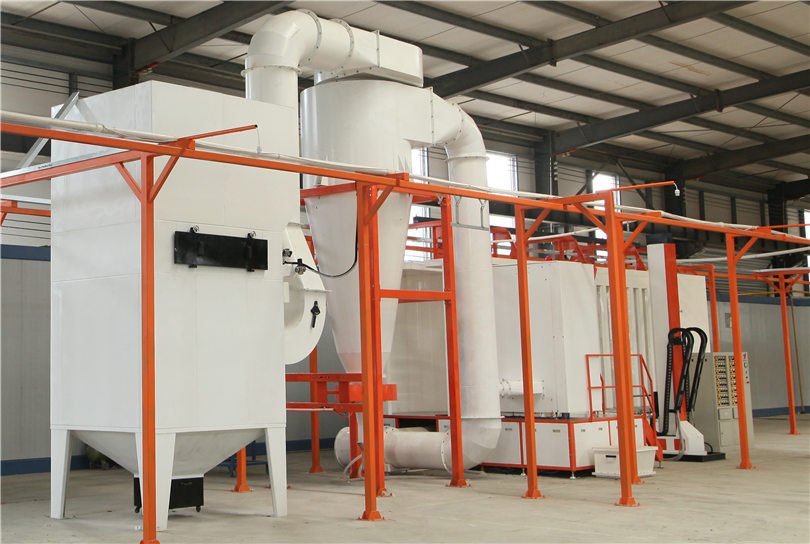

The paint drum is empty, but the production target has not changed. The workpieces are the same, and the coating specification is still the same. Yet the automated paint line is going through paint faster than expected.
This situation is more common than it seems. A paint calculation made before installation usually starts with the estimated surface area and target film thickness. Once production begins, however, the real spray process introduces variables that a simple quotation cannot always capture. A few extra spray passes, slightly higher film thickness, or lower transfer efficiency can gradually push actual paint consumption above the original estimate.
The Quoted Paint Amount Is Usually Based on Conditions
A paint estimate normally starts with several assumptions. These may include the workpiece size, coating area, target dry film thickness, paint solids content, production volume, and expected transfer efficiency.
The actual production line may not match all of these conditions.
For example, a workpiece may have more edges, corners, holes, or recessed areas than the original drawings suggested. Operators or robots may also apply slightly more coating to difficult areas to achieve the required appearance.
ASTM D5286 defines transfer efficiency as the ratio of paint solids deposited on the part to the total paint solids used during application. The standard also notes that the measurement should reflect actual plant conditions.
That distinction matters. A theoretical paint calculation and real production data are not always the same.
Transfer Efficiency Has a Direct Effect on Paint Usage
Transfer efficiency is one of the main reasons for higher paint consumption.
During spraying, not every paint particle reaches the workpiece. Some particles miss the surface, while others bounce away or enter the booth airflow. EPA refers to this material as overspray and explains that higher transfer efficiency reduces overspray and coating usage.
Spray equipment also makes a difference. EPA data for metal furniture coating show that conventional air-atomized and airless spray can have much lower transfer efficiency than electrostatic application. The actual value still depends on the equipment and the workpiece.
This is why simply calculating paint volume from surface area can give an unrealistic result. The calculation also needs a practical transfer-efficiency factor.
Why an Automated Paint Line Can Lose More Paint
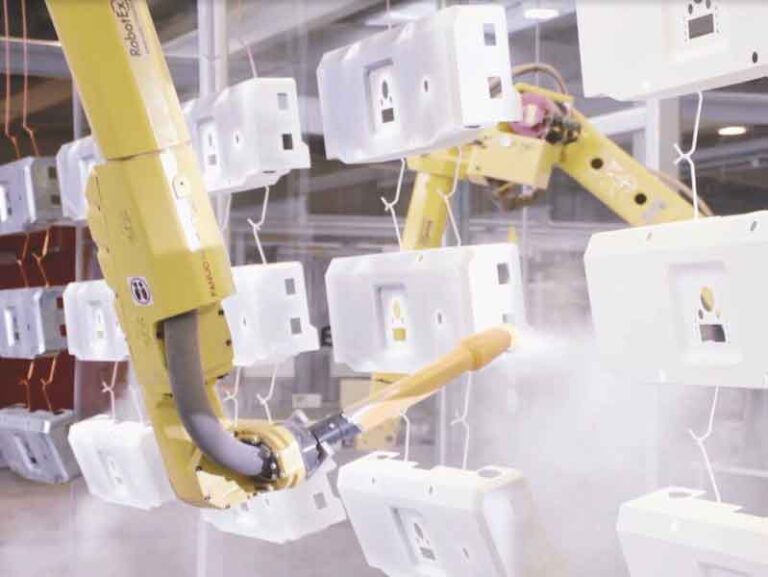
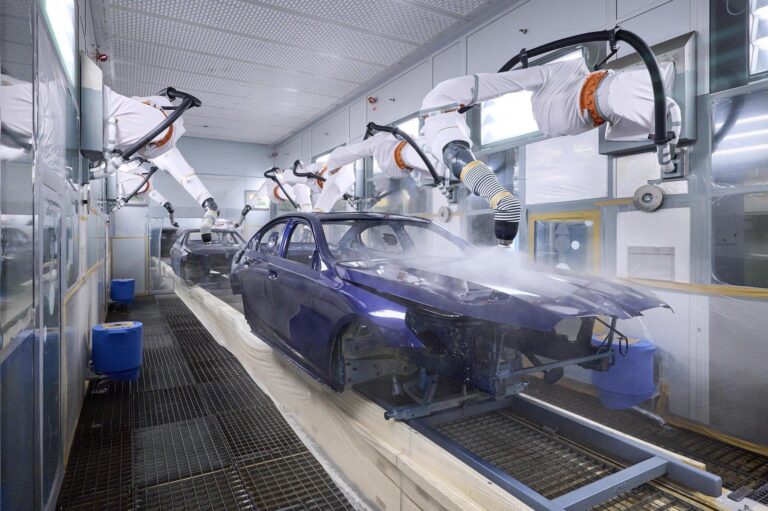
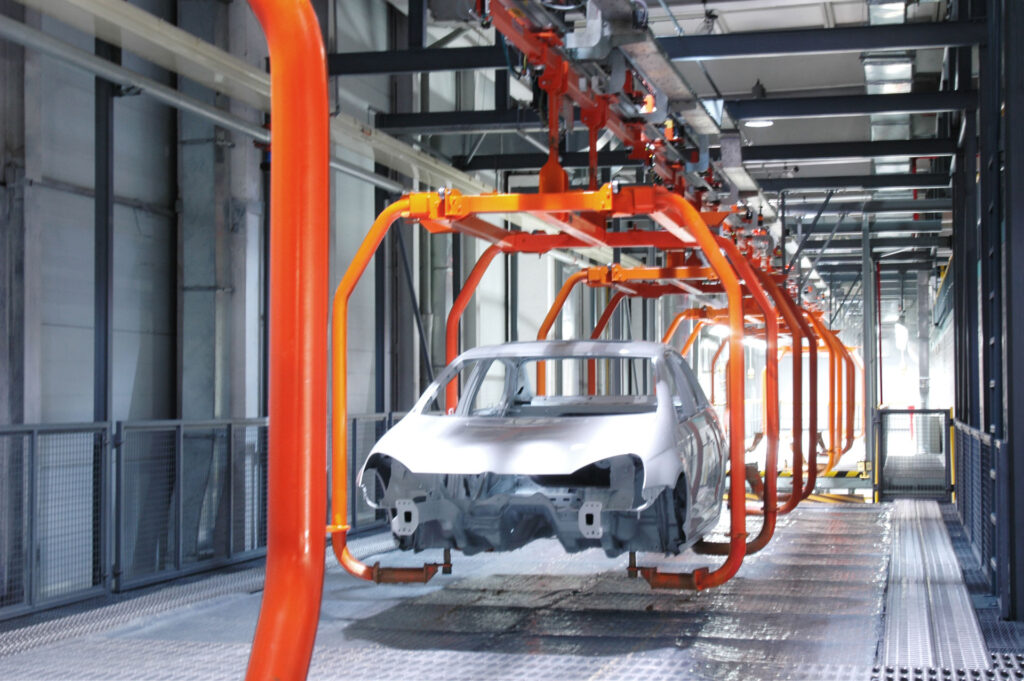
Automation improves repeatability, but it does not automatically eliminate overspray.
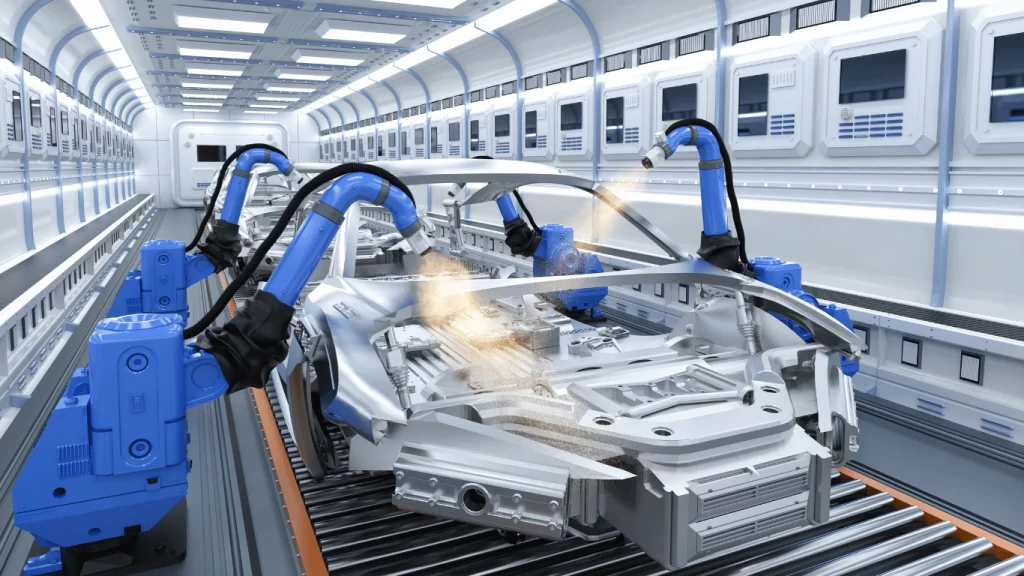
Robot speed, gun distance, spray angle, atomizing pressure, paint flow, and spray pattern all affect how much coating reaches the workpiece. If the gun stays too far from the surface, the spray cloud can spread before it reaches the target.
Booth airflow also matters. EPA technical guidance identifies booth configuration and crossdrafts as factors that can reduce transfer efficiency.
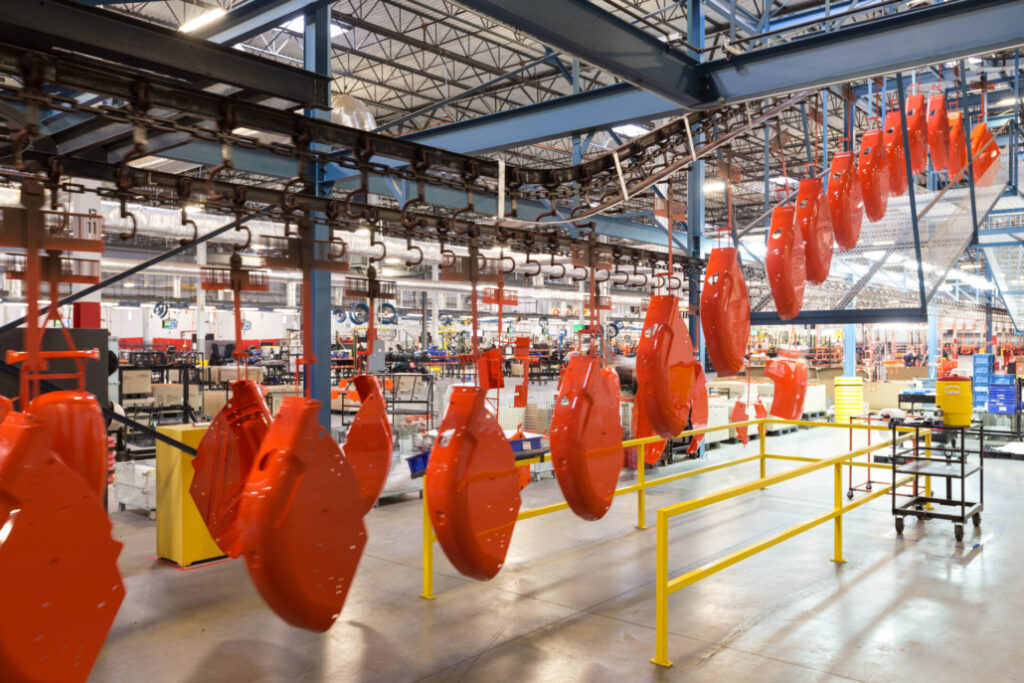
Workpiece geometry creates another challenge. Large flat panels are usually easier to coat than small parts with deep corners and narrow sections. The robot may need several passes to cover these areas, which can increase overspray.
Film Thickness Can Push Paint Consumption Higher
A small increase in film thickness can make a noticeable difference over thousands of parts.
Suppose a process requires a certain dry film thickness, but the actual application runs consistently above that value. The line will use more coating even though the finished parts may still look acceptable.
This issue often appears when operators adjust spray parameters to solve another problem. They may increase paint flow to improve coverage or add another pass to cover difficult areas.
A better approach is to measure film thickness at representative locations and compare the results with the process specification. If the measured thickness is consistently higher, the spray parameters may need adjustment.
Workpiece Shape Changes the Calculation
The surface area used in the original quotation may not represent the actual coated area.
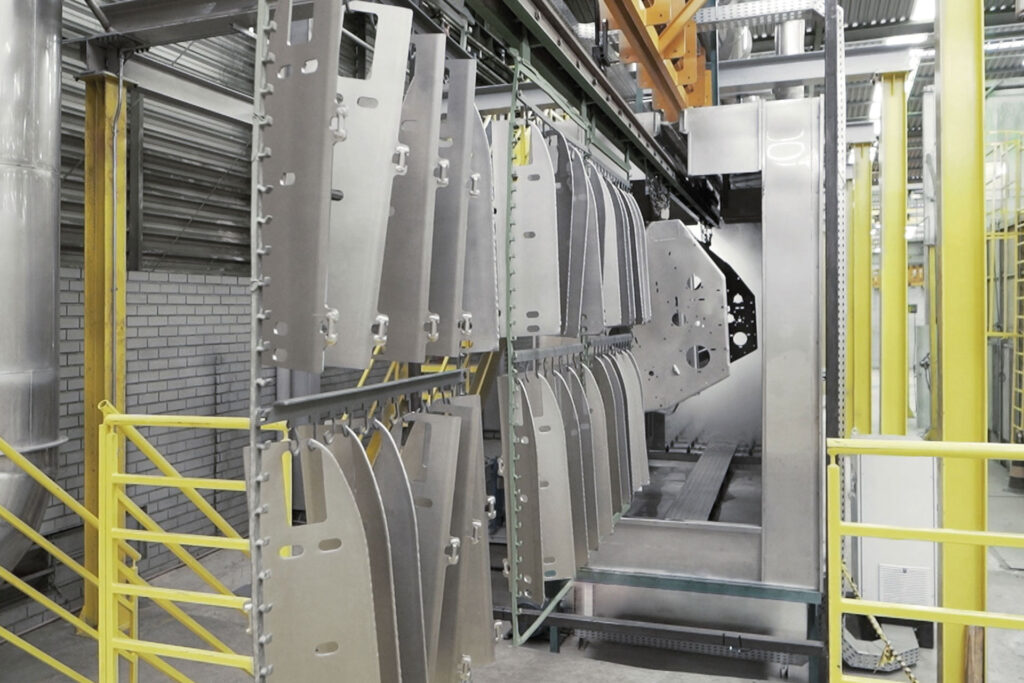
Consider a control cabinet, structural component, or fabricated metal part with brackets and internal sections. The robot must coat more than the main outer surfaces. Some areas also require different spray angles.
These details can increase paint use without indicating a problem with the paint or the line.
ASTM D5327 also points out that transfer efficiency depends on operating variables, workpiece conditions, and coating formulation. It recommends controlling these factors when comparing application results.
That is why paint consumption should be evaluated under actual production conditions rather than from laboratory figures alone.
How to Check the Real Paint Consumption
If an automated paint line is using more paint than expected, start with production data.
Record the amount of paint issued to the line and compare it with the number of completed workpieces. At the same time, record film thickness, paint solids content, spray settings, robot programs, and booth conditions.
Then check where the material goes.
Look at overspray in the booth, filter loading, cleaning frequency, rejected parts, and paint remaining in the delivery system. These records can help separate normal process consumption from avoidable losses.
It is also useful to compare paint consumption over several production cycles. One day’s data may be affected by a different workpiece mix or a temporary process adjustment.
The Goal Is Stable, Measurable Paint Usage
Higher paint consumption does not always mean that the original quotation was wrong. The production conditions may simply differ from the assumptions used during the initial calculation.
A reliable evaluation should consider transfer efficiency, film thickness, workpiece geometry, spray parameters, booth airflow, and actual production volume together. ASTM and EPA guidance both support this process-based approach rather than relying on one number alone.
When these factors are measured and controlled, the reason for higher paint usage becomes much easier to identify. For any automated paint line, accurate production data is the starting point for reducing overspray, improving coating consistency, and keeping actual paint consumption closer to the original estimate.