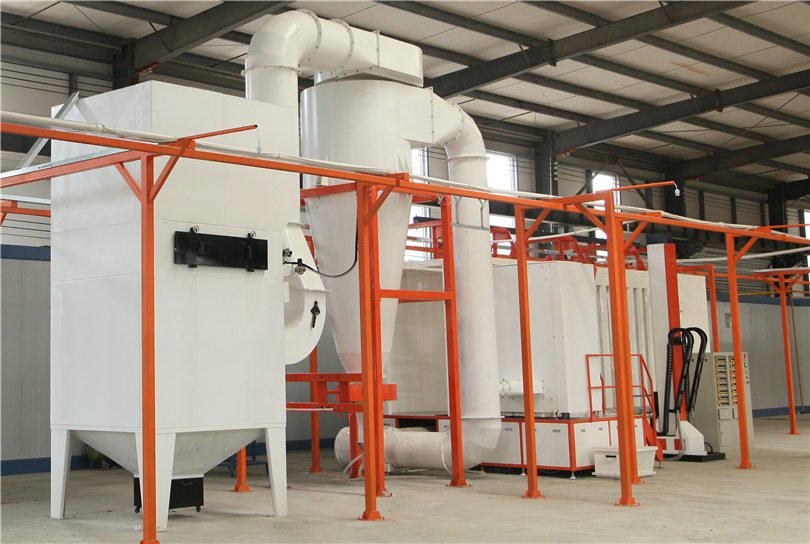

Powder coating orange peel is a leveling failure, not a material defect. The powder gels before it can flow flat, so the surface freezes in the shape the particles landed in. That is why a fresh box of powder changes nothing. Film build, atomization and heat-up rate set texture long before anyone opens the bag.
We see this on new lines and on old ones. The plant swaps powders, the surface stays the same, and the verdict becomes “the powder is bad”. Usually the line gives the film no time to flow.
Where Does Powder Coating Orange Peel Actually Come From?
Flow needs three things at once: enough material, enough heat, and enough time before the film sets. Break any one and the texture survives into the cure.
A thin film follows the substrate instead of covering it. Coarse or damp particles land as separate islands and never coalesce. A fast-heating part skins over at the surface while the core stays cold.
What Does Orange Peel Measure As on a Real Part?
“Looks like orange peel” is not a number you can work with.
ISO 2813 measures gloss at 20°, 60° and 85°. ASTM D5767 measures distinctness of image, which reads texture far more sharply than gloss. Two panels can share a 60° gloss and look nothing alike. Gloss records how much light returns; DOI records how clean the reflection is. On a line chasing powder coating orange peel, DOI is the number that moves first.
Take the reading before you touch anything. It is the only baseline that tells you whether a change helped.
Does Film Build Set the Texture Before the Powder Melts?
It does, and it is the quickest variable to rule out. A film under the substrate profile has nothing to level with: blast texture, brush marks and weld spatter print straight through. Film thickness is where most powder coating orange peel investigations should start.
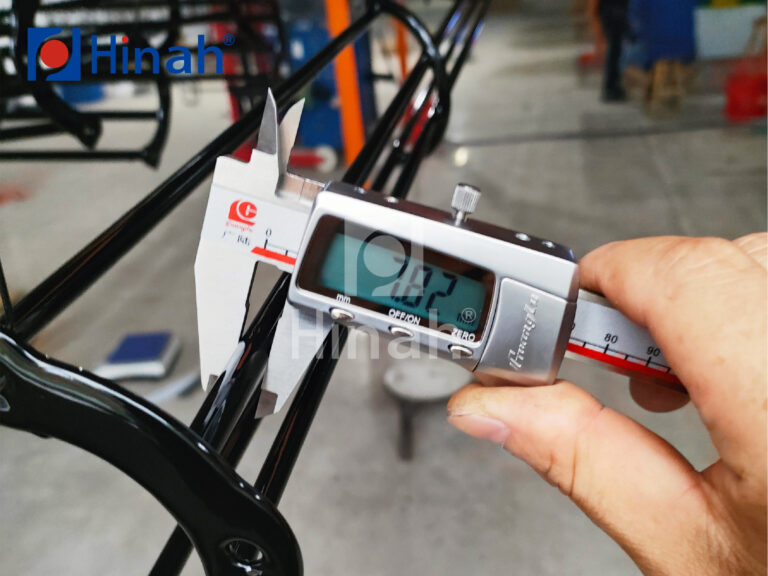
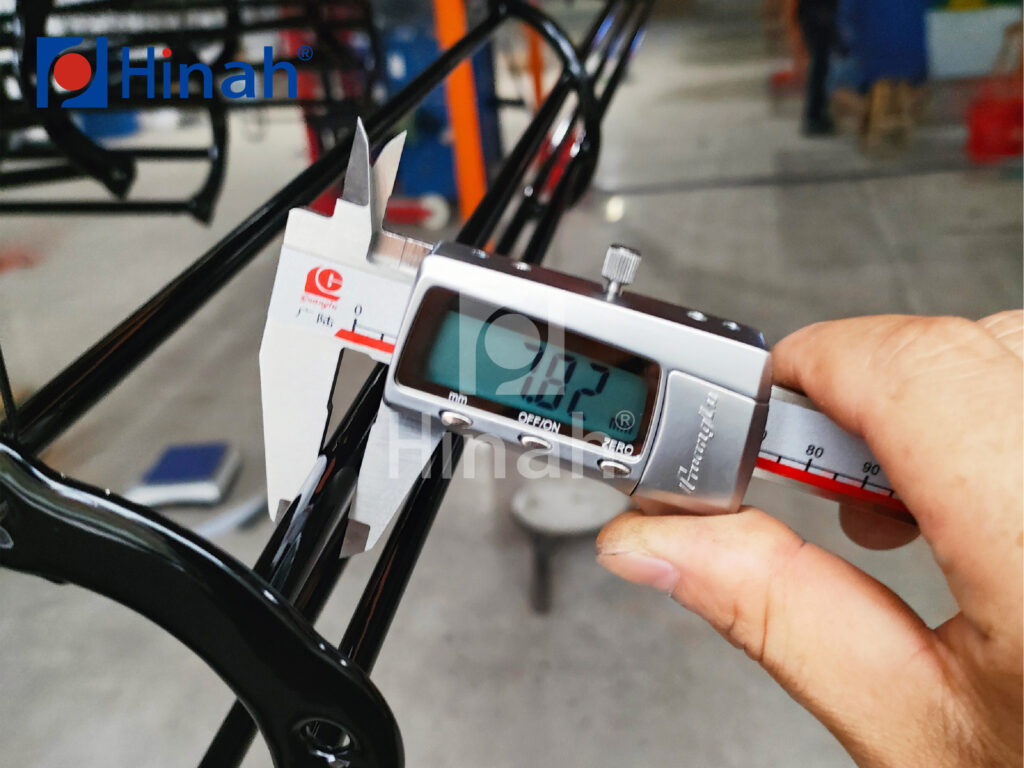
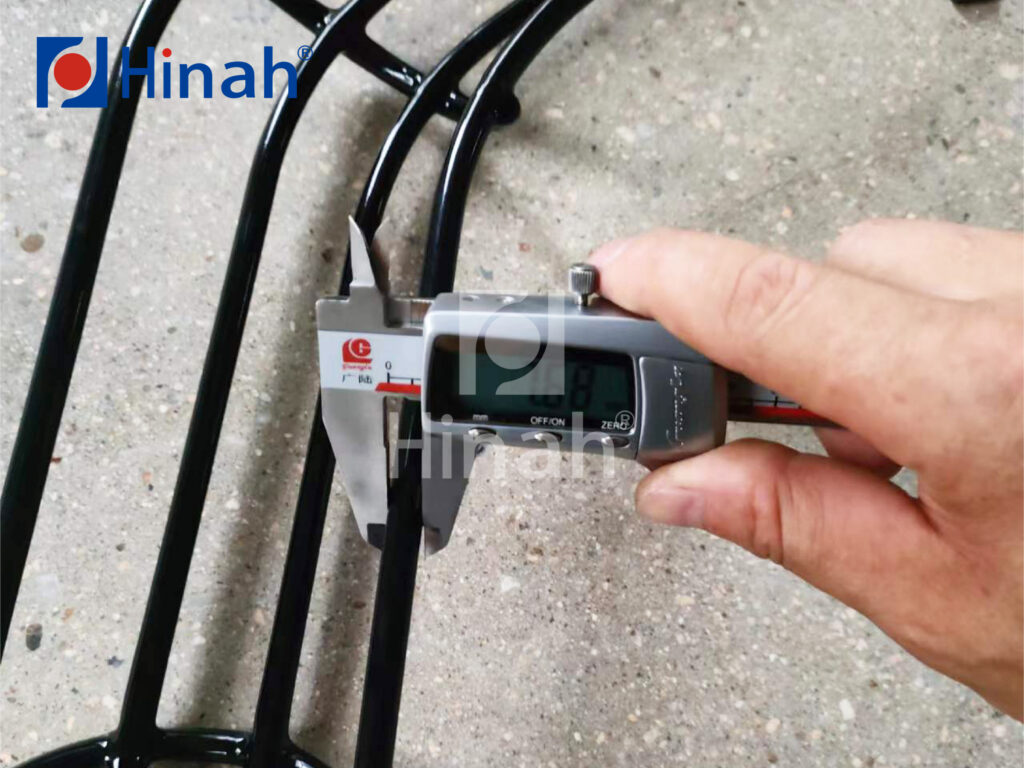
Measure with a magnetic gauge on steel per ISO 2178, or an eddy-current gauge on aluminium per ISO 2360. Read five points, and include an edge and a flat centre.
| Reading | What it points to |
|---|---|
| Thin at the centre, heavy at the edge | Spray pattern or part shape, not the powder |
| Thin everywhere, texture everywhere | Film build is the first cause to test |
| Even film, texture still present | Move on to atomization and heat-up |
An edge-heavy panel usually means the spray pattern and the part shape disagree. We cover that geometry in the piece on preventing edge build-up during horizontal coating.
Is the Gun Atomizing, or Just Throwing Powder?
Good atomization puts a fine, even cloud on the part. Poor atomization puts droplets on it, and droplets never level.
Check gun distance and voltage together. Closing the distance without dropping voltage raises field strength, and the outer layer charges harder than the layer beneath. The result is a rougher, drier film, sometimes with the pinholes of back ionisation.
Are You Putting Too Many Fines Back in the Hopper?
Reclaim is where a clean line slowly turns textured. Each pass through the booth strips coarse particles out of the circuit and leaves fines behind. Add them back without limit and the powder fluidizes badly, charges unevenly, and lands as thin dry patches that never level.
Set a reclaim ratio, write it on the hopper, and keep it. If the surface improves with a fresh box and drifts back within two shifts, the reclaim loop is the cause.
Is the Oven Ramp Fast Enough for the Film to Level?
Here the powder’s flow window matters more than the setpoint. ISO 8130-11 describes an inclined-plane flow test, and ISO 8130-6 covers gel time. A short-gelling powder needs a faster, more even ramp.
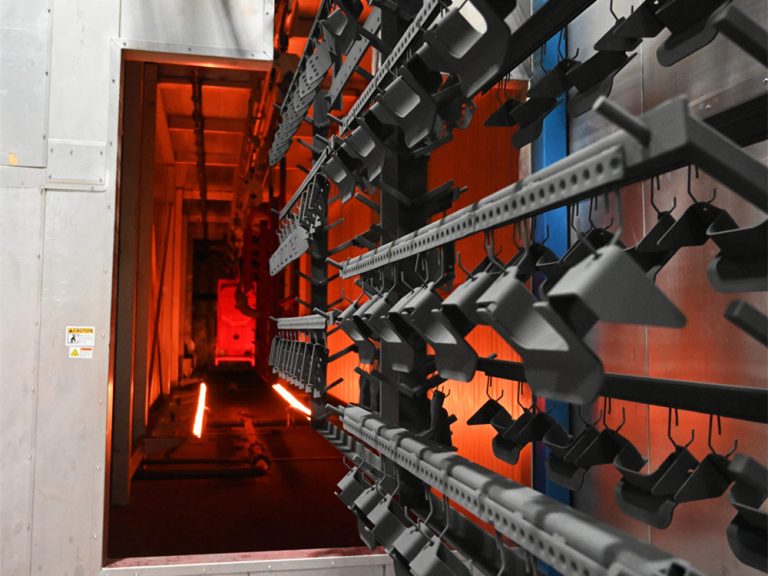
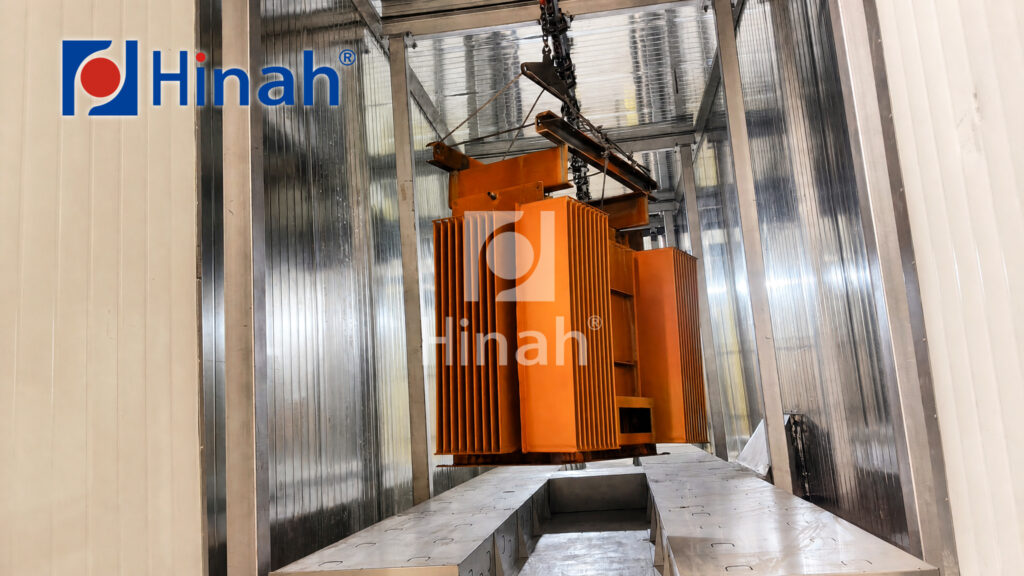
Thick parts are the usual victim. A heavy casting or a tank wall reaches temperature at the surface while the mass behind it stays cold. The film sets before the body catches up. That mismatch sits behind most powder coating orange peel on thick sections. We covered it in the piece on thick parts under-curing at the right oven temperature.
Which Check on Powder Coating Orange Peel Rules Out a Cause Fastest?
Work from the cheapest measurement to the most expensive change. Powder comes last, because swapping it destroys your baseline and says nothing about the line.
| Order | Check | Time | What it rules out |
|---|---|---|---|
| 1 | Film build at five points | Minutes | Thin film |
| 2 | Gloss and DOI reading | Minutes | Whether the last change worked |
| 3 | Gun distance and voltage | Minutes | Atomization and overcharging |
| 4 | Ramp rate on a heavy part | One cure cycle | Skin before flow |
| 5 | Reclaim ratio and powder batch | One shift | Material, last |
Most powder coating orange peel resolves in the first three rows. When it does not, the answer is usually a heat-up problem that no powder change will touch, and the fix sits in the oven. If the texture arrives with lifting edges or a film that scrapes off, start from the peeling article. That is a different failure with a different order of checks.