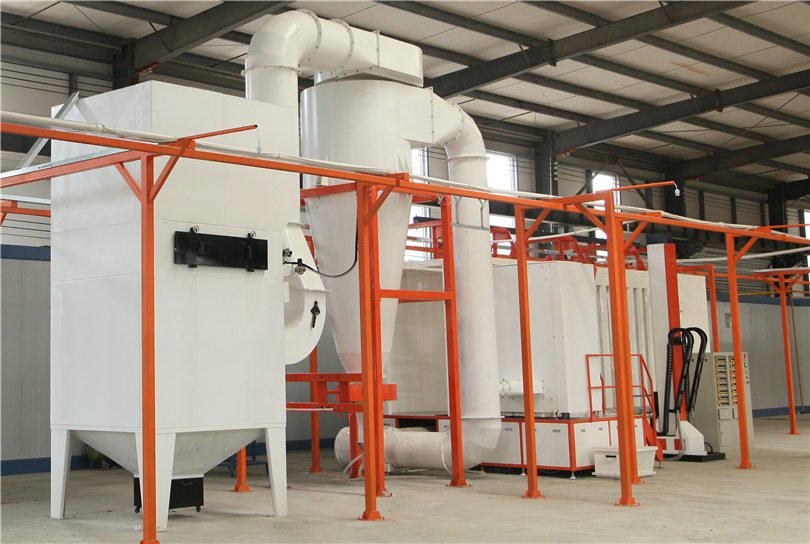

Powder coating peels off for a short list of reasons, and they show up in the same order on most lines. Teams usually start with the powder. That is the wrong end. The powder is rarely the cause, and swapping it costs a week while the real fault sits in a rinse tank or an oven zone. Run the six checks below in sequence. Each takes under an hour, and each one either clears a suspect or closes the case.
Check 1: Where Powder Coating Peels Off First Points to the Cause
Look at the bare metal under the peeled film before touching anything else. Shiny, clean metal means the film never bonded, so the problem sits in pretreatment. A thin grey or white layer still on the part means the conversion coating held, and the failure sits above it. Film that tears inside itself, leaving powder on both the part and the fallen sheet, points to cure or thickness. Photograph that surface now: it is the most useful evidence you will collect.
Check 2: Did the Final Rinse Leave Anything Behind?
Degreasing residue is the most common root cause and the easiest to miss. Run a water-break test after the last rinse: a continuous water film should hold for about 30 seconds. If it pulls back into droplets, the surface still carries oil or surfactant. Measure rinse conductivity daily and watch the trend, not the single value. A deionised rinse that climbs past roughly 30 µS/cm is carrying dissolved solids back onto the part. Check the conversion coating weight too, and confirm the rinse after it is running clean.
Check 3: Is the Film Too Thick?
Over-thick films fail inside themselves, and edges are where powder coating peels off first. Measure with a magnetic gauge to ISO 2178 or ISO 2360, five points per part, and record the edge reading separately from the face. A 60–80 µm face with 130 µm at the edge is a peel waiting for an impact test. Check gun distance, conveyor speed and the number of passes against the thickness you actually need. If the specification asks for 80 µm, spraying to 110 µm buys nothing and costs adhesion.
Check 4: Did the Part Reach Cure Temperature?
Oven air temperature and part metal temperature are different numbers, and only the second one matters. Clamp a data logger to a heavy section and to a thin bracket, then log both through the full cycle. A part that lags the setpoint by 15 minutes at the end of the oven is under-cured no matter what the controller reads. Confirm with a solvent rub and with gel time to ISO 8130-6 on a sample from the same batch. Under-cured film stays soft, so powder coating peels off as a waxy sheet within weeks.
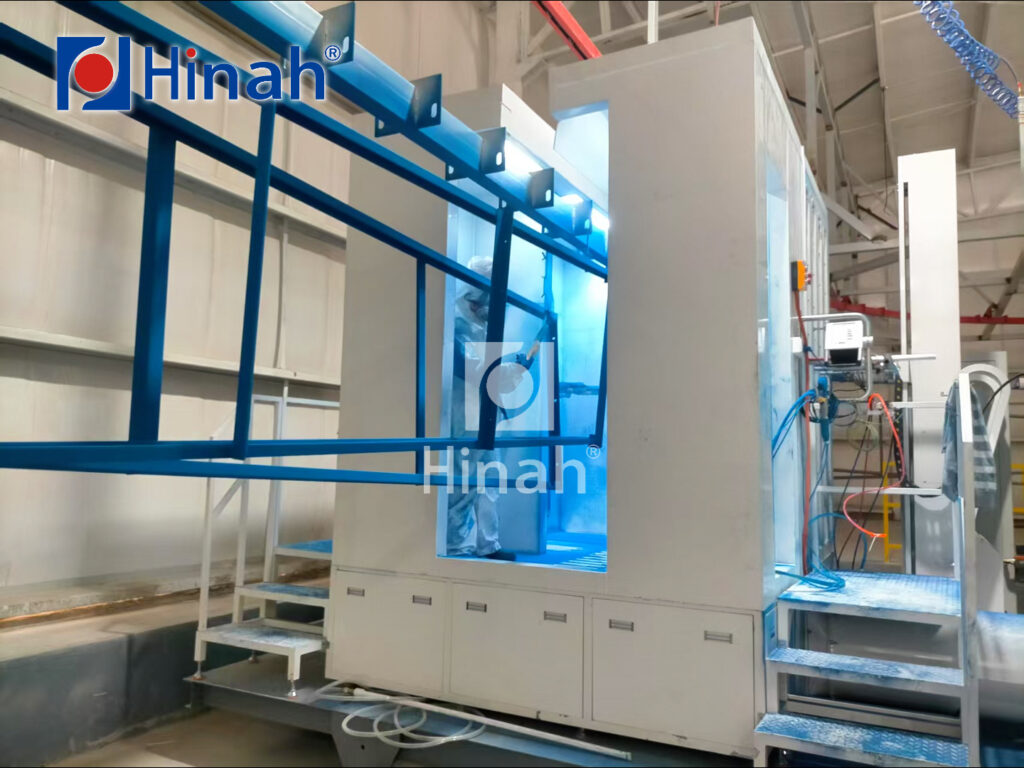
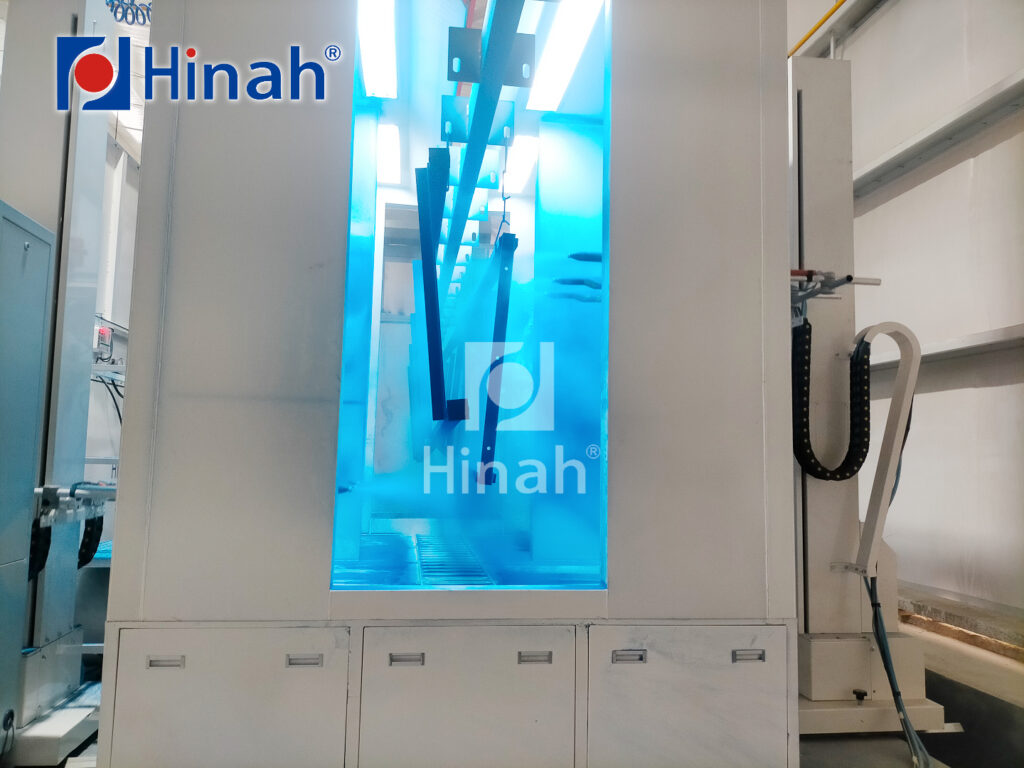
Check 5: How Was the Part Cooled and Handled?
Stacking parts warm, hanging them in contact, or packing before the film reaches handling temperature all create marks that read as adhesion failure later. Rapid cooling in a cold aisle stresses the film at edges. Mechanical damage from jigs, clamps and trimming is the other candidate: a peel that starts at a scratch or a clamp mark is damage, not chemistry. Walk the route from oven exit to packing once, at shift speed, and watch where parts touch each other.
Check 6: Is the Powder Really at Fault?
Only after checks one to five come back clean does the powder deserve attention. Then look for a batch change on the date the failures started, reclaim ratio above your own limit, clumping from moisture, and cross-contamination from a previous colour. Store powder dry, sieve reclaim, and keep the ratio fixed. A supplier change is a fair suspect when powder coating peels off right after the switch, and still the last one to check.
Confirm It With a Test, Not a Guess
A cross-cut test turns an opinion into a number. ASTM D3359 Method B and ISO 2409 both score adhesion from full retention to total loss, and either one gives you a result you can trend across batches. Add a cupping test to ISO 1520 and an impact test to ASTM D2794 when the film has to survive forming. Test a known-good part from six months ago alongside the failed one. The gap between them tells you whether the process drifted or the part changed.
When Powder Coating Peels Off at the Edges Only
Edge-only peeling is a coverage problem, not a bonding problem. The film thins over a sharp corner, the wrap is incomplete, and the first knock lifts it. Reduce edge build-up, check that the gun reaches the corner at the right angle, and remove burrs before coating. Confirm grounding at the hanger, because a poor earth weakens wrap on exactly these features.
Powder coating peels off because of a chain of small deviations, rarely because of one bad drum. Work the six checks in order, write the result down, and the next failure takes minutes instead of a week.