
Yes, but not inside the same booth. A powder coating line can share its conveyor, pretreatment stage and curing oven with a liquid paint zone. That shared hardware is where the savings sit. The application step stays separate, because powder and liquid behave nothing alike inside an enclosure. Factories that plan for two zones get a flexible line. Factories that expect one booth to do both jobs end up with contamination, slow changeovers and a line that satisfies neither process.
What Does “One Line” Really Mean?
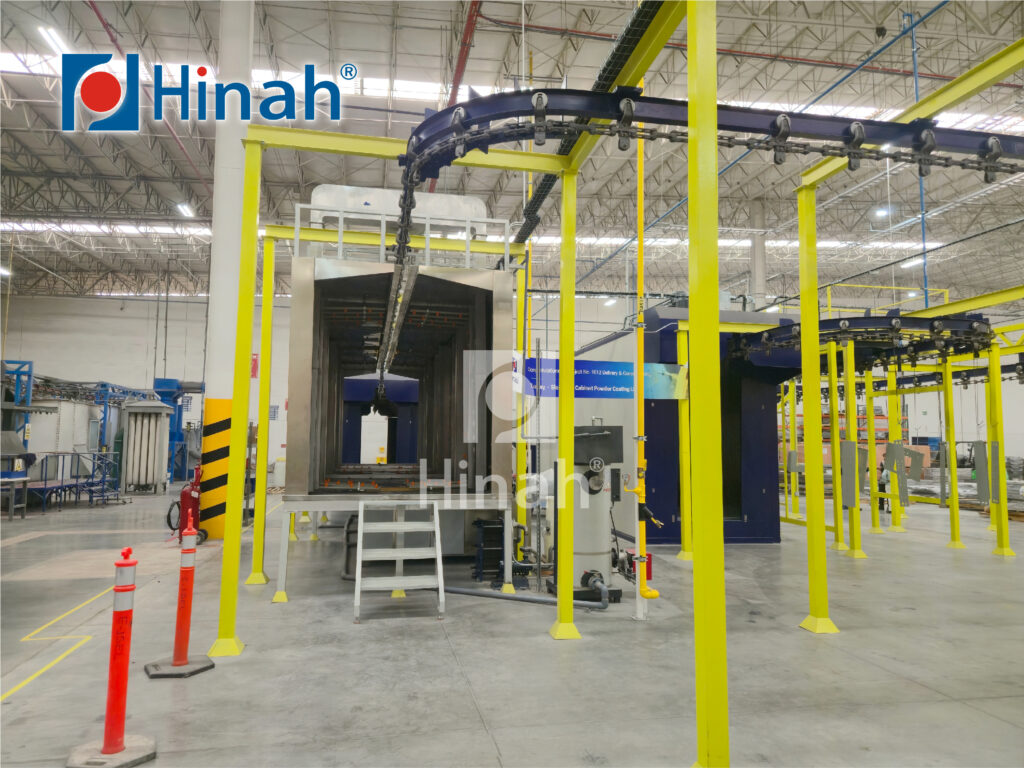
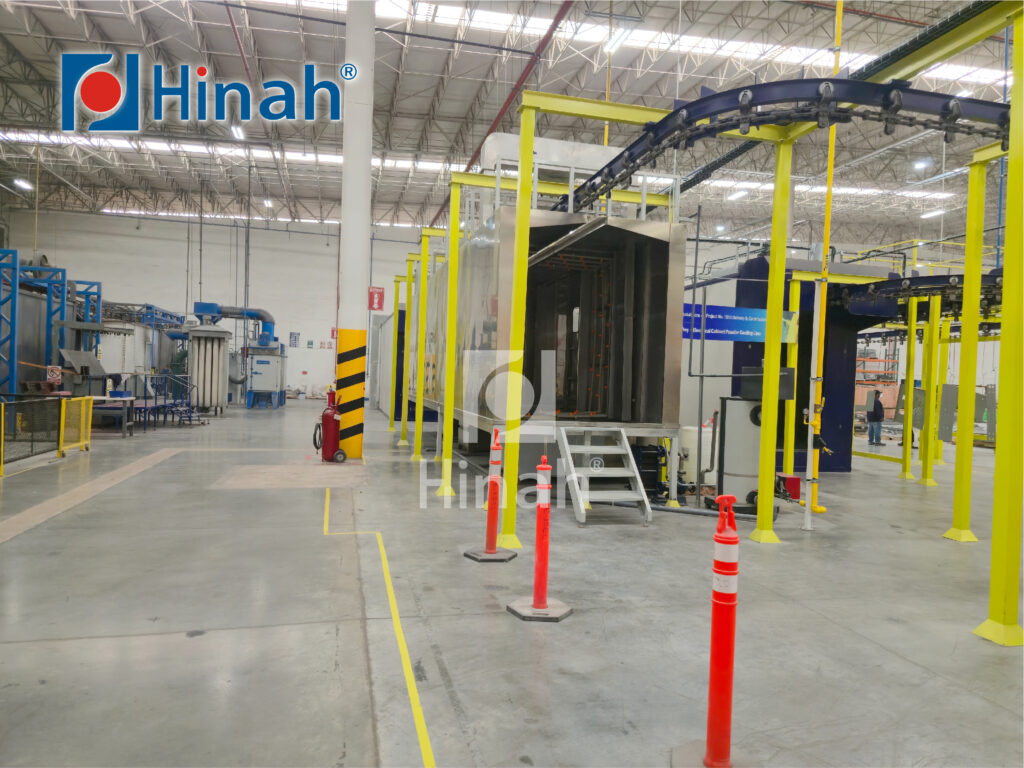
One line means one conveyor loop and one set of process stages, not one spray gun. Parts hang once, pass cleaning and conversion coating once, then reach a decision point. From there they enter either a powder booth or a liquid booth. Both paths rejoin at the oven and the unload station. That structure gives you two coating methods with one set of material handling, one pretreatment plant and one energy bill. It does not put two processes in one enclosure.
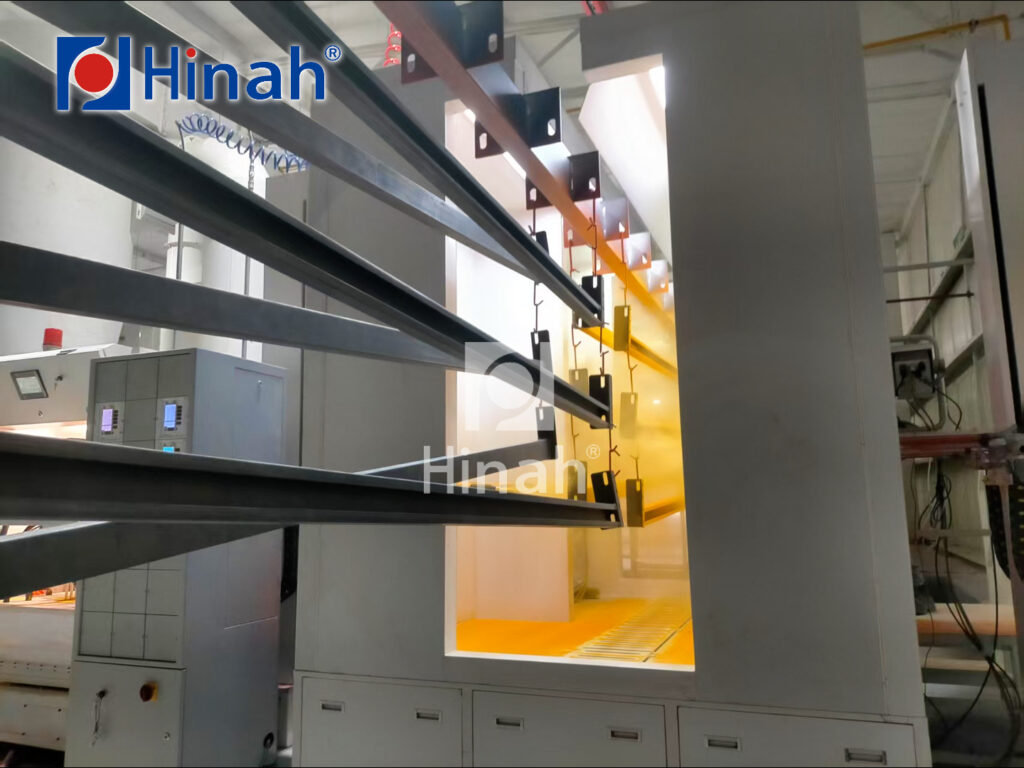
Which Parts of a Powder Coating Line Can Liquid Paint Share?
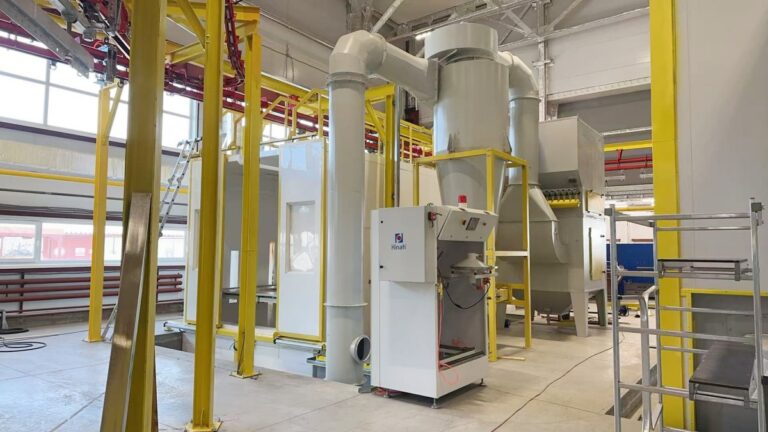
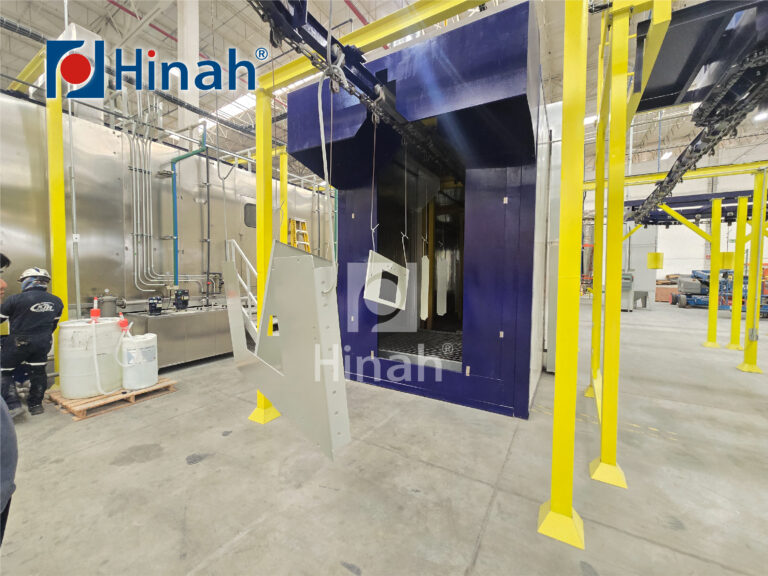
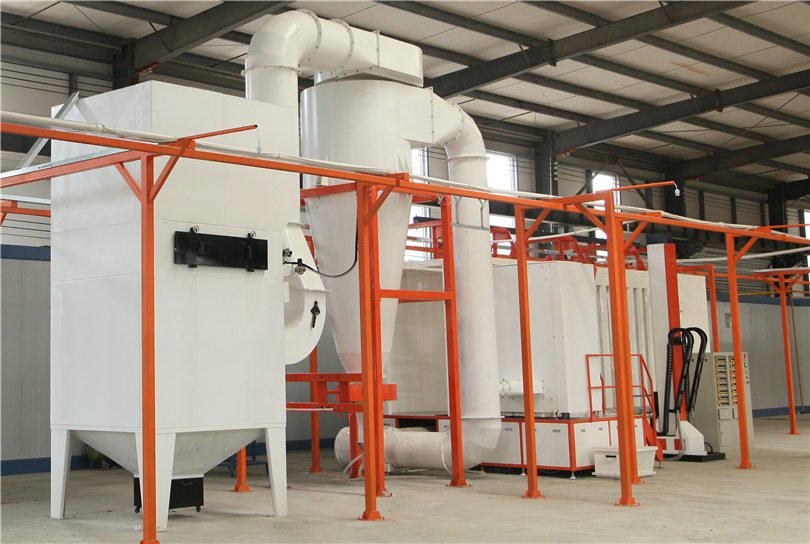
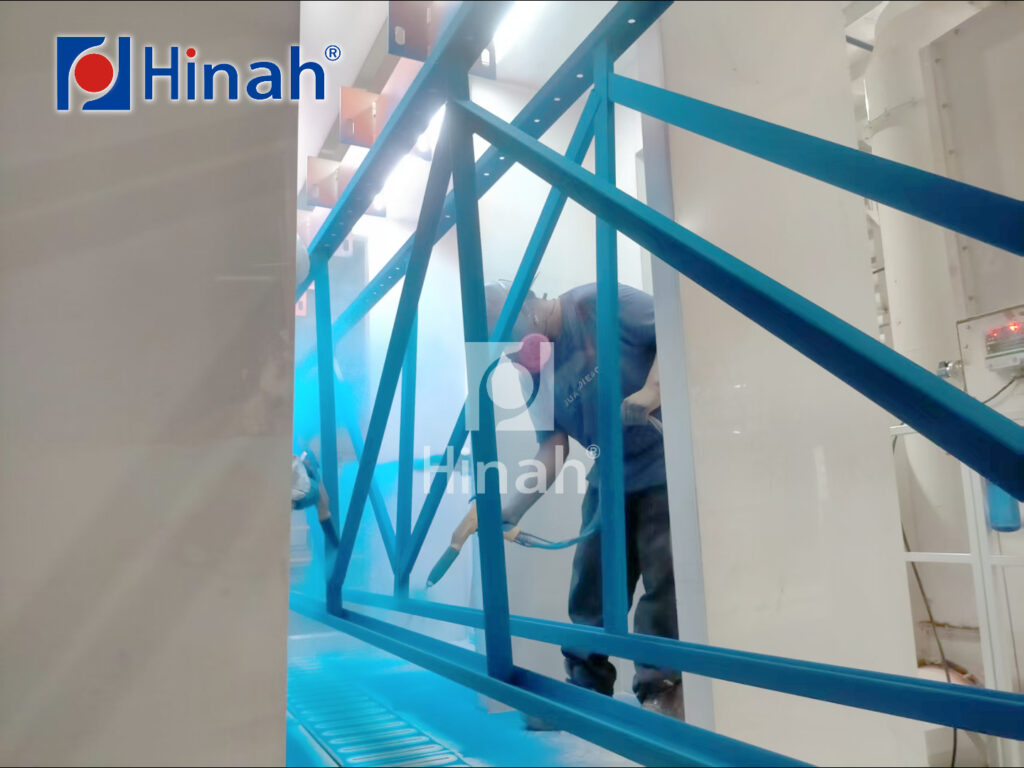
The conveyor carries the most value. Hanging, tracking, accumulation and the power-and-free buffer work for both coatings, and duplicating them doubles floor space. Pretreatment usually shares as well, since both processes want a clean surface with an iron or zirconium conversion coating. The oven can share if you handle solvent fumes properly. Loading, unloading, inspection and the control system also share without much trouble. For the application hardware, an automatic powder coating line and a liquid zone are quoted as two separate stations on the same conveyor.
Why Can’t You Spray Liquid Paint in a Powder Booth?
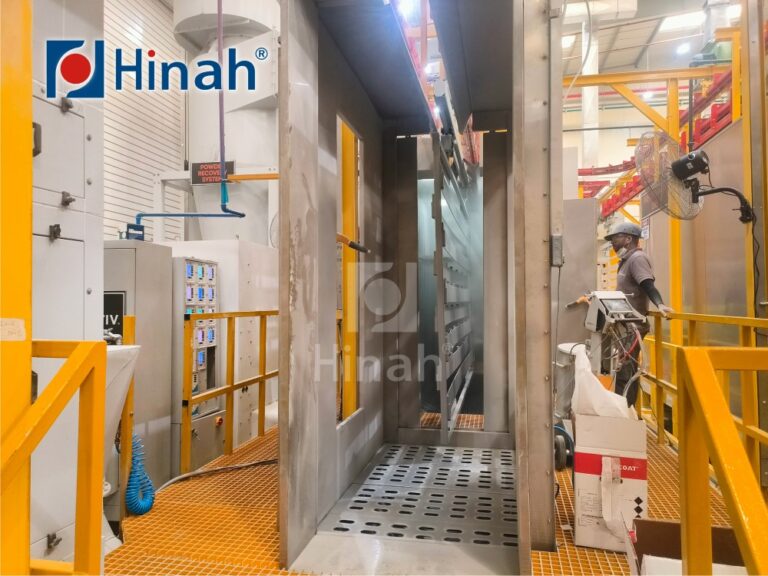
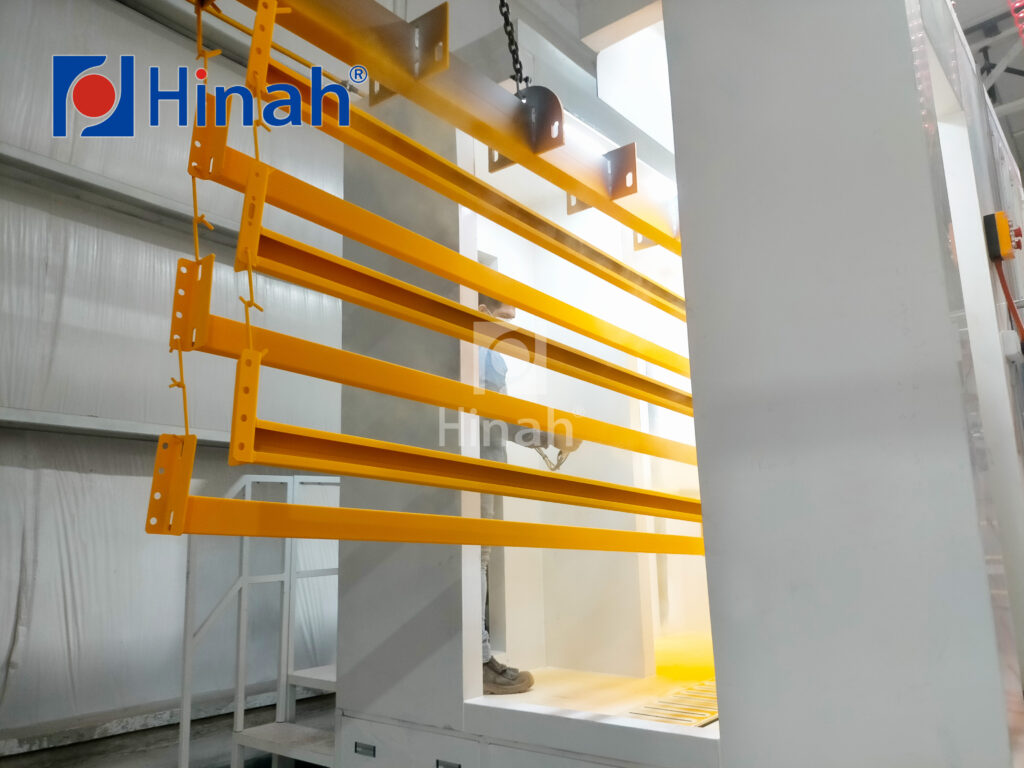
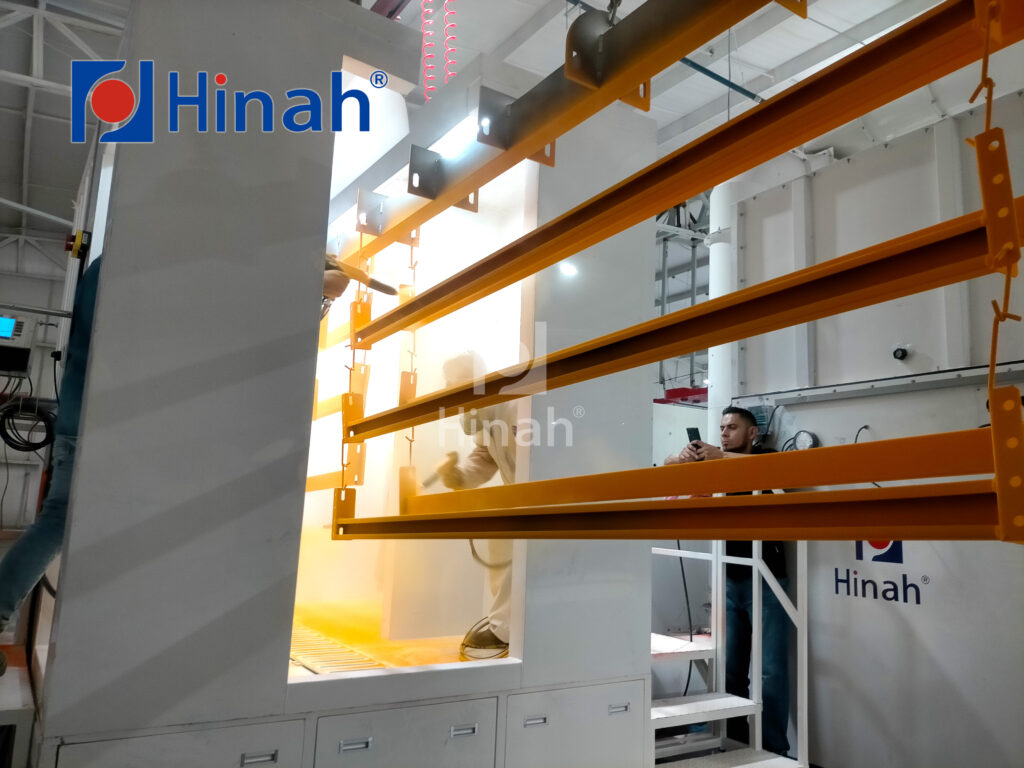
A powder booth on a powder coating line handles dry recovery only. It pulls air downward, captures overspray in cartridges or a cyclone, and returns powder to the hopper. Solvent paint breaks every one of those assumptions. Solvent vapour needs exhaust volumes and electrical classification a powder booth lacks, and NFPA 33 sets separate requirements for flammable finishes. Residual powder plus solvent mist also creates a real fire risk. Keep the two applications in separate booths with separate air handling.
Can One Curing Oven Cure Both Coatings?
Sometimes, with conditions. Powder typically needs a metal temperature near 180–200°C to fully cure. Liquid paint may need a low bake at 60–80°C, or no bake at all. The shared oven on a powder coating line runs the higher powder profile. That can over-bake a liquid coat and wreck colour or adhesion. Solvent loading is the second issue: an oven curing solvent-borne paint needs fume exhaust and lower-explosive-limit monitoring under NFPA 86. The practical answer is a zoned oven, or a separate low-bake pass for liquid work.
What Changes in Pretreatment on a Shared Powder Coating Line?
Chemistry rarely changes, discipline does. Both coatings need the same clean, rinsed, converted surface. Liquid paint puts solvent on the booth floor, the drain and the hanger hooks, so the coatings must resist it. Rinse quality matters more for liquid, because a salt film shows up as blistering rather than as a pinhole. Drain time also differs. Powder work tolerates a short drip; liquid work usually needs a longer drain and a flash-off zone before the oven, which a liquid coating line normally builds in as standard.
How Long Does Changeover Take on a Shared Powder Coating Line?
Longer than most quotations suggest. Powder to liquid means cleaning the booth, purging lines, swapping filters, rebalancing air and clearing dust from the oven inlet. Plan on two to six hours, not twenty minutes. Liquid to powder is worse, because solvent residue in the hanger, the conveyor chain and the oven will ruin powder adhesion for days. Run a full dry-off and a test panel before you release production. If you switch more than once a week, two parallel zones beat any changeover procedure.
Two Zones on One Conveyor, or Two Separate Lines?
Two zones win when the mix is stable and both coatings run weekly: one conveyor, one pretreatment plant, one oven, two booths. Two separate lines win when volumes are large, when the coatings never mix on the same part family, or when fire separation forces a wall between processes. Simple test: if either coating drops below 20 percent of output, one powder coating line with two zones costs more in downtime than it saves.
What Should You Check Before You Commit?
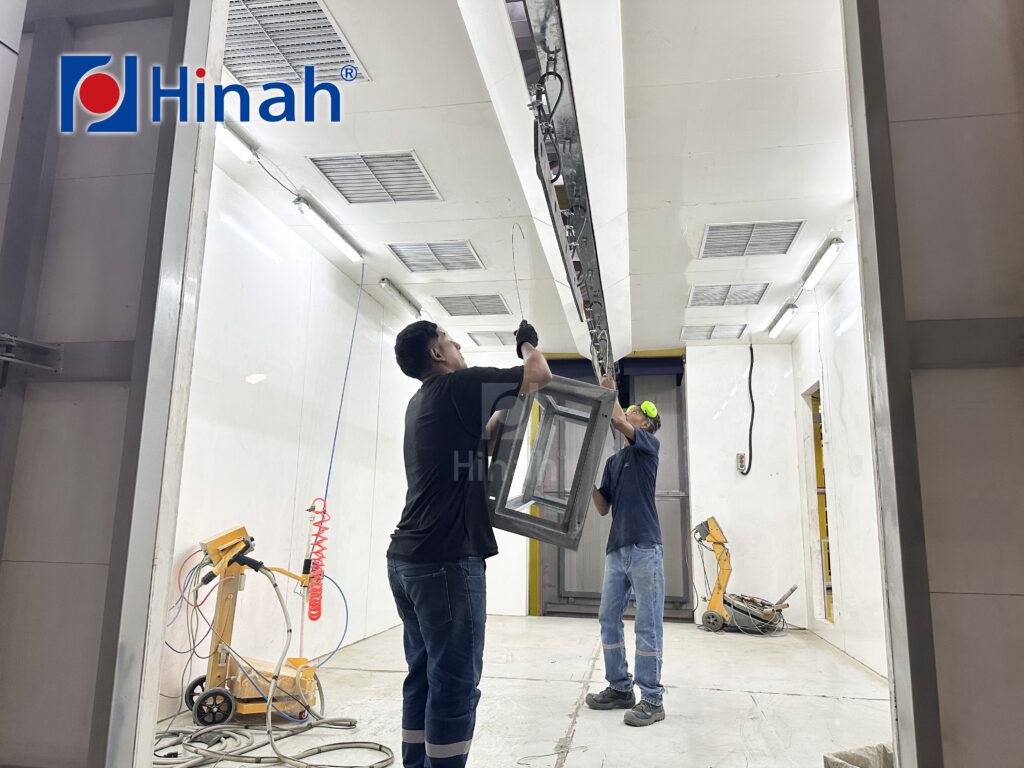
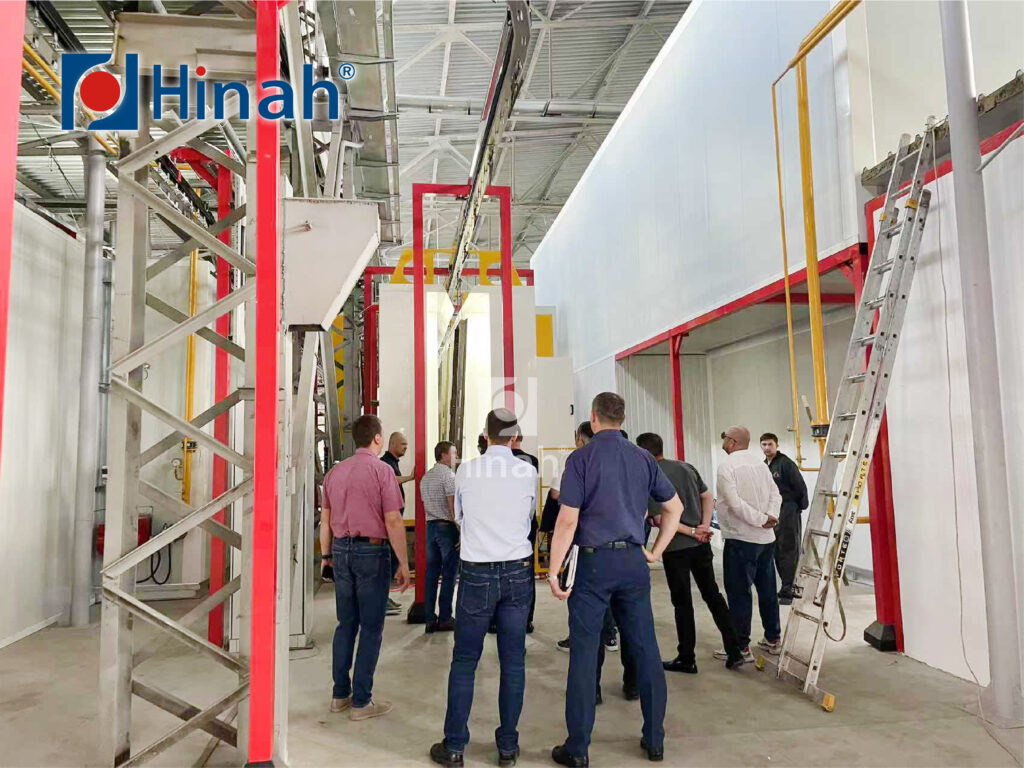
Ask for a layout that shows both booths, the air balance and the oven zoning on one drawing. Confirm the speed range on your powder coating line covers both processes, because liquid work often runs slower than powder work. Check the fire rating and the permit path for solvent storage and spray. Verify oven exhaust capacity with the solvent load calculated, not estimated. Then ask for the changeover procedure in writing, with a cleaning checklist and a first-off test. Validate the result with ASTM D3359 for adhesion and ASTM B117 for salt spray, so both routes meet one acceptance standard.
So, Can It Be Done?
A powder coating line can run liquid paint when you design it as two application zones on one conveyor. Share the handling, share the pretreatment, share the oven with proper fume control, and keep the booths apart. Decide with your real product mix and your real changeover frequency, not with a brochure. Get the layout drawing first, then the quotation. That order saves more money than any equipment discount.