
You bought an automated powder coating system to save money. On paper, the logic is simple: machines don’t get tired, they don’t take breaks, and they should spray more accurately than any human. But then the monthly reports come in. You realize you are actually buying more powder than you did with your manual team.
This is the “Efficiency Paradox.”
While a manual sprayer can adjust their hand movement for every hook, a poorly calibrated automated powder coating line often sprays the gaps between parts just as heavily as the parts themselves. In many workshops, transfer efficiency actually drops during the switch to automation. Instead of coating your products, you are effectively paying to fill your recovery filters.
If your powder consumption is climbing, it isn’t a problem with the technology. It is a problem with the setup. Let’s look at the three main reasons why your automated powder coating line is wasting material and how you can fix it today.
Root Cause 1: Poorly Calibrated Reciprocator Settings
The most common thief of powder is a “lazy” reciprocator. If your reciprocator moves from the very top to the very bottom of the booth regardless of the part size, you are wasting money.
Many operators set a wide stroke length to cover every possible part on the line. However, this means the guns keep firing even when they are pointing at empty air above or below the workpiece. If your parts are only 2 feet tall but your guns travel 4 feet, you are throwing away 50% of your powder on every pass.
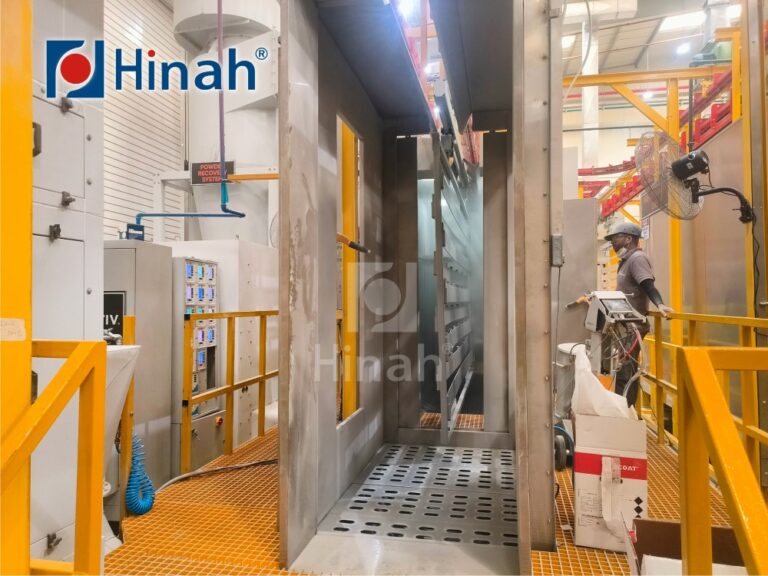
To fix this, you must sync your automated powder coating guns with the actual height of the load. Use light curtains or position sensors to tell the guns exactly when to start and stop. If your guns spray air, you aren’t just wasting powder—you are wearing out your equipment for no reason.
Root Cause 2: Neglecting the Faraday Cage Effect
A human painter naturally slows down, angles the gun, and gets closer to coat a deep corner or a recessed pocket. A basic automated powder coating system does not “see” these challenges. It follows a fixed path at a fixed speed.
When the guns stay too far away or use too much voltage, the “Faraday Cage Effect” kicks in. The electrostatic field pushes the powder away from the corners and onto the flat edges instead. This leads to “fat edges” and empty corners. Most operators try to fix this by simply turning up the powder flow, which only creates more waste and more rework.
True efficiency requires adjusting the KV (voltage) and micro-amps for specific part geometries. If your automated powder coating equipment cannot handle these recessed areas, you need to consider multi-axis control or a dedicated pre-touch station for complex parts.
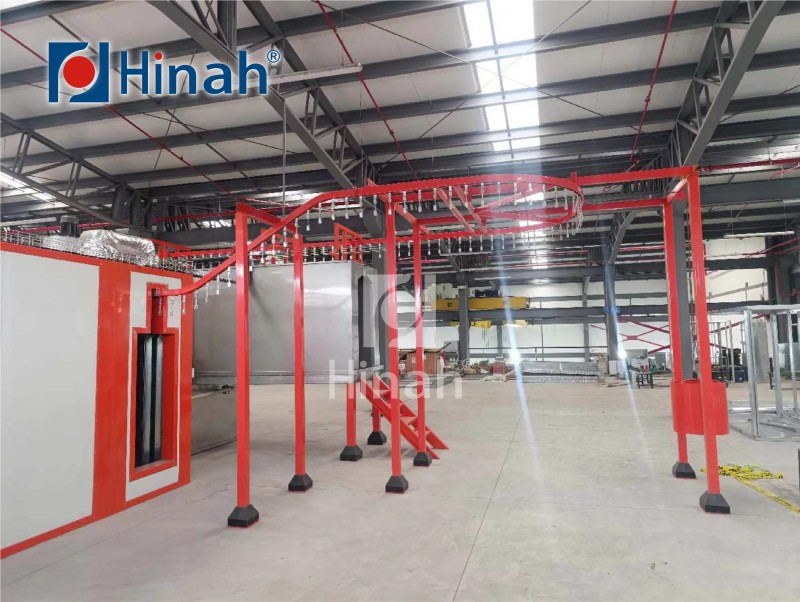
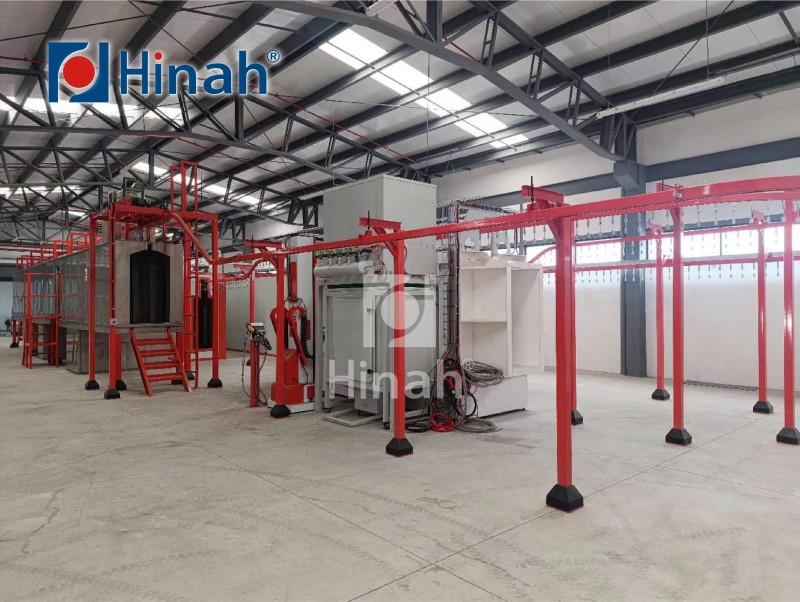
Root Cause 3: Inadequate Airflow and Recovery Dynamics
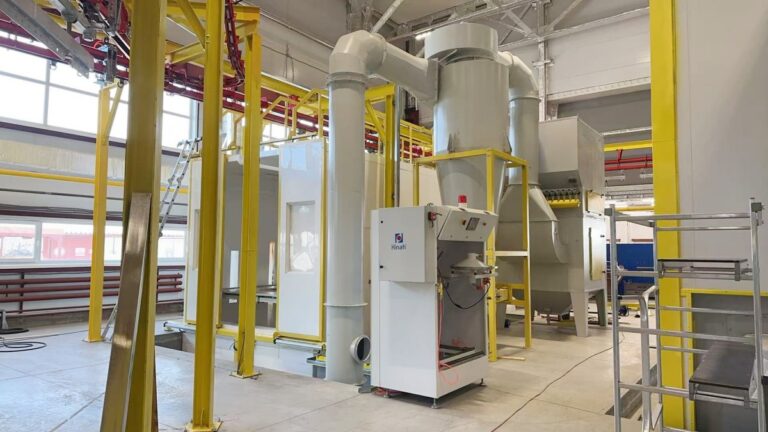
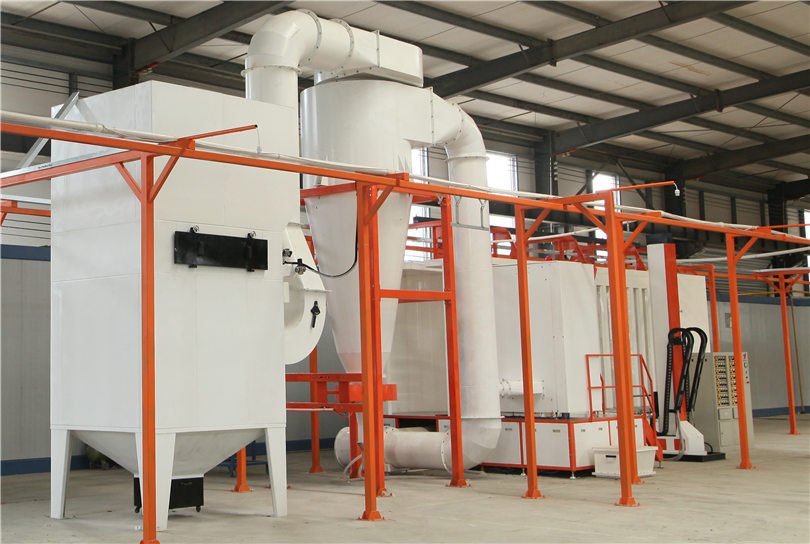
If your booth airflow is too strong, your automated powder coating guns don’t stand a chance. High-velocity air pulls the powder particles away from the part before they can even attach. This powder ends up in your cyclone or filters instead of on your product.
While you need airflow for safety and containment, excessive speed kills your “first-pass transfer efficiency.” You want the powder to “cloud” around the part, not blast past it. Check your fan speeds and filter resistance. If your booth feels like a wind tunnel, you are literally vacuuming up your profits.
Also, watch your recovery system. If you use a reclaim system but your “first-pass” rate is low, you are constantly recycling “fines”—tiny powder particles that have lost their charge. Eventually, your finish quality drops, leading to expensive rework.